In the bluntly titled drama The Death of Robin Hood, audiences are programmed to expect the outlaw hero's demise. However, this often intriguing revisionist tale reveals that what he leaves behind may be more shocking.
A Darker Take on a Folk Hero
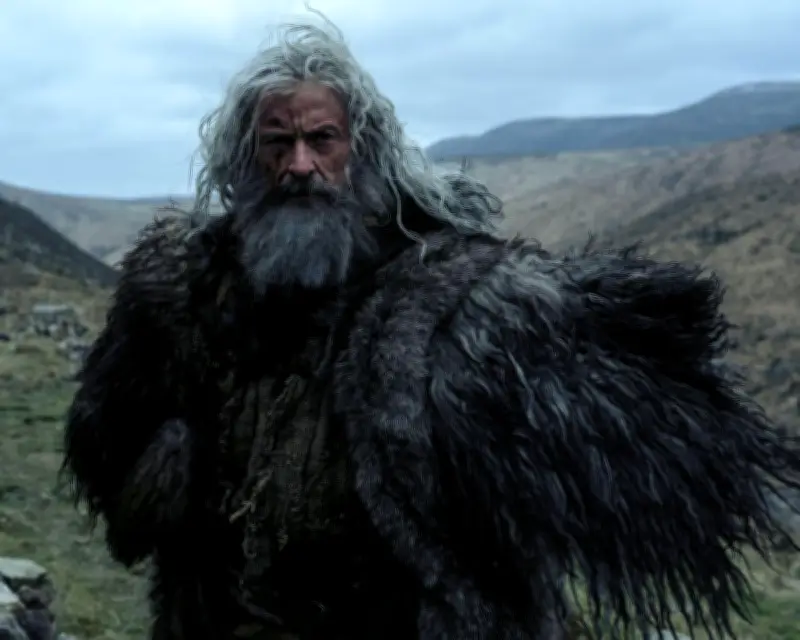
With the gap between the ultra-rich and the rest expanding at a riot-inducing pace, it would be tempting to use a folk hero as a rousing symbol. But writer-director Michael Sarnoski offers a darker, grubbier interpretation: Robin Hood takes from anyone and keeps it for himself. As played by a dour Hugh Jackman, he is plagued by fireside stories that paint him as a hero, while only those whose lives he touched know the truth—if they survived. He is an outlaw running not just from authorities but from aggrieved fathers and brothers seeking vengeance.
In an effectively jolting opener, Robin is discovered in the wilderness by a drifter (Jade Croot), who learns the hard way that Robin is not to be crossed. A reunion with old friend Little John (Bill Skarsgård) and an agreement to protect what is his leads to a violent showdown. Robin's injuries send him to a remote priory, where prioress Brigid (Jodie Comer) nurses him back to health, identity unknown. But how does one accept unconditional goodness when all they have known is the opposite?

Performances and Craft
Jackman, with a mostly acceptable but undefined northern accent, is comfortably in grizzled Logan mode again. He even mentors a young girl, John's daughter (Faith Delaney), who is eager to learn bow skills. Our expectations lead us to predict that Robin's past will bring chaos to his new home, but despite early action movie skill with gory fight scenes reminiscent of The Northman, Sarnoski defiantly denies us this. It is a conceptually interesting choice—front-loading trailer-friendly action then denying more—but one that proves frustrating in practice. The switch to meditative character drama might have been more effective if we knew more about Robin or Brigid. Too much is left unsaid, and too little is felt, a remove that expands into a hole at the story's centre.
Comer is as instinctive and luminous as ever, but she is given a sliver of a character. Both she and a mostly obscured Murray Bartlett (as a man with leprosy) are saddled with speeches aiming for profundity but never quite reaching it.
Tonal Struggles
Sarnoski tries steering us toward something similar to Martin Scorsese's The Irishman—a stark reminder that a criminal's life rarely ends in glory but in a sad, lonely place filled with waste and regret. But what Scorsese achieved brilliantly, Sarnoski loses his grip on, trying to engineer a makeshift family for Robin and insisting we find tragic humanity in his final days, desperately squeezing tears that never fall. For a slow and often ponderously uneventful film, the ending also feels strangely rushed, with decisions and reveals not explored enough to land as intended. There is a potentially more satisfying psychological thriller using the same ingredients.
There is impressive craft here, though. Sarnoski is a skilled transporter, making the most of natural sounds and textures, with Belfast and its surroundings standing in for Cumbria. He has proven himself a thoughtful filmmaker, finding real humanity in both a Nicolas Cage movie (Pig) and a Quiet Place sequel (A Quiet Place: Day One). But he has yet to elevate good to great, and the unsureness of tone here—stuck somewhere between epic and chamber piece—makes The Death of Robin Hood another valiant, if ultimately unsuccessful, attempt. Greatness will one day surely come.
The Death of Robin Hood is out in Australian cinemas on 18 June, US cinemas on 19 June, and in the UK on 3 September.