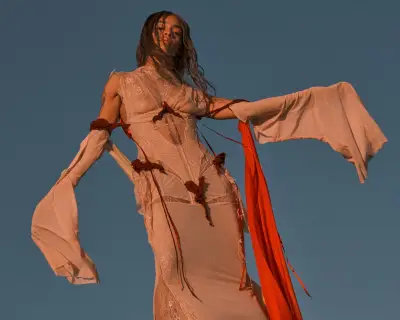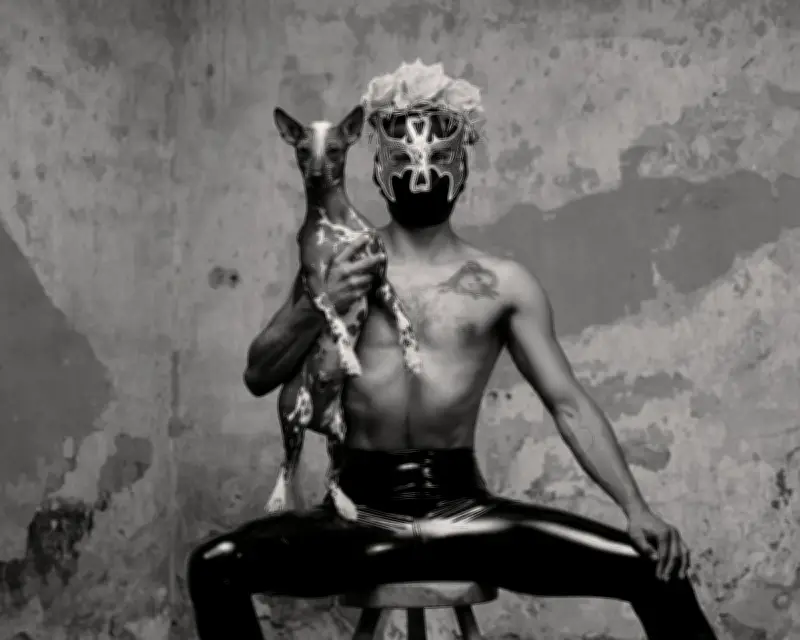
Pieter Henket's photographic series 'Birds of Mexico City' offers a dazzling and intimate look at a generation in Mexico that is courageously redefining gender, identity, and self-expression. Created in collaboration with stylist Chino Castilla, the portraits were shot in a carefully constructed studio environment in Mexico City, bringing to life a vibrant tapestry of individuality and creativity.
Las Flores
Henket describes Nicolette and Monica as 'like two flowers in a vase.' He was captivated by their deep connection and aimed to capture that bond in the image. The series is on display at Bildhalle in Amsterdam until August 8, with a book published by Damiani.
Tatuajes
Tania's entire body is covered in tattoos, including one that reads 'DF,' the former name of Mexico City. The team spent weeks constructing a Virgin Mary dress for her. When Tania wore it, they decided to cover all her tattoos, as the most powerful element was that they remained hidden. A beam of sunlight through a skylight created a magical moment that Henket quickly captured.

La Mujer
In Mexico's macho culture, the lucha libre wrestling mask symbolizes masculinity. Ixchel reclaims that symbol in this striking portrait.
El Sabucán
Chino created this outfit using woven plastic shopping bags commonly found in Mexican markets. These everyday objects, often overlooked, possess their own beauty. Transforming them into a sculptural garment highlights the value in simple things, reminding us that culture lives in the simplest objects.
Fuerza
Jossafat, a young straight gymnast, wore a leopard-print costume with kitten heels. When he saw the image, he posted it on Instagram, expressing pride in his appearance. Henket notes that the project is not only about queer kids but about anyone who dares to be themselves.
El Cuerno
Carina and Diego were kissing tenderly, and Henket added Carmen to the frame, dressed as a little devil. She represents the dark forces that try to intervene in such love. Despite the staging, every feeling in the portrait is real, capturing the magic of a good portrait.
Contemplar
Fernando, a street performer, arrived at the studio feeling down after lockdown took away his ability to dance. When asked to perform, he danced and received a standing ovation, becoming emotional as he felt appreciated for the first time in a while.
Niñez
Melón, a poet, inspired the project with her writing. The portrait reflects the machismo culture that forces young boys onto football fields. Melón wears both a football kit underneath and a dress over it, holding both on her own terms.
La Madre
Ixchel Paz and Emiliano Cruz portray a Pietà, referencing the Virgin Mary holding Christ. Ixchel is also the name of a Mayan goddess, symbolizing unconditional tenderness and strength holding vulnerability.
Libertad
Mariana's corset is broken open; she holds it now, representing her choice of freedom on her own terms. The image alludes to women carrying structures not of their own making.
El Paliacate
Fabrizzio, a member of Chino's team, embodied the project's spirit with his free energy and creativity. Henket photographed him at the end of the first shoot day, capturing an image that reflects how it made him feel.
Flor de Mayo
Chino referenced Frida Kahlo's self-portrait with a resplandor, the ceremonial lace headdress of Tehuantepec women. When Carmen sat down, Henket felt like he was looking at a living painting. Carmen invites viewers in with her gaze.
El Recreo
The piñata, known to every Latin American child, has ancient roots in Mayan, Chinese, and Spanish cultures. The church used it to tell the story of good and evil, but it has become simpler and more powerful over time.
La Raíz
Otokani initially wondered why he was chosen, but he came. Botanical artists spent hours building plants around his naked body. Otokani stood proud, feeling special that the team created something around him, like a bird with fragile feathers in a hard city.
The series is a celebration of courage, identity, and the power of self-expression, inviting viewers into a world where art comes alive.