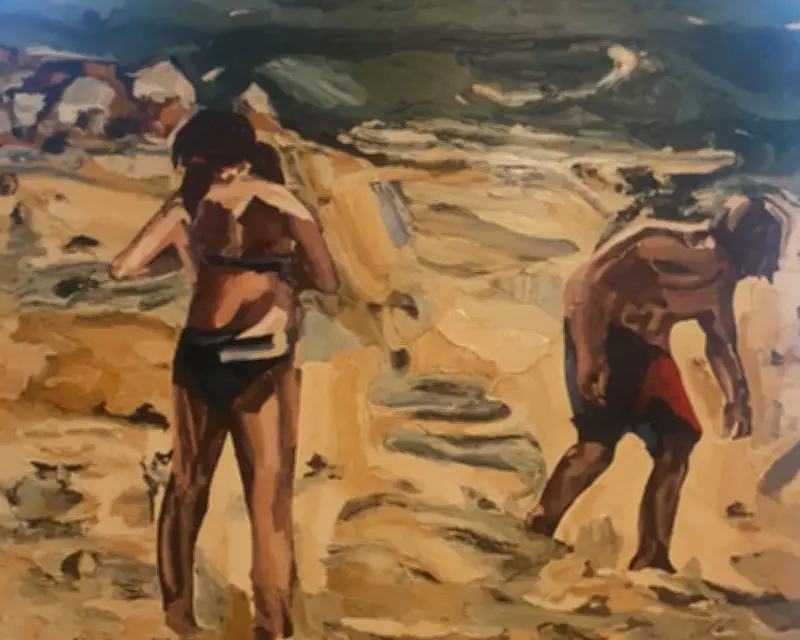
An artist who recently won a major Australian art prize has been accused of creating a work that closely imitates the style of the late American painter Jean-Michel Basquiat. The controversy has ignited a fierce debate within the art community over the boundaries between inspiration and imitation.
The Award and the Accusation
The artist, whose name has not been disclosed, received the prestigious award for a piece that judges praised for its vibrant energy and raw emotional power. However, shortly after the announcement, art critics and social media users pointed out striking similarities between the winning work and several of Basquiat's iconic pieces, particularly in the use of bold colors, fragmented text, and primitive figuration.
According to a statement from the award committee, the panel was not aware of the alleged imitation during the judging process. “We were impressed by the work’s originality and its powerful statement,” said a spokesperson. “We are now reviewing the matter in light of the concerns raised.”

Expert Opinions
Art historian Dr. Emily Chen of the University of Sydney commented, “While many artists draw inspiration from Basquiat, this particular work appears to replicate specific elements without sufficient transformation. It raises important questions about what constitutes originality in contemporary art.”
The controversy has also drawn attention to the broader issue of cultural appropriation and the ethics of borrowing from marginalized artists. Basquiat, who died in 1988, was a Black artist who used his work to comment on racism, class, and power structures. Some critics argue that imitating his style without acknowledging its context is disrespectful.
Impact on the Art World
The incident has prompted calls for greater scrutiny of award entries and for clearer guidelines on originality. The award committee has announced it will conduct a thorough investigation, which could result in the prize being revoked. The artist has not publicly responded to the allegations.
This case is not isolated. In recent years, several high-profile art prizes have been embroiled in similar controversies, leading to a growing demand for transparency and ethical standards in the art world.