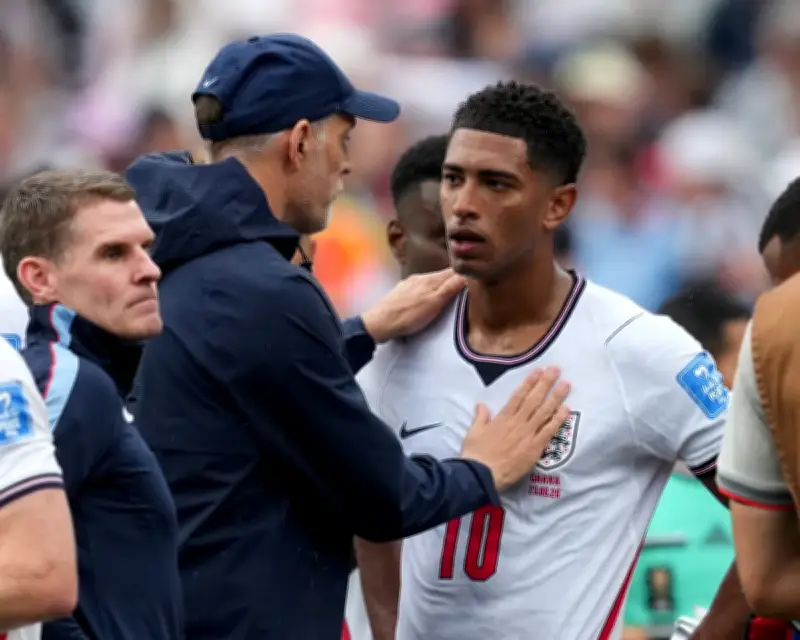
England's World Cup journey has highlighted a fundamental tactical divide between the philosophies of Gareth Southgate and Thomas Tuchel, with the team's performances reflecting contrasting approaches to the game. While Southgate's pragmatic style has prioritized defensive solidity and counter-attacking efficiency, Tuchel's influence has introduced a more fluid, possession-based system that emphasizes pressing and positional interchange.
Southgate's Pragmatic Foundation
Gareth Southgate, who led England to the semi-finals of the 2018 World Cup and the final of Euro 2020, has built his reputation on a cautious, results-oriented approach. His teams are characterized by a solid defensive structure, often deploying a back three or back four with two holding midfielders to protect the defense. According to former England international Rio Ferdinand, "Southgate's approach is about minimizing risk and maximizing the team's chances of winning through set pieces and transitions." This strategy has yielded mixed results, with England often dominating possession but struggling to break down deep-lying defenses.
Tuchel's Tactical Revolution
In contrast, Thomas Tuchel, who took over as England manager after Southgate's resignation, has implemented a more dynamic and aggressive style. Tuchel's teams are known for their high pressing, quick ball circulation, and positional fluidity. Under Tuchel, England has adopted a 4-3-3 formation that allows for greater attacking flexibility, with full-backs pushing high and midfielders interchanging positions. The change has been evident in England's World Cup qualifiers, where they have averaged 65% possession and created more chances from open play.

Statistical Comparison
Data from the last 10 matches under each manager reveals distinct differences. Under Southgate, England averaged 1.8 goals per game with a pass completion rate of 82%. Defensively, they conceded 0.9 goals per game with 2.1 shots on target against per match. Under Tuchel, these numbers have shifted to 2.4 goals per game, 88% pass completion, 0.6 goals conceded, and 1.5 shots on target against. The increase in attacking output has come with a higher risk, as Tuchel's teams commit more fouls and are more susceptible to counter-attacks.
Impact on Player Roles
The tactical shift has also affected individual players. Under Southgate, Harry Kane often dropped deep to link play, while Raheem Sterling provided width. Tuchel has instructed Kane to stay higher up the pitch, with wingers like Bukayo Saka and Phil Foden cutting inside to create overloads. Midfielders such as Declan Rice have been given more freedom to advance, while defenders like John Stones are encouraged to step into midfield. According to a team insider, "The players have embraced Tuchel's ideas, but it has taken time to adapt to the new demands."
Fan and Media Reaction
The contrasting styles have sparked debate among fans and pundits. Some argue that Southgate's caution was necessary for tournament success, noting that England reached the semi-finals of the 2018 World Cup and the final of Euro 2020. Others believe Tuchel's more attacking approach is better suited to modern football and will yield greater success in the long run. A recent poll by the Football Supporters' Association found that 62% of fans prefer Tuchel's style, while 38% favored Southgate's pragmatism.
Looking Ahead
As England prepares for the knockout stages of the World Cup, the tactical divide will be put to the test. Tuchel's system has shown promise, but it remains to be seen whether it can withstand the pressure of high-stakes matches. With a potential quarter-final clash against a top-tier opponent, the effectiveness of England's new approach will be scrutinized. The outcome could determine the future direction of English football, as the nation seeks to end its long wait for a major trophy.