An Australian para sprinter, who nearly died in a motorcycle crash overseas, has defended the family of rising sprint athlete Jemma Stapleton against criticism which followed her death in Thailand.
Shannon Winchester, 36, was left fighting for his life in a motorcycle accident in Bali in 2017, spending days in hospital, weeks learning to walk again and years living with the consequences of a traumatic brain injury.
So, when he saw criticism directed at Stapleton's grieving family after a fundraiser was launched to help bring the 21-year-old's body home to Australia, he felt compelled to speak out.

"I don't see what people get out of criticising a family when they don't actually know the circumstances," Winchester told 7NEWS.com.au.
Many online commenters questioned why donations were needed, with some assuming Stapleton had travelled without insurance.
"You have no idea whether she did or didn't have travel insurance," he said. "There's a lot of hoops to go through before you get paid."
Winchester's own ordeal in Bali
Winchester said his Bali hospital bill totalled almost $60,000 and he was unable to leave until it was paid. Friends stepped in to cover the cost until he returned to Australia.
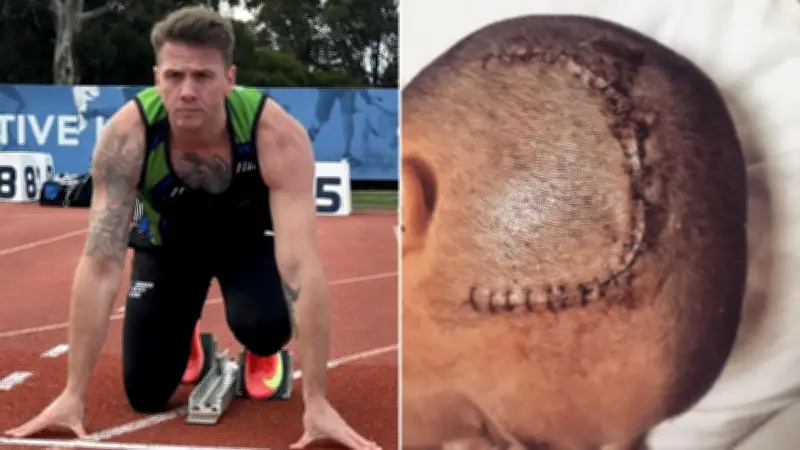
The then-27-year-old underwent emergency brain surgery in Bali after suffering catastrophic head injuries in the crash.
Days after emergency surgery, Winchester had little understanding of the extent of his injuries.
He said he had insurance, held an international motorcycle licence and had been wearing a helmet. Yet while still recovering in a hospital bed just days after emergency brain surgery, he was being interviewed by investigators acting on behalf of an insurer.
"My memory had dropped out. Cognitively, I wasn't really there," he said.
The then-27-year-old had been holidaying in Bali with friends when he came off his motorcycle while riding home one evening.
Looking back, he describes the circumstances with characteristic self-awareness.
"I was 27, on a boys' trip in Bali, riding motorcycles and being a bit of an idiot," he said.
His helmet came off during the crash and he suffered catastrophic head injuries after hitting the road, a kerb and then a tree.
While he has little memory of the incident itself, the stories told to him later painted a confronting picture. As blood poured from his mouth, one of his friends held his throat open to stop him suffocating while they waited desperately for help to arrive. Blood was also streaming from his ears.
An ambulance did not arrive immediately, so a local resident instead drove him to hospital.
Doctors discovered severe bleeding inside his skull and rushed him into emergency surgery.
"I'd split my brain in two places," Winchester said.
Surgeons performed an emergency craniotomy to relieve pressure caused by blood clots building around his brain.
When he woke days later, he had little understanding of what had happened. Still believing he was fine and just in his holiday accommodation, he attempted to get out of bed.
"I discovered my legs didn't quite work the way they used to," he said.
Winchester had to relearn how to walk, consciously thinking through every step as his brain struggled to perform movements most people take for granted.
Life after the accident
Today, nearly a decade later, the effects remain. He is deaf in his right ear, lives with balance and co-ordination issues and lost much of his memory from before the accident.
Doctors have also warned he faces accelerated cognitive decline as a result of his brain injury and subsequent complications.
"I'd say about 75 per cent of my lifetime memories, I don't really remember," he said.
Some memories have returned over time, but many feel distant.
"It's a little bit like if you saw a movie once and someone asked you about it later — you can recall it, but you didn't really live it."
The accident changed the trajectory of his life — and Winchester said for the better.
In the years that followed, Winchester struggled to come to terms with what had happened and admitted he spent a period making "horrible life decisions" while grappling with his mortality.
At 28, warnings about future cognitive decline felt like a distant problem for Winchester.
"Who cares?" he recalled thinking.

The turning point came when he learned he was going to become a father.
"I was like, what the bloody hell am I doing with my life?" he said.
His daughter became the reason to get his life back on track and remains the driving force behind everything he does today. Wanting to set an example, Winchester threw himself into opportunities he might once have dismissed as impossible.
Today, less than a decade after nearly dying in Bali, the 36-year-old is now competing internationally and chasing a place at the Los Angeles Paralympics in 2028.
"Every parent tells their kid that if they work hard, they can do whatever they want," he said. "It's a lot easier for that message to hit home when you've done it yourself."
Winchester prepares for training, a routine he once could not have imagined during the long rehabilitation following his traumatic brain injury.
Winchester says becoming a father gave him the motivation to rebuild his life and pursue elite sport.
Winchester competes in para athletics as a sprinter with ataxia, a co-ordination impairment caused by his brain injury.
"The messages from the right side of my brain don't go to the left side of my body as well as they used to," he said.
Within six weeks of taking up sprinting, Winchester had been selected to represent Australia at the world championships.
Surrounded by Paralympic medallists and elite athletes, Winchester said he felt wildly out of place, more like a spectator than a teammate. He describes himself at the time as an overweight dad who had somehow stumbled into international sport.
"I was just some guy," he said. "I didn't feel like I belonged there."
After dedicating himself fully to the sport and training with the Australian Institute of Sport (AIS) in Canberra, Winchester said the imposter syndrome has finally faded and he finally feels he has earned his place among Australia's best para-athletes.
Winchester competes in para athletics nearly a decade after a motorcycle crash in Bali left him fighting for life and learning to walk again.
Winchester spent his early days in para athletics feeling like an imposter before eventually earning his place among Australia's leading para-athletes.
Looking back, Winchester said the accident taught him lessons he wishes he had learned decades earlier.
"You can wake up and be sorry for yourself, or you can make the most of the time you do have," he said.
"If I'd had this when I was 19 or 20, I probably could have gone to the Olympics," he said.
But when asked what motivates him now, his focus quickly shifted away from sport. Speaking about his three-year-old daughter, Winchester became emotional.
"Everything I do is about my daughter," he said.
Knowing the long-term effects of his brain injury could one day affect how present he is for some of the biggest moments in her life is "probably the hardest thing to deal with".
"I know that probably at a younger age than most, my daughter will have to deal with the fact dad's not quite Superman anymore," he said.
"That's why I'm doing the things that I'm doing now. I want to leave things for her to look back on."