ACT Budget Update: Superficial Success Hides Underlying Fiscal Challenges
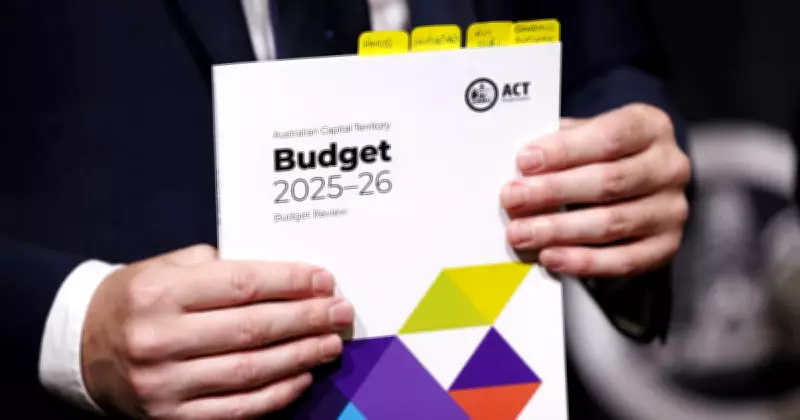
Treasurer Chris Steel presented a mid-year budget review that projected a reduced deficit compared to last year's budget, suggesting the government's cost-cutting measures were yielding results. Released on Thursday, the review maintains the customary projection of a surplus at the end of the forward estimates period.
The Illusion of Stability
While the surface numbers appear neither disastrous nor outstanding, they are unlikely to alter the political landscape for a long-standing administration that faced serious challenges during the summer recess. At that time, the opposition and the Greens engaged in substantial discussions about potentially forming a new government.
Labor politicians have celebrated what they describe as a fiscal achievement, while their political adversaries highlight a much more vulnerable and delicate financial situation. The budget resembles a shattered vase meticulously reassembled with adhesive: it appears intact from afar but lacks the original resilience following multiple external shocks.

Walking on Fiscal Eggshells
Delving deeper into Thursday's figures reveals a government treading carefully on financial thin ice, particularly as borrowing levels escalate. The scenario assumes everything proceeds smoothly: no unexpected funding requirements emerge, population-driven demand remains controlled, infrastructure projects stay within budget, and information technology initiatives avoid failures. How plausible does this sound?
Consider the additional $43.3 million allocated for the 2025-26 public school system. The government awaits a comprehensive review of school resources, with the mid-year update acknowledging that future needs across government-operated classrooms represent a significant risk to current forecasts.
Growing Service Demands and Political Pressures
Although immediate pressure on the health budget may ease through an improved Commonwealth agreement, with updated figures expected mid-year, the educational situation demonstrates the government's ongoing struggle with escalating demand for essential services.
The opposition and ACT Greens persistently advocate for initiatives requiring additional expenditure while criticizing what they perceive as a more severe budget deterioration than officially acknowledged. Many of these proposals would undoubtedly prove popular, and some represent genuinely worthwhile ideas deserving serious governmental consideration.
The Government's Political Dilemma
The administration finds itself in an unusual political predicament. It faces simultaneous pressures to restrain government spending and protect households from increased rate charges. Concurrently, it encounters demands to expand services, often from the same constituencies, whether addressing hospital improvements, constructing swimming facilities, or extending free public transportation.
Budgetary expenditure continues its annual growth throughout the forward estimates period. The government's promoted "city-shaping projects" will exert their own financial influences in coming years. Canberra currently experiences a growth phase, demanding new infrastructure and upgrades nearly four decades after the Commonwealth concluded its generous financial support, leaving the capital to self-govern.
The Debt Burden and Future Implications
By the conclusion of the forward estimates, ten cents of every dollar spent by the ACT government will service borrowing interest. This interest obligation must be covered by internally generated revenue for years ahead. Whether it's appropriate to burden future generations with infrastructure costs they'll eventually utilize becomes a matter of political philosophy.
While fiscal constraints should theoretically ease once significant city development concludes and historical superannuation liabilities are addressed, likely during the 2030s, achieving genuinely sustainable budgeting requires the territory to operate within its financial means.
The time has arrived for all political factions to clearly articulate what fiscal sustainability genuinely signifies for their respective platforms and for Canberra's future.