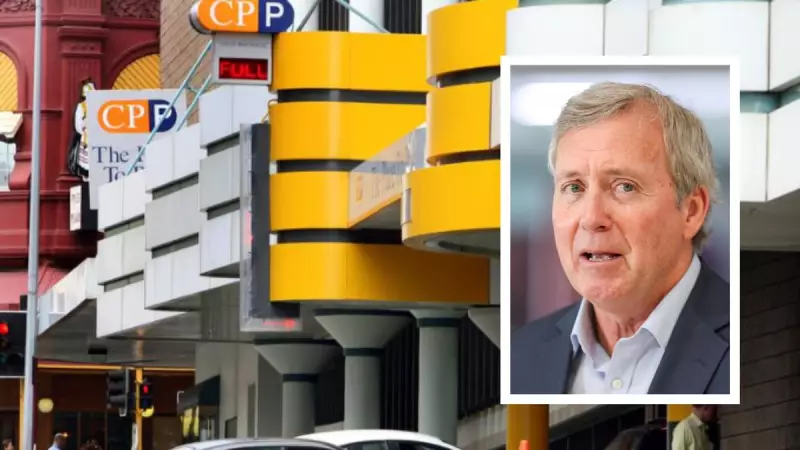
Western Australia's Transport Minister has pledged to lift the veil of secrecy surrounding the multi-million dollar fund generated by Perth's contentious CBD parking levy, promising greater transparency after years of criticism.
Minister Responds to 'Slush Fund' Allegations
Transport Minister Reece Whitby has directly addressed concerns that the Perth Parking Levy has operated as a 'slush fund', with revenue collected not being clearly tied to improvements within the city centre. The levy, applied to non-residential parking bays within the CBD and parts of West Perth, raises approximately $30 million annually.
Since its inception in 1999, the levy has amassed a staggering $300 million. However, the specific allocation and outcomes of this substantial sum have often been opaque, leading to persistent accusations from business groups and the opposition that the money is not being effectively reinvested to benefit the city that generates it.

Whitby acknowledged these criticisms, stating the government needs to be more transparent. He committed to implementing a new, clear framework for reporting how the funds are spent, ensuring the public can see the direct link between the revenue collected and projects designed to enhance the CBD.
Where Does the Parking Levy Money Go?
The funds from the parking levy are directed into the Transport Portfolio's Consolidated Account. According to the government, this money supports a wide range of initiatives aimed at improving access to and within the city centre. These include:
- Public transport services and infrastructure.
- Projects that manage traffic flow and reduce congestion.
- Initiatives that promote walking and cycling in the CBD.
- Overall city-access projects.
Despite this broad mandate, the lack of granular, project-specific reporting has been the core of the transparency issue. Shadow Transport Minister Libby Mettam has been a vocal critic, labelling the fund a 'slush fund for government' and arguing that Perth businesses contributing to the levy deserve to see a direct return on their investment in making the CBD more attractive and accessible.
A Push for Clearer Reporting and CBD Revitalisation
The commitment to transparency comes amid a broader push to revitalise Perth's central business district. Business groups like the Committee for Perth and the Property Council of Australia have long advocated for the levy funds to be visibly and strategically deployed to address the city's challenges, particularly outside of regular business hours.
'We need to see that money invested back into the city to bring people back into the city,' stated a Property Council representative, highlighting the need for evening and weekend activation.
Minister Whitby's promise indicates a shift in approach. The proposed new reporting model is expected to detail specific projects and outcomes funded by the levy, moving beyond high-level accounting. This aims to demonstrate tangible benefits such as improved public transport services, better pedestrian pathways, or upgraded cycling networks directly attributable to the levy revenue.
While the exact format and timeline for the new transparency measures are yet to be fully detailed, the minister's acknowledgment marks a significant step. It responds to sustained pressure for accountability over a significant revenue stream intended to ensure Perth's CBD remains a vibrant, accessible, and well-serviced heart for the state.