WA Labor's Infrastructure Agenda Faces Scrutiny One Year After Election Victory
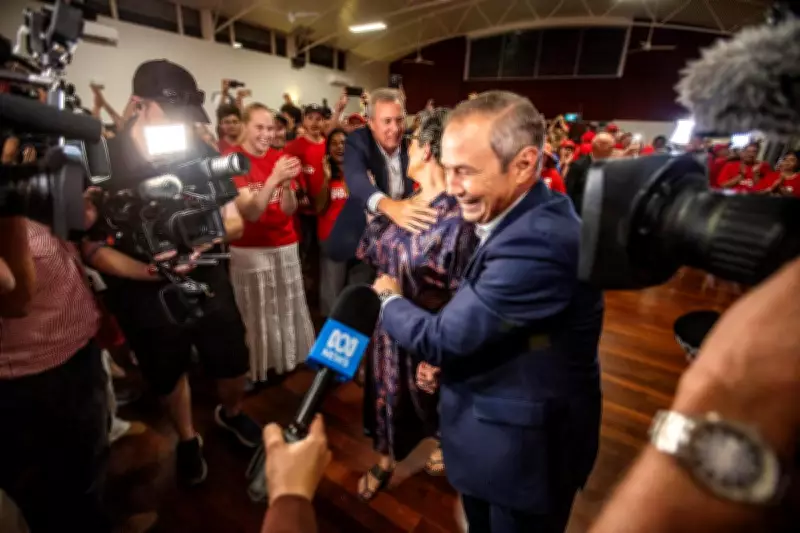
Twelve months have passed since Roger Cook led the Labor Party to a decisive victory in the Western Australian state election, securing a third term in government. Polling data indicates that if an election were held today, Labor would still dominate, largely because the opposition, under new leader Basil Zempilas, has struggled to present itself as a viable alternative. The political landscape remains largely unchanged, with Labor leveraging its financial strength to push forward with ambitious projects.
Financial Surplus and Infrastructure Commitments
Labor entered the election with $3.4 billion in commitments, and it has ample resources to deliver on these promises. In the first six months of the current financial year, the government recorded an operating surplus of $2.3 billion, positioning it for an eighth consecutive surplus since taking office in 2017. This financial windfall is driven by substantial iron ore and gold royalties, along with annual GST distributions totaling $43 billion since 2019.
On the infrastructure front, Labor is advancing key projects, including the $1.8 billion Women's and Babies Hospital at Murdoch, expansions at Osborne Park Hospital, and new emergency departments at Sir Charles Gairdner, Royal Perth, and Midland hospitals. Additionally, contentious initiatives like the $217 million racetrack and recreation precinct at Burswood and increased ferry services on the Swan River are proceeding.

Persistent Housing and Health Challenges
Despite these efforts, Western Australia grapples with significant housing and health issues. The public housing waitlist has ballooned to 23,168 people, while available properties for sale in Greater Perth number under 3,000, with median house prices hovering around $1 million. Rental prices have surged, often exceeding $700 per week, exacerbating affordability concerns.
In the health sector, ambulances and patients face prolonged waits at emergency departments, with St John WA reporting 4,892 hours of delays outside hospitals last month alone. In response, the Cook Government recently announced a $140 million winter strategy, which includes contracting more private sector beds and offering free flu vaccinations. Further investments of $1.5 billion have been allocated for hospital redevelopments and maintenance, but critics argue that immediate relief is urgently needed for those suffering.
Labor and Opposition Dynamics
Premier Roger Cook has committed to contesting the 2029 election, aiming to quell speculation about an early retirement similar to Mark McGowan's departure. However, internal party unity could be tested, with figures like Rita Saffioti and Amber-Jade Sanderson eyeing leadership roles, and backbenchers seeking ministerial positions.
On the opposition side, Basil Zempilas has increased the Liberal-National Alliance's media presence, but polling suggests he is not yet viewed as a credible alternative premier. The opposition lacks a compelling policy vision, and with Labor's massive election win, it cannot rely solely on voter fatigue to gain ground. Signature Labor projects like Metronet, completed at $12.5 billion and over budget, highlight both achievements and shortcomings.
Future Prospects and Workforce Shortages
Another pressing issue is the construction workforce crisis. WA faces a severe shortage of skilled and unskilled labor, prompting Cook to request 5,000 skilled migrants under a Commonwealth scheme, though only 3,400 have been approved. The government is now engaging with WA business leaders through roundtables to devise solutions.
In its first year of the new term, Labor has been criticized for slow action on domestic issues, such as tobacco legislation and hospital spending, which only advanced after media scrutiny. To achieve a historic fourth term, Labor must address the state's immediate needs more swiftly and effectively, balancing its infrastructure ambitions with the everyday struggles of West Australians.