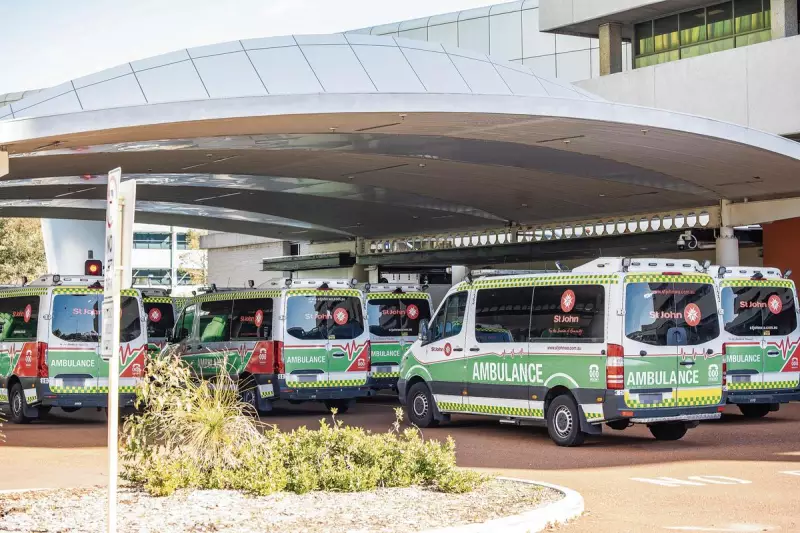
St John Ambulance in Western Australia has publicly acknowledged it failed to meet its own minimum staffing benchmarks for emergency ambulance crews over a recent four-week period. The admission follows a formal investigation by the state's health regulator, yet the organisation strongly refutes claims that this led to emergency 000 calls going unanswered.
Investigation Reveals Staffing Shortfalls
The Department of Health launched an investigation after receiving concerning reports about ambulance service levels. The probe focused on a four-week snapshot and found that St John WA did not achieve its required minimum staffing levels. These levels are a critical component of the organisation's contract with the WA government, designed to ensure sufficient paramedic and ambulance availability across the metropolitan area.
Despite the shortfall, a spokesperson for St John WA insisted that all emergency Triple Zero (000) calls were answered and responded to. They attributed the staffing gaps to a combination of unexpected, high-demand surges in ambulance call-outs and planned staff leave. The organisation maintains that while minimum targets were missed, patient care was not compromised.

Union Raises Alarm Over Systemic Issues
The United Workers Union (UWU), representing paramedics, has expressed deep concern over the findings. UWU secretary Carolyn Smith stated the results confirm what paramedics have been reporting for months: chronic understaffing is placing immense pressure on the frontline workforce.
"This isn't just about numbers on a spreadsheet," Ms Smith said. "It's about exhausted paramedics working double shifts, it's about ambulances stuck ramping at hospitals for hours, and it's ultimately about the safety of the WA community." The union directly links the staffing crisis to the worsening problem of ambulance ramping, where crews are stuck waiting at overcrowded hospital emergency departments, unable to hand over patients and return to the road.
Government and Organisational Response
In response to the investigation, the Department of Health stated it is working closely with St John WA to address the identified issues. A government spokesperson emphasised that ensuring reliable ambulance services is a top priority and that the contract with St John includes mechanisms to manage performance.
St John WA outlined several steps it is taking to improve staffing reliability. These include an aggressive recruitment campaign to bring on more paramedics, offering incentives for existing staff to take on extra shifts, and reviewing internal processes to better manage leave during peak demand periods. The organisation reiterated its commitment to meeting its contractual obligations and serving the community.
The situation highlights the ongoing strains within Western Australia's pre-hospital care system. While St John WA denies any unanswered emergency calls, the failure to meet basic staffing benchmarks raises questions about system resilience and the long-term sustainability of ambulance services amid growing demand.