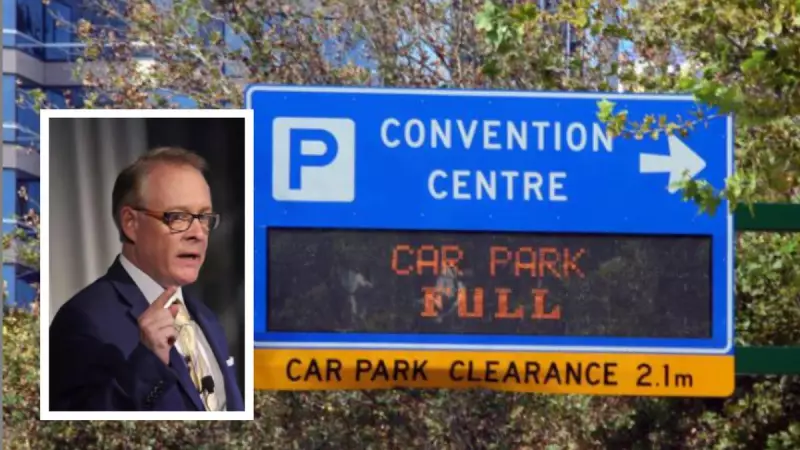
The Property Council of Western Australia has launched a furious attack on the Cook Government, following the revelation of a new state budget measure that will impose a levy on Perth CBD parking spaces, expected to raise a staggering $300 million over four years.
A Budget Surprise Sparks Industry Outrage
The contentious policy, confirmed in the recent state budget papers, introduces an annual levy of $400 on every non-residential parking bay within the Perth CBD, Northbridge, and West Perth. The levy is projected to generate $73.4 million in the 2024-25 financial year alone, with the total haul forecast to reach $300 million by 2027-28.
Sandra Brewer, the Executive Director of the Property Council WA, did not mince words, labelling the move a "stealth tax" that unfairly targets businesses and workers in the city centre. "This is a tax on people who work in the city," Brewer stated emphatically. She argued that the levy directly contradicts the government's own stated goals of revitalising the Perth CBD and encouraging a return to office work post-pandemic.

Economic Recovery at Risk, Industry Warns
The Property Council's primary concern is the potential for this new cost to be passed down the chain, ultimately burdening tenants, employees, and consumers. Brewer warned that building owners, faced with the new levy, would have little choice but to increase parking fees or incorporate the cost into overall service charges. This, she contends, makes the Perth CBD less competitive compared to suburban business hubs with free parking, threatening the fragile recovery of the city's core.
"At a time when we need to attract people back into the city, this levy does the exact opposite," Brewer said. The organisation fears it will act as a disincentive for businesses to establish or maintain a presence in the CBD, undermining investment and economic activity in the state's premier commercial district.
Government's Position and the Road Ahead
The state government has defended the levy as a necessary revenue measure. A government spokesperson indicated that the funds would contribute to general budget priorities, including cost-of-living relief for households. The policy is framed as part of a broader fiscal strategy, rather than a dedicated transport or infrastructure fund.
However, this justification has done little to appease the property sector. The Property Council is now calling for urgent consultation and a reconsideration of the policy's design and impact. They argue that if a parking levy is to exist, it should be reinvested directly into improving public transport and amenity within the CBD to offset its negative effects, not absorbed into consolidated revenue.
The introduction of this levy sets the stage for a significant clash between the Cook Government and one of the state's most influential industry bodies. With the first bills due in the coming financial year, all eyes will be on how businesses adapt and whether the government's revenue predictions hold firm against the backlash from the heart of Perth's commercial landscape.