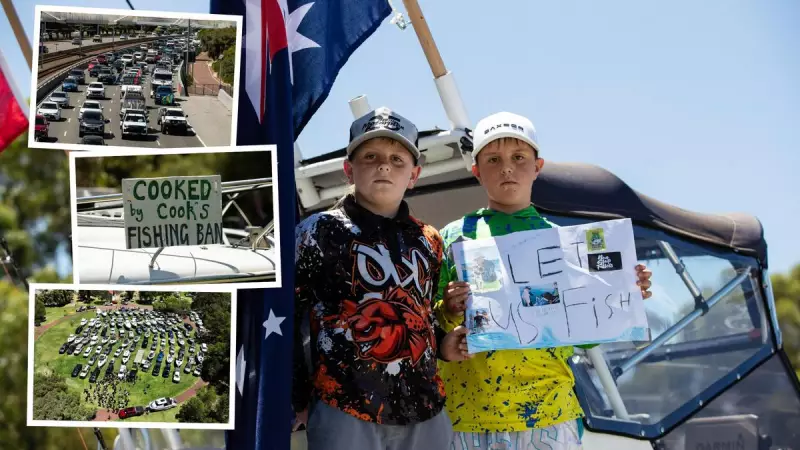
Hundreds of recreational fishers have made their frustration known, driving in a large convoy to protest the Western Australian government's controversial decision to extend a ban on catching demersal fish. The protest, which saw vehicles trail from Perth to the steps of State Parliament, highlights deep community anger over the policy.
Convoy of Discontent Rolls into Perth
The protest action, organised by the Recfishwest advocacy group and supporters, involved a significant convoy of vehicles that travelled from the northern suburb of Hillarys Boat Harbour to Parliament House in West Perth. This visible demonstration aimed to send a clear message to the Cook Labor government about the impact of its fisheries management decision.
The core issue is the government's extension of a seasonal ban on catching demersal scalefish, which includes popular species like dhufish, pink snapper, and baldchin groper. The closure, which traditionally applied for part of the year, has been significantly lengthened. For the West Coast Bioregion, stretching from Kalbarri to Augusta, the ban now runs from October 15 to January 31. In the South Coast Bioregion, from Augusta to the South Australian border, it is in effect from October 15 to December 15.

Government Defends Ban Amidst Community Backlash
The state government, led by Fisheries Minister Don Punch, defends the extended closure as a necessary measure based on scientific advice. Officials argue that demersal fish stocks are under severe pressure and require drastic action to recover. The government's stated goal is to rebuild these iconic species to sustainable levels for future generations.
However, this justification has failed to placate the recreational fishing community. Protesters and advocacy groups argue that the extended ban is a blunt instrument that unfairly punishes responsible fishers and will have severe economic and social consequences. They contend that the science is flawed and that the government has not adequately considered alternative, more targeted management strategies.
Recfishwest CEO Dr. Andrew Rowland has been a vocal critic, stating the decision was made without proper consultation and will devastate fishing families, regional communities, and businesses that rely on the recreational fishing sector. The protest convoy was a physical manifestation of this widespread discontent.
Economic and Social Ripples from the Decision
The extended ban is expected to have far-reaching effects beyond the water. The recreational fishing industry is a major economic driver in regional Western Australia, supporting tackle shops, charter boat operators, tourism, and hospitality. Many fear significant job losses and business closures in coastal towns that depend on fishing tourism.
Furthermore, the protest underscores a feeling among many fishers that their lifestyle and cultural practices are being eroded. Recreational fishing is a cherished pastime for thousands of West Australian families, and the extended ban is seen as an overreach that strips away opportunities for responsible enjoyment of the state's marine resources.
The convoy protest has successfully placed the issue firmly on the political agenda. The opposition has seized on the community anger, criticising the government's approach. The challenge now for the Cook government is whether it will hold firm on its policy or seek a compromise to address the community's valid concerns about consultation, economic impact, and the long-term management of a shared public resource.