In a bid to turn the page on a year of internal disarray, Canberra Liberals leader Mark Parton has unveiled a reshuffled shadow cabinet, presenting a picture of unity that the opposition desperately needs.
A Show of Unity After a Fractious Year
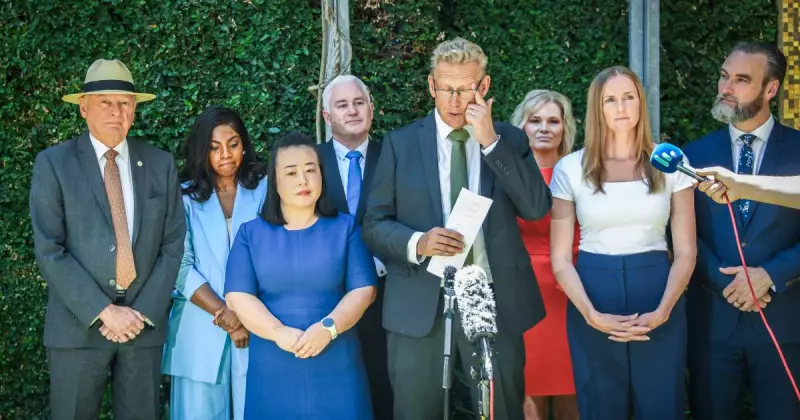
The entire Liberal party room gathered in a Legislative Assembly courtyard on Thursday, December 7, 2025, for the announcement. The event was Mr Parton's first major political manoeuvre since becoming leader and was billed as a demonstration of a fresh start.
Notably present was Elizabeth Lee, the former leader who had spent a year on the backbench. Her return to the frontbench fold marks a significant moment, following the debacle that led to the resignation of former deputy leader Leanne Castley. Also back was Peter Cain, who had quit the shadow cabinet mid-year citing a lack of support for the previous leadership team of Ms Castley and Jeremy Hanson.

The scene was a stark contrast to the public divisions that have plagued the party for the past twelve months, which many have labelled a 'lost year' for the opposition.
Key Players in New Roles
The week also saw the resolution of another key position. Jeremy Hanson was elected unopposed as the Speaker of the Legislative Assembly on Tuesday morning. This occurred despite a last-minute possibility that Elizabeth Lee might have marshalled numbers for the role.
Ms Lee revealed she had received indications of support from the crossbench, but Chief Minister Andrew Barr stated other Liberal candidates lacked the necessary Assembly-wide backing. The simple political arithmetic suggests Labor chose not to support Ms Lee, ensuring Mr Hanson's elevation.
Mr Hanson, who has openly stated his intention to retire in 2028, has pledged to be an even-handed Speaker, promising an end to the partisan interjections and combat of the past.
The Challenge of Convincing Canberrans
The immediate challenge for Mr Parton and his team is to convince the public that this united front is substantive and not merely a cosmetic rearrangement of the same personalities. After a year where the opposition advanced few fresh ideas and was often sidelined by an influential crossbench, the need to rebuild credibility is urgent.
Mr Parton used the final sitting week of the year to declare the Liberals' intent to 'reclaim Canberra for suburban Canberrans'. While this strategy of appealing to the city's outer suburbs is not new, observers noted the message carried more weight coming from Mr Parton, the member for Brindabella, who embodies the suburban lifestyle the party seeks to represent.
However, the opposition's task is likened to cricket selectors trying to fix a failing Test team; reshuffling the order can only achieve so much if the fundamental talent and strategy are lacking. Mr Parton's success will hinge on uplifting his team's skills and directing them toward the singular goal of winning government in 2028.
A Broader Political Landscape
The parliamentary year concluded with a sense of unease, and the government led by Andrew Barr has also faced its own struggles. Its 'tough decisions' budget landed poorly, with Labor seemingly reluctant to fully defend its narrative of fiscal restraint. Ongoing disputes with the Commonwealth over hospital funding promise more difficult choices ahead.
With three years remaining in the term, the government must refine its message. If it fails to do so, the Liberals' slogan of reclaiming the city for the suburbs—however vague—could gain traction and become a compelling political argument in the capital.
The coming months will test whether the Canberra Liberals' newly displayed cohesion is a durable foundation for revival or merely a temporary facade.