The Hidden Workshop Preserving Parliament's Heritage
Maintaining the furniture at Parliament House has been compared to the mythical task of repainting the Sydney Harbour Bridge – a continuous cycle where work never truly finishes. While the bridge analogy may be more folklore than fact, the reality of preserving the building's interior is an endless, meticulous endeavour requiring specialised skills passed down through generations.
Where Tradition Meets Modern Parliament
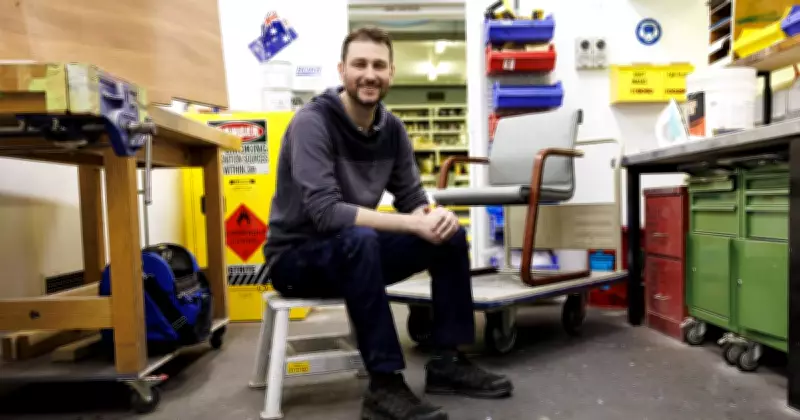
This expertise resides in the concealed corridors of Parliament House's basement, where a small team works diligently to protect and restore the building's physical heritage. Among them is Anthony Stih, a master French polisher whose daily responsibilities span from delicate wood restoration to creating essential signage throughout the parliamentary complex.
During a visit to the fabrics workshop, located in one of the building's winding underground passages, a wooden seat back awaits repair and retouching. This seemingly simple task represents just one of several hundred identical pieces located in the public galleries of both parliamentary chambers, all requiring the team's careful attention.

Mastering Centuries-Old Techniques
After completing a carpentry apprenticeship, Mr Stih qualified in French polishing – a traditional wood finishing method that uses shellac to create a high-gloss finish that enhances natural wood colour and texture. He later operated an antique restoration business for twelve years, perfecting skills that prove invaluable in Parliament House, where much furniture dates back to the building's 1988 opening.
"You can bring something that's two-, three-, four-hundred years old and restore it the way it's supposed to be restored," Mr Stih explains. "Doing finishes by hand, being able to restore something without stripping the whole thing and working on expensive pieces of furniture as well."
From Name Plates to Replica Maces
The team's responsibilities extend across the entire building, maintaining everything from the ninety-three wooden bench seats scattered throughout to the timber walls and parquetry floors in the marble foyer. Recently, they restored a coffee table from the Prime Minister's sitting room among other significant items.
Adjacent to the fabrics workshop lies the paint shop, where technicians mix every colour to precise specifications, including the distinctive "Parliament House grey" and more than ten different shades of white. Beyond this space is the signage workshop, where the team produces nearly all building signage, from glass name plates outside parliamentarians' offices to directional signs in hallways and stairwells.
"We tackle anything. If the King is coming, we'll make the signage for that," Mr Stih states proudly.
A Day in the Workshop
On any given day, the workshop buzzes with diverse projects. One workbench holds portraits of newly elected members of parliament being prepared for display, while another contains timber pieces adorned with laser-cut sticker motifs that will assemble into wooden replicas of the Speaker's mace. The team is crafting approximately one hundred sixty such replicas for schools participating in the Speaker's civics program.
Among their aspirations is acquiring a new printer that would enable in-house production of Braille signage, improving accessibility throughout the parliamentary complex.
Unexpected Passions and Ongoing Discoveries
Despite his training as a cabinetmaker and French polisher, Mr Stih finds unexpected satisfaction in the sign shop. "It's not something that I thought I would do in my lifetime, but to come in and learn that and pretty much master it has been a really good feeling," he reflects.
When not in the workshop, Mr Stih can be found throughout the building, repairing scratches on wooden floors and monitoring every inch of timber. Even after six years working at Parliament House, the building's scale continues to astonish him.
"It's massive. I've been here six years and I don't think I've seen every room in the place. I get around, but there's still a lot to see," he admits, highlighting how this hidden workshop preserves both physical heritage and traditional skills within Australia's most important political institution.