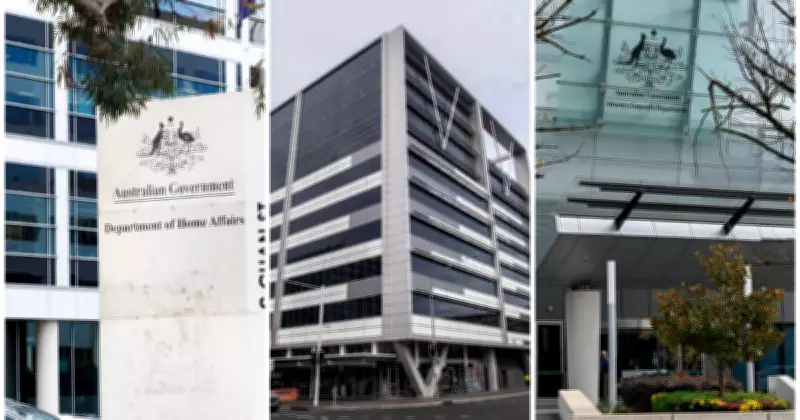
New data has shed light on which Australian Public Service (APS) departments are the best and worst for executive promotions, revealing significant disparities across the public sector.
Top Performers in Executive Promotions
The Department of the Prime Minister and Cabinet leads the pack, with the highest rate of executive promotions relative to its size. Other high-performing agencies include the Treasury, the Department of Foreign Affairs and Trade, and the Australian Taxation Office. These departments have consistently promoted staff to senior executive service (SES) roles at a faster pace than their counterparts.
Factors Behind Success
Experts attribute the success of these departments to several factors, including a strong focus on talent management, clear career pathways, and a culture that encourages internal mobility. The Department of the Prime Minister and Cabinet, for instance, has a reputation for grooming high-potential staff through targeted development programs.

Struggling Departments
At the other end of the spectrum, some departments have significantly lower promotion rates. The Department of Social Services, the Department of Agriculture, Fisheries and Forestry, and the Department of Infrastructure, Transport, Regional Development, Communications and the Arts are among the worst performers. These agencies have seen fewer staff advance to executive levels, raising concerns about career stagnation.
Reasons for Low Promotion Rates
Low promotion rates in these departments may be linked to budget constraints, smaller executive footprints, or less emphasis on internal career development. The Department of Social Services, for example, has faced ongoing staffing challenges and restructuring, which may have limited opportunities for advancement.
Implications for APS Staff
For APS employees, these findings highlight the importance of strategic career planning. Staff seeking executive roles may benefit from targeting departments with stronger promotion records or seeking cross-agency moves. However, experts caution that promotion rates are just one factor to consider, as job satisfaction, work-life balance, and mission alignment also matter.
Broader Context
The data comes as the APS continues to undergo significant reform under the Albanese government's agenda. The government has committed to building a more capable and responsive public service, with a focus on leadership development and succession planning. These efforts may help address disparities in promotion opportunities across departments.
Methodology
The analysis is based on APS employment data from the Australian Public Service Commission, covering promotions to SES levels over the past five years. Rates were calculated as a proportion of total staff in each department to account for size differences.