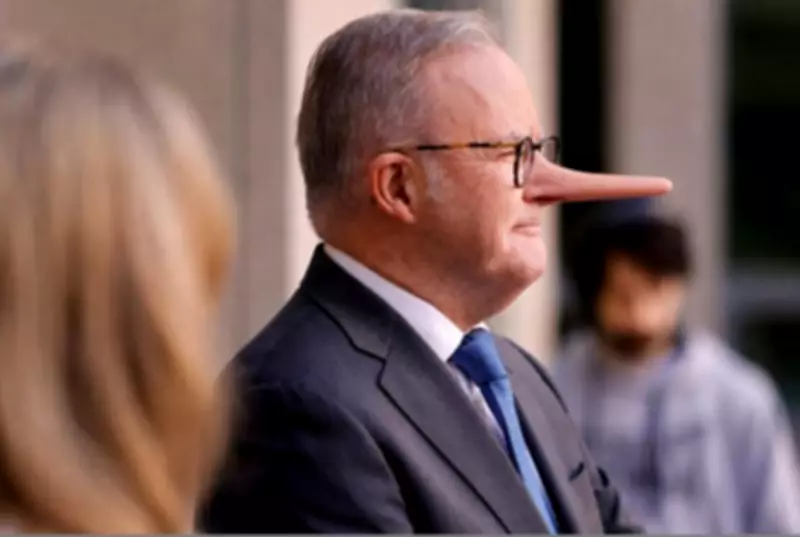
Ben Harvey has taken aim at Prime Minister Anthony Albanese, accusing him of blatant duplicity over tax policy following the federal Budget. In a scathing opinion piece for The West Australian, Harvey argues that Albanese’s pre-election promise of no new taxes has been shattered by the Budget’s revenue-raising measures.
A broken promise on tax
Harvey points out that during the election campaign, Albanese repeatedly assured voters there would be no new taxes under a Labor government. Yet the Budget, delivered just weeks after the election, includes several tax increases that directly contradict that pledge. “The audacity is breathtaking,” Harvey writes.
The opinion column highlights specific measures such as changes to superannuation tax concessions, increases in excise duties, and tighter rules for multinational tax avoidance. While the government frames these as “closing loopholes” or “fairness measures,” Harvey labels them as new taxes by another name.

Spin versus reality
Harvey criticises the government’s messaging, saying it tries to spin tax hikes as something else. “If it looks like a tax, smells like a tax, and hits your wallet like a tax, it’s a tax,” he writes. He accuses Albanese of treating voters like fools, expecting them to forget his election promises.
The article also notes that the Budget’s tax measures disproportionately affect middle-income earners and small businesses, groups that were supposedly Labor’s priority. Harvey argues this is a betrayal of the trust placed in Albanese by working Australians.
Political fallout
Harvey warns that this duplicity could have long-term consequences for Labor’s credibility. He suggests that if the government cannot be trusted on tax, voters will question its integrity on other issues. The piece concludes with a call for Albanese to admit the truth: that the Budget includes new taxes, and that his pre-election promises were not kept.
The opinion has sparked debate, with some readers agreeing that the government should be held accountable, while others defend the Budget as necessary for fiscal responsibility. Regardless, Harvey’s critique underscores the tension between election rhetoric and governing reality.