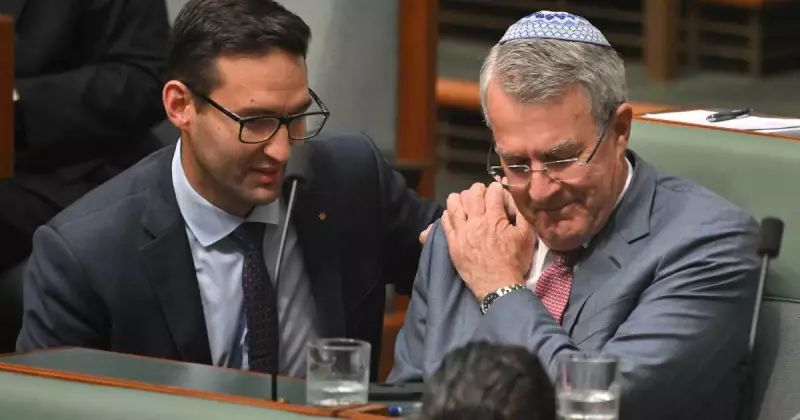
The Australian Parliament convened in a sombre and historic session to honour the 15 innocent lives lost in the devastating anti-Semitic terrorist attack at Bondi Beach. In a rare display of unity, politicians from all sides gathered as the names of the victims were solemnly read aloud.
A Moment of National Grief and Historic Firsts
Following the recitation of the victims' names, a profound minute's silence enveloped the House of Representatives. The victims remembered were Matilda, Boris and Sofia Gurman, Boris Tetleroyd, Reuven Morrison, Edith Brutman, Marika Pogany, Rabbi Eli Schlanger, Rabbi Yaakov Levitan, Dan Elkayam, Peter Meagher, Tibor Weitzen, Adam Smyth, Alexander Kleytman and Tania Tretiak.
In a powerful address, former Attorney-General and prominent Jewish Labor MP, Mark Dreyfus, spoke directly to the national wound. "You don't have to be Jewish to feel this in your chest; an attack like this hurts all of us," he told the chamber, wearing his kippah. Mr Dreyfus, whose great-grandparents perished in the Holocaust, then recited the Mourner's Kaddish, a centuries-old Jewish prayer for the dead. This marked a historic first, believed to be the initial time the ancient Aramaic language has been spoken in the House.

Leadership Vows and a Community's Anguish
Prime Minister Anthony Albanese, who had recalled Parliament two weeks early specifically to respond to the December 14 atrocity, moved a formal condolence motion. He placed the responsibility to prevent future attacks squarely on his own shoulders, stating it "starts with me". Mr Albanese paid tribute to the indelible contributions of Jewish Australians and made a solemn pledge: "We will not meet your suffering with silence. We will not leave you in darkness."
Opposition Leader Sussan Ley spoke gravely of lives brutally cut short and posed the critical question facing the nation: "How did this happen? And how can we make sure it never happens again?" She described the anti-Semitic hate that fuelled the Bondi attack as having crept out of the shadows since the October 7, 2023 Hamas attacks, festering "like a slow creeping disease" in public spaces and institutions.
The emotional weight of the debate was palpable, especially from Jewish MPs. Victorian Labor MP Josh Burns shared how his first thought upon hearing of the unfolding massacre was for his own daughter's safety, illustrating the heightened fear within the community. His voice breaking, he stated, "Not every act of hate ends in violence, but every act of violence begins with hate."
Calls for Action Amid Political Division
Despite the unified grief, political divisions on the path forward were immediately evident. Liberal frontbencher Julian Leeser, a sixth-generation Jewish Australian, expressed a profound sense of anger and betrayal within his community. He criticised a "failure of moral leadership" that allowed anti-Semitism to flourish in universities and the arts, and called for a decisive move away from the political "cul-de-sac" of the past 800 days.
However, the prospect of swift, bipartisan legislative action appeared dim. The Coalition revealed it would not support the hate speech laws drafted by the Labor government, leaving open the crucial question of how Parliament will tangibly tackle the sources of violent extremism.
Allegra Spender, the independent MP for Wentworth which includes Bondi, highlighted the stark change in daily life for Jewish Australians, recalling a childhood without the guards and barriers now commonplace at schools and synagogues. She called for a response that is both "strong and soft"—resolute against hate but protective of common humanity.
The session concluded with a shared resolve from all speakers to honour the victims through meaningful action, yet the precise mechanism for achieving this national imperative remains the Parliament's most urgent and contested challenge.