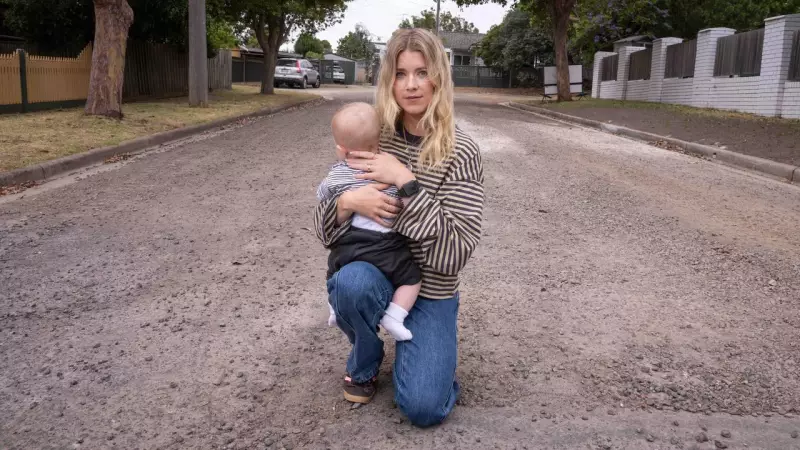
The City of Greater Geelong is facing serious accusations of discrimination after refusing to seal a rough and potholed court in Belmont, leaving a resident with a disability stranded and the broader community fuming over a persistent safety hazard.
A resident's plea falls on deaf ears
Belmont local Kylie Fisher, who lives with a physical disability and relies on a mobility scooter, says her life has been severely impacted by the council's inaction. She has been pleading with the council for years to seal the crumbling surface of Mooltan Avenue court, but her requests have been consistently denied.
"I can't get out of my own street," Ms Fisher stated bluntly. The unsealed, uneven surface, riddled with potholes and loose gravel, makes it impossible for her to navigate safely in her scooter, effectively trapping her at home. She has been forced to rely on friends and family to ferry her to medical appointments and run essential errands.

Her formal complaint to the council, lodged in a bid to have the road upgraded, was dismissed. The council's response, she claims, was that sealing the court was "not a priority." This decision has sparked outrage and allegations that the council is failing in its duty to provide equitable access for all residents.
A community-wide safety crisis
The issue extends far beyond one resident's access. Neighbours describe the court as a dangerous thoroughfare for everyone. The poor condition poses significant risks.
Children playing in the street are at risk of injury from falls on the rough surface or loose stones. The dust created by vehicles kicking up gravel is a constant nuisance, forcing residents to keep their windows closed and coating homes and cars in a layer of grime. During wet weather, the area turns into a muddy quagmire, and the potholes become hidden water traps.
Residents argue the council is neglecting its responsibility to maintain safe local infrastructure. They point out that other streets in the area have been upgraded, questioning why Mooltan Avenue court continues to be overlooked despite the obvious safety and accessibility concerns raised repeatedly by the community.
The council's stance and what happens next
When confronted, a City of Greater Geelong spokesperson defended the decision, citing a rigorous process for prioritising roadworks across the municipality. The council maintains that its limited infrastructure budget must be allocated to projects deemed to have the highest need based on technical assessments and broader community benefit.
However, this explanation offers little solace to Kylie Fisher and her neighbours. They view the refusal as a clear case of the council ignoring the needs of a vulnerable resident and failing to address a documented public safety issue. The community's frustration is palpable, with many vowing to continue their campaign until the road is finally sealed.
The accusation of discrimination places significant pressure on the council to revisit its decision. It raises important questions about how local governments balance budgetary constraints with their obligations under disability discrimination laws and their fundamental duty to ensure safe, accessible communities for every resident.