Say goodbye to your Friday night Chinese takeaway. Forget Greek festivals, Lunar New Year celebrations, Italian sweets in suburban corner cafes, or that sneaky late-night Halal snack pack.
The diversity of modern Australia has become so ingrained in everyday life that most people barely notice it. Cultural influences from around the world can be found everywhere, from the food Australians eat and the languages spoken in school playgrounds to the festivals celebrated in local communities and the businesses that line suburban shopping strips.
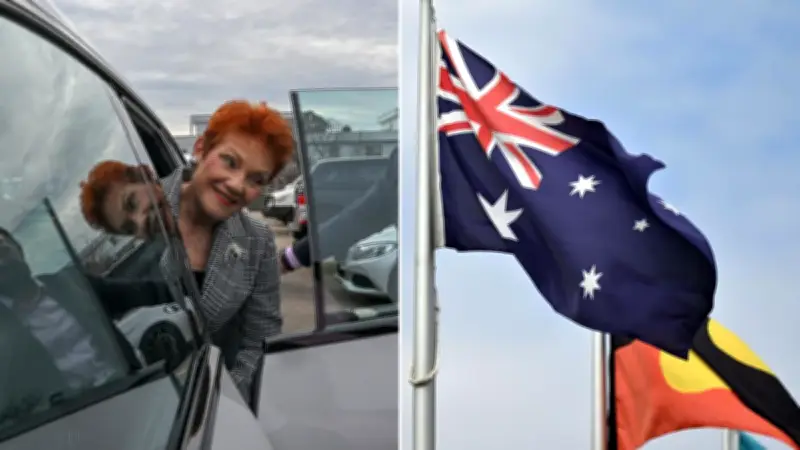
Despite this, One Nation leader Pauline Hanson declared Australia “must be monocultural” during a speech at the National Press Club this week, arguing that while Australia can be “multiracial” it “cannot be a multicultural society”.

It is a concept that might sound simple enough, but one that becomes far more complicated the moment you try to picture it. What exactly disappears in a monocultural Australia? Which traditions remain? Which cultures are embraced, and which are expected to assimilate? And who gets to decide what being Australian looks like in the first place? For one expert, the answer is simple: it would be a completely different country from the Australia people know today.
More than immigration
Dr Luara Ferracioli, a political philosopher at the University of Sydney who specialises in migration and citizenship, told 7NEWS.com.au a monocultural society would require governments to decide what culture Australians should embrace and actively promote.
“The idea would be that the state dictates what culture everyone should subscribe to,” she said. While the concept is often framed around immigration, Ferracioli said its impact would extend well beyond migrant communities because culture influences far more than ethnicity or nationality. The traditions people observe, the values they hold, the communities they belong to and the way they choose to live their lives all contribute to Australia’s cultural landscape.
“Some ... groups in society are going to bear the brunt of this if we were ever to become a monocultural society,” she said. “It would touch us all because there’s so much cultural variation.” “Not all Australians live the same way. They don’t all value the same thing. They don’t all care about the same thing.”
The challenge, Ferracioli argues, is that there is no single vision of Australian life. Even within communities whose families have lived in Australia for generations, people have vastly different priorities, beliefs, lifestyles and traditions.
Ferracioli argues the idea conflicts with the foundations of a liberal democracy, where governments are expected to protect citizens’ freedom to pursue their own beliefs and ways of life rather than directing them towards a preferred cultural model. “You cannot both live in a liberal society and a monocultural society,” she said.
What culture would Australians be expected to adopt?
One of the biggest questions raised by Hanson’s proposal is deceptively simple: which culture would become the national standard? Australia is home to hundreds of languages, religions, traditions, and lifestyles, with almost half of all Australians having at least one parent born overseas. The question becomes even more complicated when considering Australia’s history. If monoculturalism requires a dominant culture, whose culture would it be? Indigenous culture, which predates European settlement by tens of thousands of years? British traditions inherited through colonisation? Or some modern hybrid of the two? The country has spent decades evolving into a society where different cultural traditions exist alongside one another, making it difficult to identify a single set of customs or values that could realistically represent everyone.
“Even among Australians who were born here, whose parents were born here, whose grandparents were born here, there will be enough cultural variation,” she said. “They don’t all value and care about the same things.”

A surfer living in a coastal town, a family running a farm in regional Australia and a young professional living in Sydney’s inner city may all have vastly different lifestyles, priorities and traditions. They may hold different religious beliefs, have different views about family and community life and spend their time in completely different ways, despite all identifying as Australian. Ferracioli says any attempt to define one version as the “correct” Australian culture would inevitably marginalise large sections of the population because it would require governments to decide which traditions and lifestyles should be encouraged and which should sit outside the national mainstream.
A very different Australia
The most visible changes would be found in everyday life. Australia’s food, arts, music, sport and business sectors have all been shaped by successive waves of migration, with cultural influences from around the world becoming woven into the Australian way of life over generations.
A simple scroll through a food delivery app in a major city will reveal hundreds of options for Chinese, Italian, Thai, Vietnamese, Indian, Japanese and Lebanese meals. What were once considered foreign cuisines have become staples of Australian dining habits, enjoyed by people from every background.
The same is true beyond food. Cultural festivals attract millions of visitors every year, while migrant communities have helped shape everything from local shopping precincts and small businesses to professional sport, television, music and the arts. Removing those influences would create a nation that many Australians would struggle to recognise.
“It would be a completely different country. It wouldn’t be the Australia we recognise,” Ferracioli said. In fact, she argued Australia’s multicultural character is itself part of the country’s identity. “We live in this liberal multicultural society. That’s the culture that we share.”
The groups likely to feel it most
While Ferracioli believes everyone would be affected by a monocultural model, she says some communities would feel its effects more immediately. That includes migrant communities, people from culturally and linguistically diverse backgrounds, and members of the LGBTQI+ community, who may find themselves under greater pressure to conform to a government-endorsed vision of Australian identity.
She said many Australians value living in a society where people are free to make their own choices about religion, family life, identity, and culture without government interference. That freedom, she argues, is one of the defining characteristics of modern Australia and one of the reasons people from such diverse backgrounds have been able to build lives together here. “The whole point, one of the main reasons we want to have liberal institutions and live in a liberal society, is that in a liberal society the state gives us all space to pursue the things we care about.”
The social cohesion argument
Supporters of monoculturalism often argue that a shared culture promotes social cohesion and national unity, suggesting societies function best when people share common values, traditions and expectations. Ferracioli disagrees. She argues social harmony comes less from cultural uniformity and more from creating a society where people feel respected, included and treated equally regardless of their background. “A truly liberal society, where the laws treat everyone the same, where everyone’s given the space to pursue the things they care about, their religious and their cultural commitments, is a society that’s more likely to be harmonious,” she said.
According to Ferracioli, social cohesion is not something that automatically emerges when everyone is encouraged to behave the same way. Instead, it is built through institutions and policies that allow people with different backgrounds and beliefs to co-exist while feeling that they are valued members of society. By contrast, she argued governments that endorse one culture over another inevitably create division because they elevate some identities and experiences while diminishing others. “If you start disrupting that, then, of course, you’re going to erode social harmony.”
A country that may never have existed
Perhaps the biggest challenge for monoculturalism is that the Australia it seeks to preserve may never have existed in the first place. Australia’s history has been shaped by countless cultural influences, from Indigenous traditions that stretch back tens of thousands of years to British colonisation, post-war migration and the multicultural society that emerged during the second half of the 20th century. Determining which of those influences should define a monocultural Australia raises difficult questions about whose history, values and traditions should take precedence.
Ferracioli believes the concept often relies on an idealised vision of the past — “some kind of nostalgic vision of Australia that doesn’t exist and maybe never existed” — rather than a clearly defined model for the future. For her, the debate ultimately comes down to whether Australians want governments deciding how citizens should live and what values they should embrace. “Anyone who takes pride in the fact they live in a free society or they get to choose what a good life looks like is going to be negatively impacted,” she said. “Pauline Hanson is telling us what a good life looks like and is using the power of the government to direct us towards that. It’s a dystopian society.”