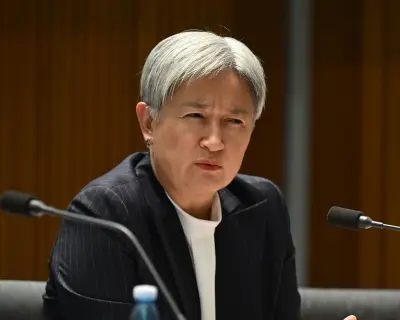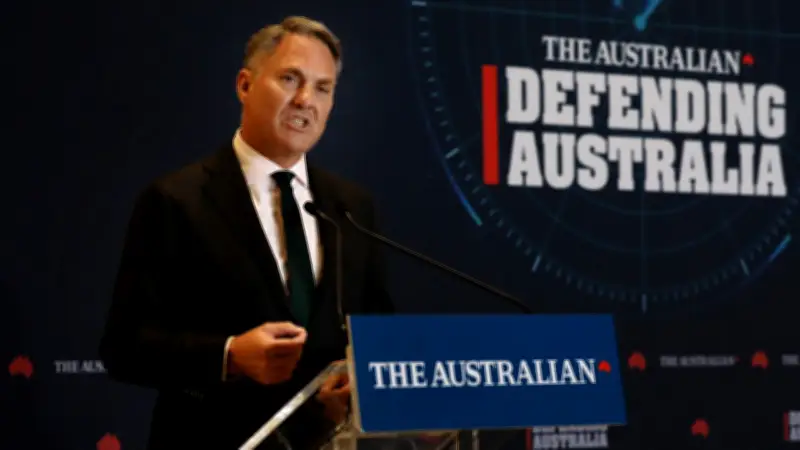
Defence Minister Richard Marles has warned that Australia's security interests could be damaged if political leaders embrace anti-migrant rhetoric. Speaking at the Defending Australia Summit on Tuesday night, Mr Marles tied Australia's national security directly to its multicultural identity, saying the country could not afford to undermine its standing in the region.
Migration has become a central political issue, with One Nation and the Coalition both pushing for tighter controls and lower migrant intakes. Without naming specific opponents, Mr Marles suggested some political figures were risking the nation's international relationships by promoting messages that divide migrants from the broader Australian community.
“For a long time, what we’ve had to offer is a model, multicultural, diverse, outward-looking society, which is engaging with Asia, which is obviously well received,” he said. “But for those who are tempted to walk down a path of xenophobia, it not only undermines our social cohesion, it fundamentally makes us less safe.”

His comments come amid renewed debate about migration, after One Nation leader Pauline Hanson declared she was ready to be prime minister and reiterated her opposition to mass migration. Ms Hanson has advocated for annual visa numbers to be capped at 130,000 and has argued Australia should prioritise migrants who are willing to assimilate. On Sunday, the One Nation leader revealed she would support banning migration from some Muslim-majority countries over concerns about “radical Islamist” ideologies. Ms Hanson told Sky News she wanted restrictions on arrivals from some countries, while reiterating her long-standing push to ban the burqa.
The Coalition has also placed migration at the centre of its policy agenda, including proposals to restrict welfare access for non-citizens and tighten eligibility rules. Mr Marles said it was utterly unacceptable for politicians to draw distinctions between migrants and other Australians in a country where a quarter of citizens were born overseas.
“It was utterly unacceptable for a country where fully one quarter of our citizens are born overseas, that we have leading politicians who are seeking to draw a distinction between migrants and Australians,” he said in his speech on Tuesday. The Defence Minister argued Australia's multicultural identity was more than a social policy issue and had become a strategic asset as Canberra deepened security ties across the Indo-Pacific.
“Our diverse, multicultural, socially cohesive society is fundamental to our national security, and maintaining it is fundamental to defending Australia,” he said. The Albanese government has overshot its net overseas migration numbers, according to figures released in the federal budget. Australia will welcome 35,000 additional people in 2025-26 compared to the previous forecast, and an extra 20,000 in 2026-27 financial year. The upward revisions mean that there will be a total net overseas migration of 1.2 million people between 2025 and 2030.
Mr Marles also used the summit address to highlight Australia's growing defence partnerships throughout the region. He pointed to expanding military co-operation with countries including Singapore, Japan, Vietnam and Malaysia, as Canberra responds to a more contested strategic environment. India was becoming increasingly important to Australia's defence planning, he said, with military co-operation expected to feature prominently when Indian Prime Minister Narendra Modi visits Australia in the coming weeks.
Australia's defence engagement with regional partners has expanded significantly in recent years, reflecting a broader shift towards closer strategic integration with neighbouring countries. Mr Marles said the success of that approach relied on relationships built over time rather than assumptions that co-operation would automatically continue.
“We are literally living Paul Keating’s aphorism that we are finding our defence in Asia and not from Asia,” he said. “But the risk in articulating the narrative in the way is that it almost sounds inevitable. But of course nothing could really be further from the truth.”