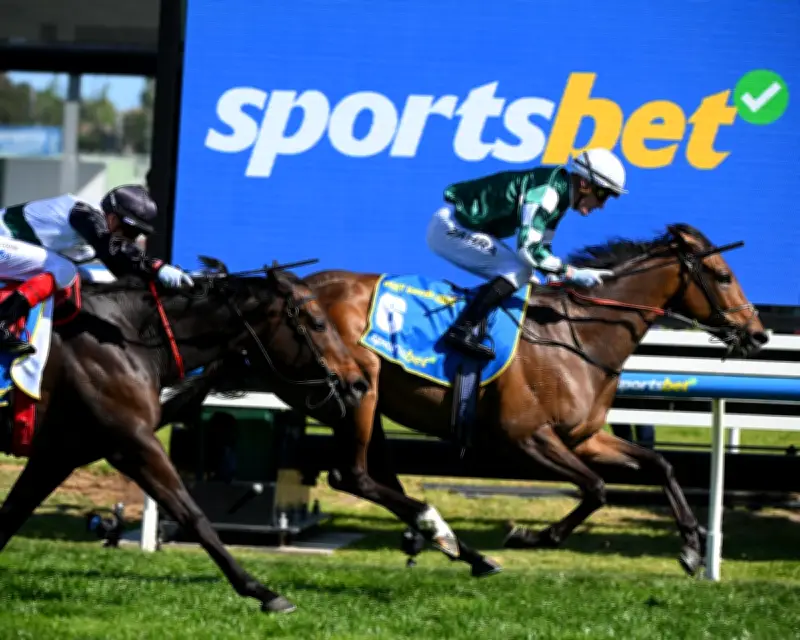
The Albanese government’s proposed gambling advertising legislation has been labelled a “capitulation to the industry lobby” by Liberal MP Dr. Andrew Charlton, who argued the measures fall short of protecting vulnerable Australians.
Criticism from Within the Coalition
Dr. Charlton, the member for Parramatta, said the government had bowed to pressure from gambling companies and broadcasters, producing a bill that “does not go nearly far enough” to reduce gambling harm. He told parliament that the legislation was a missed opportunity to implement meaningful reform, such as a total ban on gambling ads.
The proposed laws would restrict gambling advertisements to certain hours and limit the number of ads per hour, but critics say these measures are insufficient. Dr. Charlton pointed to research showing that Australians lose more than $25 billion on gambling each year, making it the world’s highest per capita gambling losses.

Industry Influence on Policy
“This bill is a capitulation to the industry lobby,” Dr. Charlton said. “The government has chosen to protect the profits of gambling companies over the health and wellbeing of Australians.” He noted that the industry had spent millions on lobbying and advertising campaigns to weaken the reforms.
The legislation has also drawn fire from anti-gambling advocates and some Labor backbenchers, who have called for a complete ban on gambling advertising. The government has defended its approach as a balanced compromise that addresses concerns while avoiding unintended consequences for broadcasters and sports organisations.
What the Bill Proposes
The Communications Legislation Amendment (Gambling Advertising) Bill 2026 would ban gambling ads during live sports broadcasts between 6am and 10pm, and limit the number of ads to two per hour during those hours. Ads would still be permitted during other programming, including news and current affairs. The bill also includes measures to strengthen the classification of gambling content and increase penalties for breaches.
However, Dr. Charlton argued that the exemptions for news and current affairs create a loophole that the industry could exploit. “If the government were serious about reducing gambling harm, it would not allow any advertising during any program that might be viewed by children or vulnerable adults,” he said.
Impact on Vulnerable Australians
According to the Australian Institute of Health and Welfare, around 1% of Australian adults experience severe gambling problems, with a further 4-5% at risk of harm. The Productivity Commission has estimated that problem gambling costs the economy around $4.7 billion annually in financial and social costs.
Dr. Charlton said the bill did not go far enough to address the normalisation of gambling, particularly among young people. “Every time a child sees a gambling ad during a cricket match, it sends a message that gambling is a normal part of sport and life,” he said. “We need to break that cycle.”
Government Response
Communications Minister Michelle Rowland defended the bill, saying it represented a “significant step forward” in reducing gambling harm while balancing the needs of broadcasters and sporting codes. She noted that the government had consulted widely with stakeholders and that the measures were supported by some harm reduction groups.
“We have taken a pragmatic approach that will reduce the volume of gambling ads that Australians see, particularly during live sport,” Rowland said. “We will continue to monitor the impact and consider further reforms if necessary.”
The bill is expected to be debated further in the Senate, where crossbench MPs may seek to amend it to include a total ban on gambling advertising.