The Albanese government spent a staggering $170 million in legal fees over three years fighting National Disability Insurance Scheme (NDIS) participants appealing decisions about their support packages, a Senate estimates hearing has been told. This revelation comes as officials face intense scrutiny over reforms to the beleaguered scheme, which are expected to spark a political battle in the Senate later this year.
Rising Legal Costs
During Friday's hearing, officials disclosed that the government spent $66 million this financial year to contest participants' appeals, up from $60 million the previous year and $44 million the year before that. The figures highlight a steady increase in legal expenditure as more cases are brought before the Administrative Review Tribunal (ART).
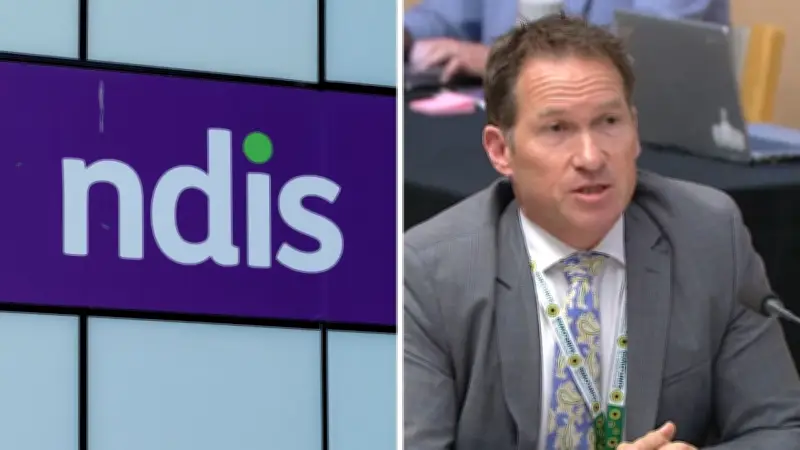
National Disability Insurance Agency (NDIA) deputy chief executive Matthew Swainson revealed the number of cases submitted to the ART. "In the 2025-26 year to date, that is to the end of March, we had 6,998 matters received," he said. "In the 2024-25 financial year, we had 7,137 cases. In 2023-24, we had 4,044 new cases received."

Mr Swainson also provided details on case resolutions. "We resolved 1,979 applications in the last quarter. Of those, 96.9 percent were resolved prior to a hearing, and 3.1 percent proceeded to a hearing." He added that of the cases resolved before a substantive hearing, approximately 70 percent were settled by agreement, meaning the NDIA reached some sort of settlement with the participant. "22.4 percent were withdrawn by the participant, 6.3 percent were dismissed, and 1.8 percent resulted in an extension of time or some jurisdictional outcome," he said.
It was also revealed that participants win three out of every ten cases that go to tribunal.
Political Backlash
Earlier, Greens senator Jordon Steele-John accused the Albanese government of a "fundamental disconnect" between its language around fraud and NDIS reforms, telling officials that "disabled people are not silly." Disability Minister Jenny McAllister and other officials faced tough questioning on Friday about the reforms, less than 24 hours after the lower house passed the first tranche of Labor's budget changes.
However, cuts to the NDIS, along with changes to housing investor tax benefits, are heading for a showdown in the Senate, with calls from both the Right and Left for a longer inquiry.
In a lengthy opening address, Senator McAllister said the government "remains committed to the long-term sustainability of the NDIS." She described the NDIS as "a critical part of Australia's social infrastructure and a human rights achievement" that "must be protected for people with permanent and significant disability and for future generations who will rely on it."
The estimates hearing also addressed Health Minister Mark Butler's May revelation that about 160,000 people would be cut from the NDIS by the end of the decade. These cuts, driven by an eligibility crackdown, are expected to save the budget $35 billion over four years.
Senator McAllister stressed that "this government takes fraud seriously" and is working to eliminate fraudulent claims through the reforms. "Every dollar taken by fraud is a dollar taken from someone who needs it," she said.
She also noted that the reforms aim to return the NDIS to its original intent of supporting people with permanent and significant disability. "This divergence from the scheme's original intent has meant that the NDIS has grown at unsustainable levels," she added.
Senator McAllister said the government would collaborate with the disability community, states, and territories through the "significant changes" to the NDIS. She explained that the reforms would deliver quality services and support by giving decision-making power on pricing to the Minister for Disability and the NDIS. "Our intention is to improve quality, encourage innovation, and greater responsiveness to participant need," she said.
Senator Steele-John's Concerns
Senator Steele-John, who lives with cerebral palsy, opened his questioning with a focus on the breakdown of savings, particularly how much is expected to be recouped by cracking down on fraud. He claimed that only $5 billion of the approximately $38.7 billion set to be cut from the scheme would be recovered through fraud measures.

"The vast majority of what we've got here in this budget are cuts made to participants, impacting them rather than impacting the large private providers who are the primary perpetrator of fraud in the system," he said. "So we have a wildly disproportionate impact falling on people who are doing nothing wrong."
Senator Steele-John argued there was a "fundamental disconnect" between the "government's language, which is often around tackling fraud, and what the numbers say here in the budget papers." He added, "To be very, very clear with the government and with yourself, disabled people are not silly. We've lived and died by what decisions government does and doesn't make in relation to the NDIS for over a decade. We've come to understand that when it comes to budget rhetoric and government policy, one of the most effective ways to understand intent is to follow the money."
Senator McAllister responded that Senator Steele-John had "misunderstood" her evidence and that there would be a "significant impact" on providers seeking to take money from people with disability. "That is the purpose of the fraud measures," she said. "We do expect very significant impacts in this regard by way of the measures we're proposing. However, in terms of savings to government intervening to prevent fraud, as I have already explained, generally returns money to people with disability who need it, not to consolidated revenue."
Earlier, Senator McAllister noted that many fraud measures were intended to improve the "performance of the market," including differentiated pricing for unregistered providers. Asked about mandatory registration of providers, she said it had a "dual purpose." "Where we see fraud, we often see poor quality services and, in the very worst cases, exploitation and abuse. Mandatory registration offers the opportunity to improve safeguarding and to improve the quality of services that are offered to participants."
Senator McAllister concluded that fraud intervention was largely motivated by concern about the impact on participants. "There are some savings to government when we intervene, but mostly what occurs is an improvement on outcomes for people with disability who need support," she said.