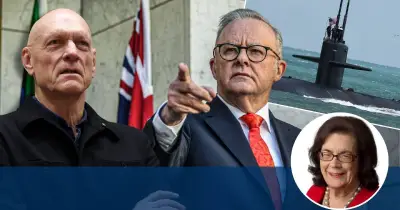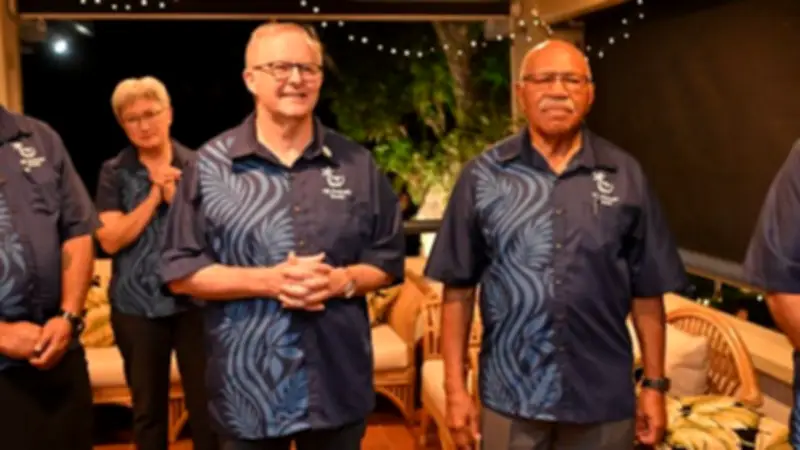
Australia and Fiji have signed a significant defence treaty, the Ocean of Peace Alliance or Veitacini Treaty, during Prime Minister Anthony Albanese's Pacific tour. The agreement, inked with Fijian Prime Minister Sitiveni Rabuka, is the latest in a series of bilateral security pacts Australia has forged with Pacific Island nations, including the Falepili Union with Tuvalu (2023), the Nauru–Australia Treaty (2024), the Pukpuk Treaty with Papua New Guinea (2025), and the Nakamal Agreement with Vanuatu (2026). Shortly after the signing, China conducted a long-range ballistic missile test in the Pacific Ocean, drawing criticism from regional leaders and underscoring the urgency for collective defence and security arrangements among Pacific Island countries.
Symbolic Signal Amid Strategic Concerns
The Veitacini Treaty, along with its accompanying Vuvale Union, aims to elevate security, economic ties, and people-to-people links. However, like the 1951 ANZUS Treaty, its security guarantee is largely unenforceable. Article 6 stipulates that each party would “act to meet the common danger” of an armed attack in the Pacific, but only “in accordance with its domestic processes.” This qualified commitment is weaker than NATO's collective defence clause. As with the Nakamal Agreement, the treaty is primarily symbolic, as Australia relies on the US for its own defence and would struggle to defend Fiji alone.
The symbolism is intentional. Beyond diplomatic language of “friendship” and “mutual respect,” the treaty signals shared concerns about China's strategic interest in the region. Rabuka's remarks at the signing ceremony were telling: he did not expect “severe pushback” from China and stressed that the alliance threatens neither country's relationship with Beijing. A leader does not repeatedly reassure that a treaty is not aimed at a country unless everyone understands it is, at least partly, a signal to that country and to the region watching whether Fiji has picked a side.

Regional Questions: Militarisation and Architecture
First, does the Veitacini Treaty encourage militarisation of the Pacific? Article 12 allows other Pacific Island countries to accede if they are “in a position to further its purposes and principles,” implying they will need militaries. Only PNG, Fiji, Tonga, and New Zealand currently have armed forces. This risks creating two tiers of security relationships: deeper integration through mutual defence treaties for countries with militaries, and lesser cooperation for those without. Pacific Island countries may conclude they should develop militaries to shape the regional strategic agenda, as Solomon Islands has foreshadowed. However, this could entrench dependence on Australia for defence assistance, and militaries can be a mixed blessing—useful for disaster response but risky for internal stability, as Fiji's coups in 1987 and 2006 demonstrate.
Second, how does the alliance sit with regional architecture? The Blue Pacific Ocean of Peace Declaration was endorsed by Pacific Islands Forum leaders in 2025 as a regional vision. Borrowing its name for a bilateral military alliance raises the question of who speaks for the Ocean of Peace: the Forum, or Fiji and Australia? With the Forum Secretariat headquartered in Suva and Fiji positioning to host an Ocean of Peace Centre under the Vuvale Union, there is a risk of reinforcing perceptions that Pacific regionalism is too Suva-centric, a longstanding grievance among Micronesian Forum members.
Third, has Fiji abandoned the regional commitment to “remain friends to all and enemies to none,” reiterated in its 2025 National Security Strategy? Pacific leaders have repeatedly rejected “a choice between a China alternative and our traditional partners.” A mutual defence treaty is an unfriendly choice; it implies defending against threats from at least one other country.

Questions for Fiji: Costs and Risks
First, what are the costs of implementation? Alliance obligations require interoperability, sustained exercises, and equipping forces to “act to meet the common danger” as per Article 6. These costs are high, as Australia is reminded in its efforts to keep up with the US. Will Fiji's budget stretch, or will it depend on Australian assistance? The cost of mutual defence is particularly high; a perceived need to make “insurance payments” can entrap a country into following its ally into wars it wouldn't choose, potentially entangling the region more broadly.
Second, how does the Veitacini Treaty interact with ANZUS? Both treaties relate to armed attacks in the Pacific, with Australia as the linking ally. If Australia responds to an attack on the US in the Pacific, such as on Guam's Joint Region Marianas, and is itself attacked, will Fiji be expected to respond? Has Fiji unnecessarily made itself a strategic target? China's ballistic missile test may be an unsubtle reminder of potential risks.
Third, how transparent will implementation be? The treaty leaves governance to consultation mechanisms the parties will “determine.” Previous agreements offer little comfort: implementation of the Falepili Union and the Nauru-Australia Treaty has proceeded largely out of public view. There is no publicly available systematic assessment of whether the 2019 Fiji-Australia Vuvale Agreement, renewed in 2023, has delivered.
Australia as a Good Neighbour
Australia has legitimate strategic concerns about China, but its response of Pacific treaty-making resembles “sugar-rush” diplomacy: announcements first, hard questions later. Whether Australia and Fiji can answer these questions in ways that advance Australian, Fijian, and Pacific security will depend on transparency, honest evaluation, and genuine deference to the Pacific Islands Forum. One thing is certain: the region will notice whether Australia behaves like a good neighbour.