Burnham's Vision for a Fairer Economy
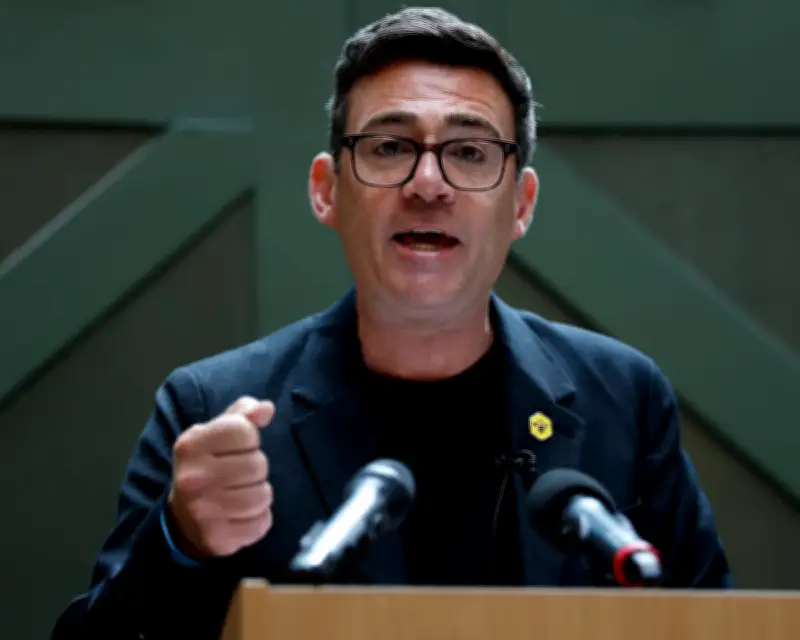
Andy Burnham, the Mayor of Greater Manchester, has published a detailed economic and political blueprint for Britain, outlining a radical shift towards devolution, public ownership, and green investment. The plan, titled 'A New Deal for Britain,' aims to tackle regional inequality and drive economic growth from the ground up.
Burnham argues that the current centralised model has failed, leaving many regions behind. His blueprint proposes transferring significant powers and funding from Westminster to local authorities, including control over skills, transport, and housing. 'We need to empower our cities and regions to make decisions that reflect their unique needs,' Burnham said.
Key Policies: Public Ownership and Green Investment
A central pillar of the plan is the expansion of public ownership in key sectors such as energy, water, and rail. Burnham calls for a 'public ownership revolution' to ensure essential services are run for public benefit, not private profit. He also proposes a massive green investment programme, aiming to create hundreds of thousands of jobs in renewable energy and retrofit housing.

The blueprint includes a target to achieve net-zero carbon emissions by 2040, a decade earlier than the current national goal. To fund these initiatives, Burnham suggests a combination of progressive taxation, including a wealth tax on the richest 1%, and borrowing for capital investment. 'The climate crisis demands urgent action, and we can't rely on the private sector alone,' he stated.
Devolution as a Catalyst for Change
Burnham emphasises that devolution is not just about administrative efficiency but about giving people a real say in their economic future. He proposes a 'constitutional convention' to redesign the UK's governance, moving away from the 'Westminster village' model. 'Power must be handed to communities that have been ignored for too long,' he wrote in the blueprint.
The plan also includes measures to strengthen workers' rights, such as banning zero-hours contracts and introducing sectoral collective bargaining. Burnham argues that these changes would boost productivity and reduce in-work poverty. 'A fair economy is a productive economy,' he said.
Reactions and Criticisms
The blueprint has drawn mixed reactions. Supporters, including some Labour MPs and trade unions, have praised its ambition and focus on inequality. 'This is the kind of bold thinking we need to rebuild Britain,' said a spokesperson for the Unite union. However, critics from the business community have warned that nationalisation and higher taxes could deter investment. 'These proposals risk driving away the very capital we need to grow,' said a representative of the Confederation of British Industry.
Political opponents have also questioned the feasibility of the plan. A Conservative Party spokesperson described it as 'a wish list from a bygone era' and argued that it would lead to higher debt and lower growth. 'Burnham's blueprint is more about ideology than practical solutions,' they said.
Looking Ahead: From Blueprint to Reality
Burnham's blueprint is not an official Labour Party policy but is seen as a potential roadmap for a future government. The mayor has indicated he will campaign for these ideas within the party and beyond. 'This is not just a document; it's a call to action,' he said. 'We have a once-in-a-generation chance to reshape our economy for the better.'
The release of the blueprint comes amid growing debate about the UK's economic direction, with many calling for a more interventionist state to address the cost-of-living crisis and stagnant growth. Whether Burnham's vision gains traction will depend on political will and public support in the coming years.