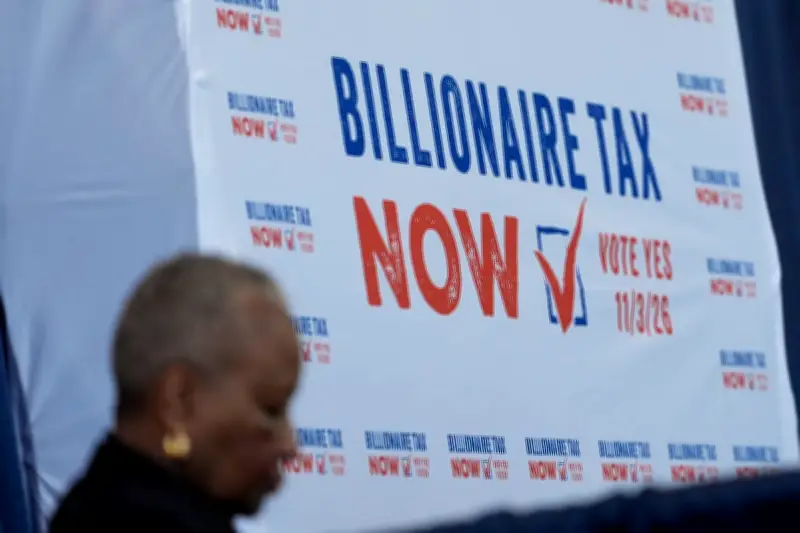
The California Billionaire Tax Act, which would impose a one-time 5% tax on residents with wealth exceeding $1 billion, has been certified for the November ballot after receiving more than double the required signatures. The secretary of state confirmed the measure late Thursday, following failed negotiations between Governor Gavin Newsom and the supporting labor union, SEIU-UHW.
What the Tax Would Do
The tax applies retroactively to all billionaires who were California residents as of January 1, 2026. California is home to approximately 200 billionaires, many of whom have seen their wealth surge during the recent AI boom. Revenue from the tax would fund food assistance, education, and healthcare programs, including low-cost health coverage and preventing hospital closures. SEIU-UHW chief of staff Suzanne Jimenez stated, "Regular working people pay higher effective tax rates than the wealthiest Americans. Asking those who have benefited most from the economy to contribute more – particularly to stabilize health care systems under direct threat – is a reasonable step."
Opposition from Newsom and Unions
Governor Newsom has been a vocal opponent, arguing that state-level wealth taxes "drive a race to the bottom" and could chase billionaires out of California, reducing state revenue. Despite SEIU-UHW offering to lower the tax from 5% to 2%, Newsom rejected the deal. Other opponents include the California Teachers Association, State Building and Construction Trades Council of California, California Medical Association, and Planned Parenthood Affiliates of California. A Planned Parenthood spokesperson said the measure is "short-sighted" and "does not offer a sustainable solution to funding cuts."

Tech Billionaires Fight Back
Silicon Valley has poured enormous sums into opposing the tax. Google co-founder Sergey Brin, worth around $260 billion, has spent at least $82 million, while crypto billionaire Chris Larsen, worth over $11 billion, has contributed at least $13.2 million. Other donors include Peter Thiel, Eric Schmidt, Tony Xu, and Patrick Collison. Their spending has helped place two competing initiatives on the November ballot: one prohibiting new taxes on individually-owned assets and barring retroactive taxes, and another requiring audits of programs funded by voter initiatives and banning new state taxes after January 1, 2026.
Voter Confusion Ahead
With three tax-related measures on the ballot, voter confusion is expected. University of California, Berkeley public policy professor Francesco Trebbi noted, "What you’re seeing now … it was just like a drop in the bucket of what’s going to happen. It’s going to be exponential." The campaign is anticipated to involve unprecedented spending, with residents facing mailers, robo-calls, and ads in the coming months.