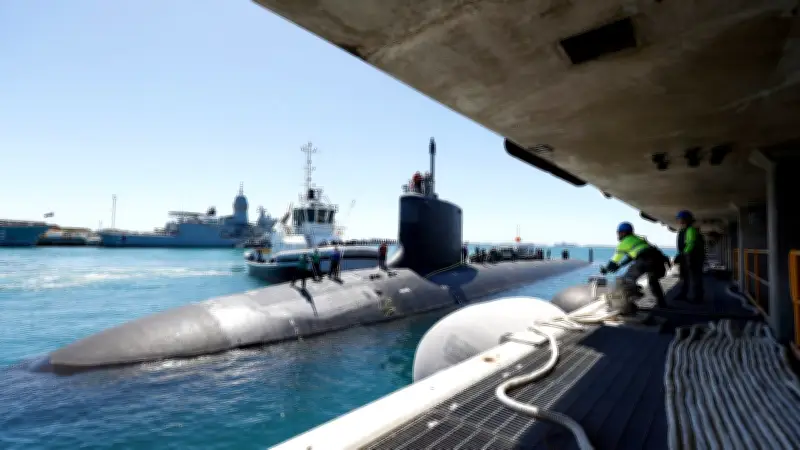
Defence officials have revealed that Australia spent more than 18 months negotiating changes to the AUKUS submarine pathway before securing a revised agreement with the United States to provide three second-hand Virginia-class submarines. The timeline emerged during Senate estimates hearings this week, where senior defence officials disclosed that discussions with Washington began early last year.
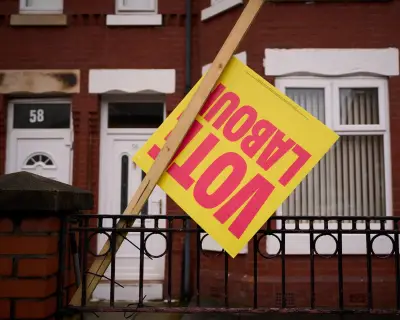
The revelation comes as the Labor Party faces increasing internal pressure over the future of the $368 billion agreement. Former cabinet minister Ed Husic has questioned whether the pact should be reconsidered following the latest changes, while union leaders and former Labor figures have also called for a review.
Revised Submarine Plan
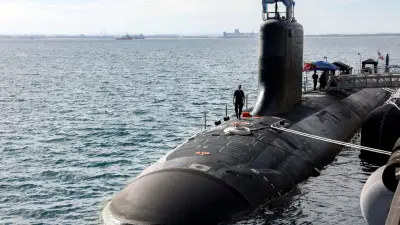
The government announced last weekend that Australia would receive three in-service Virginia-class submarines during the 2030s, replacing the previous arrangement of two second-hand vessels and one newly built submarine. This marks the most significant change to the AUKUS optimal pathway since it was unveiled in 2023.

Australian Submarine Agency director-general Vice-Admiral Jonathan Mead told Senate estimates that the revised arrangement had been under discussion for some time. "Really, the beginning of last year," he said when asked about when discussions began. Vice-Admiral Mead explained that Australia had secured the best arrangement available when the AUKUS pathway was negotiated in 2023, but officials continued exploring whether the US could eventually provide three submarines already in service.
"What was available to us then was the optimal pathway. We have been working with the US now for about the last 12 months or more on seeing if there was scope, as their industrial base matured… as they began to climb their production rates, was there scope to turn production into an in-service. That has been an ongoing conversation with the US, which we saw was agreed to," he said.
Benefits and Costs
The government has argued that the revised arrangement will simplify maintenance, training, and operations because all three submarines will be near-identical. It has also maintained that the shift will reduce costs across the life of the program. Defence Minister Richard Marles said the financial savings would be meaningful but not transformative given the overall size of the project.
"It will be significantly cheaper, that will help. It's a useful contribution to saving money in terms of the overall program, but across the life of the program this doesn't fundamentally change the cost of what we are seeking to do here," he told the ABC's 7.30 program.
Officials also revealed that the submarines will be transferred to Australia after approximately six years of service with the US Navy. The vessels are expected to remain operational for between 30 and 33 years, meaning Australia will retain them for more than two decades after delivery.
Internal Labor Opposition
While the government has insisted the program remains on track, the changes have reignited debate inside Labor. Mr Husic used a caucus meeting this week to argue that the agreement should be revisited, claiming the deal was no longer the same arrangement originally endorsed by the party. His intervention has been backed by a number of Labor-aligned figures, including former ministers Peter Garrett and Carmen Lawrence, who support a separate campaign calling for the pact to be reassessed.
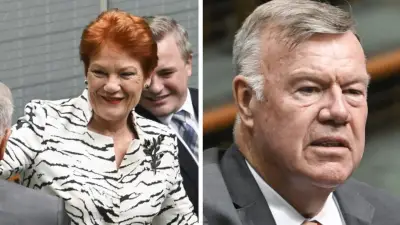
The Coalition has seized on the disagreement, arguing the government is struggling to maintain a united position on what it describes as Australia's most important defence project. Shadow defence industry minister Phillip Thompson said concerns extended beyond a single Labor MP.
"You've got Ed Husic, a power broker within the Labor Party, a former senior cabinet minister who also doesn't support it. It holds a lot of concern within the coalition of the direction of AUKUS, because, you know, at the moment, we're seeing a fracture within the Labor Party itself," he told Sky News on Wednesday.

Mr Thompson said questions also remained about how the revised arrangement was reached. "I'm glad that you know that it's the Americans that changed the rules because we've been sitting in the dark here going from who's made this decision, or requested where we've gone to when it comes to getting used submarines," he said.
Shadow treasurer Tim Wilson said Labor's internal debate risked undermining confidence in the agreement. "The Defence Minister is out there quite justifiably acknowledging we're in the most dangerous geostrategic and political environment since the Second World War. And he's got his own backbench, Ed Husic, and of course some of his frontbench, undermining his position and the government on AUKUS," he told Sky News.
Mr Wilson said Australians deserved greater clarity about the future of the project. "They need to explain to Australians what's happening, when it's happening and actually take them into their trust," he said.
The AUKUS program has so far cost taxpayers about $9 billion, with Australia's first nuclear-powered submarine still years away from entering service.