The Coalition has launched a blistering attack on the Albanese government after it was revealed that more than $10 billion in veterans’ welfare payments have been included in Australia’s headline defence spending figure. The opposition argues this accounting approach inflates the real level of military capability and misleads the Australian public.
Revised Methodology Under Fire
Labor’s defence funding calculations have come under fresh scrutiny following revelations that billions of dollars in non-military spending are being counted as part of Australia’s defence effort. The change is part of a broader shift in how the nation reports defence expenditure under NATO-style accounting rules. Alongside veterans’ payments, $2.1 billion in intelligence funding has also been folded into the defence total.
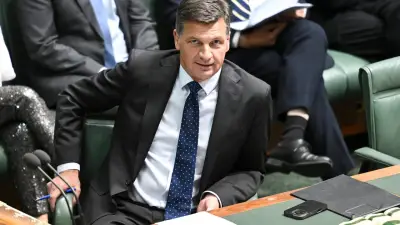
Shadow foreign affairs minister Ted O’Brien has been particularly vocal in his criticism, describing the move as “funny money accounting trickery.” Speaking to Sky News on Tuesday, he said: “The number one job of government is to keep its people safe, and there’s been an enormous deterioration in our capability. But you don’t improve Australian safety by taking welfare payments from one spreadsheet and putting them into the defence spreadsheet and suddenly Australia is safer.”

The government’s revised methodology has lifted Australia’s headline defence figure from about 2 per cent of GDP to a reported 2.8 per cent under NATO definitions. In total, more than $18.5 billion in non-defence administered expenditure has been incorporated into the headline figure for the current financial year. This includes veterans’ income support payments, superannuation liabilities, and parts of intelligence agency funding—categories not directly controlled by the Department of Defence.
Government Defends Approach
Officials have argued that NATO methodology permits some of these categories to be counted in defence totals, particularly military pensions and related long-term obligations. Despite this, Mr O’Brien insisted the inclusion of welfare-style payments stretches the definition beyond what most Australians would understand as defence spending. “He (Richard Marles) might have political cover, but the real point is: is he making Australians safer? The answer to that is no,” he said.
The opposition has warned that the figures risk creating a perception of stronger defence investment without a corresponding increase in deployable military capability. This comes as Australia’s defence posture is under renewed focus, with international partners urging higher and more sustained spending commitments.
AUKUS Submarine Program Adds to Tensions
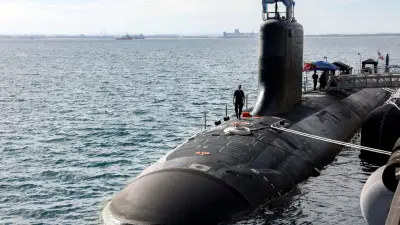
The debate over defence accounting is running alongside growing questions about Australia’s AUKUS submarine program. Defence Minister Richard Marles confirmed on Sunday that Australia will now receive three second-hand Virginia-class submarines under the expensive defence deal, rather than the originally expected mix of two second-hand vessels and one brand new boat. Mr Marles has defended the adjustments, saying the revised approach simplifies the program and improves delivery certainty.
Mr O’Brien has maintained support for the AUKUS framework but warned that execution is a concern. “The Minister is trying to celebrate the fact that he’s not going to get a new first-class sub. In fact, they’re all going to be second-hand… that just doesn’t cut it,” he said, adding: “It’s like a dodgy car salesman where you want a new vehicle and we walk away with a second-hand one and say, ‘isn’t this great.’ It’s up to the Australian Defence Minister just to speak straight with the Australian people… Australians aren’t fools.”
The Coalition said Australia cannot afford delays or reductions in capability at a time when regional tensions are increasing and military preparedness is under scrutiny. Australia expects to receive the three Virginia-class submarines from 2032 onwards.

Additional Defence Investment
Earlier this year, Mr Marles committed billions in additional defence investment over the next ten years. The Integrated Investment Program, unveiled alongside the 2026 National Defence Strategy, includes defence spending of $14 billion over the forward estimates and $53 billion over the next decade. However, the opposition argues that without genuine transparency, these figures do little to reassure Australians about the nation’s security.