Australian Airbase in UAE Targeted by Iranian Drone Strike
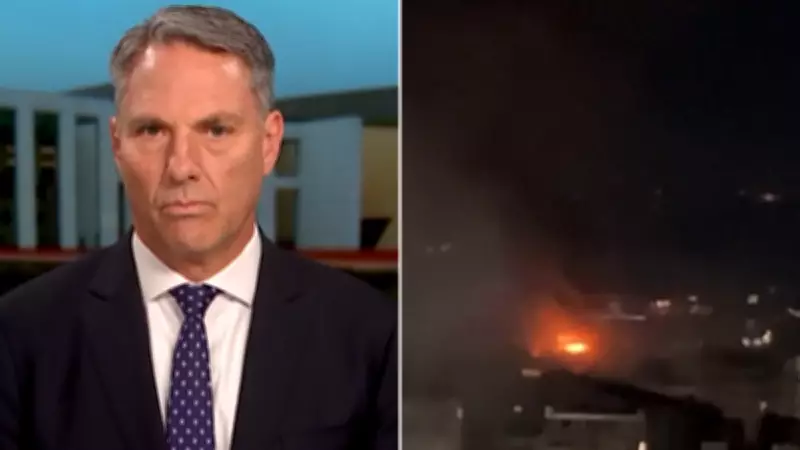
An airbase in the United Arab Emirates utilized by Australian defence personnel has been struck by Iranian drones, according to Deputy Prime Minister Richard Marles. Marles confirmed the attack specifically targeted Al Minhad Air Base, situated approximately thirty minutes outside Dubai, with no injuries reported among Australian forces.
Critical Australian Military Hub Unharmed
The base currently functions as the headquarters for the Australian Defence Force's Joint Task Force 633 and supports Australian operations throughout the Middle East region. "We have a number of Australians who operate from a headquarters that we've had at Al Minhad now for many, many years," Marles stated. "They are all accounted for, they are all safe."
More than one hundred Australian Defence Force personnel are presently serving across the Middle East, with the majority based in the UAE. Marles described Al Minhad as "very important for us," reiterating there were no injuries among Australian personnel following the drone strike.

Escalating Regional Conflict and Aviation Disruption
The strike occurs as hostilities spread beyond initial flashpoints, with Iranian missiles and drones targeting sites across multiple countries. A British airbase in Cyprus was also hit, while Israel's counterstrikes against Iranian-backed Hezbollah are drawing Lebanon further into the escalating crisis.
The intensifying violence has severely disrupted aviation across one of the world's busiest transit corridors, leaving more than 115,000 Australians stranded across the region as airspace closures ground commercial flights. On any typical day, about 11,000 Australians travel through major hubs including Abu Dhabi, Dubai and Doha.
Government Reassurance and Strategic Support
With public anxiety heightened, Marles sought to reassure Australians that the nation remains secure despite distant conflicts. "We are safe in Australia, we're a long way from this conflict. Australians should have a sense of confidence that we have some of the best national security agencies in the world, and they are very much working day in, day out right now around the clock," he emphasized.
Marles confirmed Australia has not been requested to provide any direct military assistance in the conflict, which is currently being undertaken by the United States and Israel. "We are taking this literally a day at a time... and keeping our minds open about what the possibilities are," he added.
Reiterating previous statements from Prime Minister Anthony Albanese, Marles said Australia continues to support United States actions. "At its core, this is about preventing Iran from ever being able to acquire a deployable nuclear weapon," Marles explained. "Were Iran ever to acquire that it would be an utter catastrophe for the world, and we simply cannot trust the Iranian regime, in respect of their nuclear weapons program; they've demonstrated that over many, many years."
"So we are supporting the United States-led action in relation to this, because Iran walking down the path of acquiring a nuclear capability flies in the face of the rules-based order." Despite this support, the government has maintained that Australia will not be deploying boots on the ground in the war at this time.
Focus on Stranded Australians and Repatriation Challenges
The government's immediate priority, according to Marles, is the welfare of Australians caught in the escalating crisis. "Our focus is very much on them. What can be done in terms of getting people home is clearly restricted so long as airspace is closed," Marles stated.
While Italy, Germany and France have committed to sending repatriation flights, Marles would not commit to doing the same, citing closed airspace as the primary barrier. "We're working through contingencies. The biggest restriction now is clearly airspace. It is fundamentally closed, and so any form of flight is difficult," he said.
"There are a lot of Australians in the region... as airspace begins to reopen, we would expect the quickest option in terms of flights resuming will be commercial options." Marles urged Australians in the region to monitor official travel advice for updates, noting that commercial airlines are likely to provide the fastest pathway home once it is safe to fly.