Australia Test-Fires First Locally Assembled Missiles in Over 50 Years
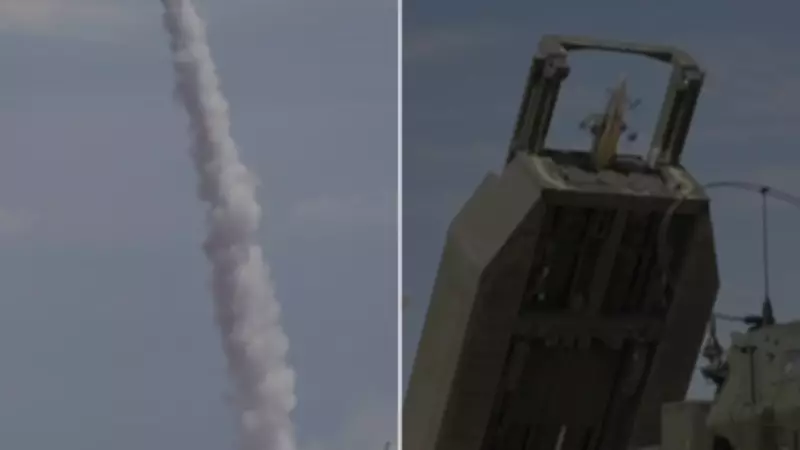
Australia's Defence Force has achieved a significant milestone by test-firing a locally assembled missile that is critical for both the Australian army and allied forces worldwide. Exclusive video footage obtained by 7NEWS reveals the launch at a secretive site in South Australia, marking the first time in more than five decades that Australia has assembled and tested its own missiles.
Historic Launch in South Australian Desert
Officials from American weapons giant Lockheed Martin observed as 12 Australian-assembled versions of their Guided Multiple Launch Rocket System (GMLRS) surface-to-surface missiles were launched across the South Australian desert. These precision weapons are designed to accurately target enemy positions up to 150 kilometres away, representing a substantial advancement in Australia's defence capabilities.
The missiles were assembled at a newly established Defence and Lockheed Martin facility located outside Adelaide, which began operations just four months ago. This facility is particularly noteworthy as it represents only the second factory in the world and the first outside the United States capable of producing these advanced missile systems.

Addressing Global Defence Demands
Gaylia Campbell, Lockheed Martin's Vice President of Tactical Missiles, emphasized the strategic importance of this development. "This starts to build additional capacity, really, for the global demand," Campbell stated, highlighting how the new manufacturing capability addresses pressing international defence needs.
Defence Industry Minister Pat Conroy and missile manufacturers are acutely aware that ongoing conflicts in Ukraine and the Middle East have highlighted vulnerabilities in global defence supply chains. These wars have alarmed military allies by demonstrating how quickly stockpiles can be depleted during sustained conflicts.
"So there's a big global backlog, and the only way to avoid being at the end of the queue is to build your own," Conroy explained, underscoring the strategic necessity for Australia to develop domestic manufacturing capabilities rather than relying solely on international suppliers.
Expert Analysis and Future Plans
Military analyst Malcolm Davis from the Australian Strategic Policy Institute offered critical perspective on the government's approach. While supportive of Australia entering the missile manufacturing business, Davis expressed concern about the pace of development. He warned that in a potential Indo-Pacific conflict, which many defence experts now consider a realistic concern, Australia's current missile stockpile would be exhausted almost immediately.
"Within days, essentially, we would be out of munitions within days," Davis cautioned, painting a stark picture of Australia's vulnerability without enhanced domestic production capacity.
Davis acknowledged government plans to establish two additional missile factories in Australia within this decade but argued that significantly greater investment and accelerated timelines are essential. "But now time is not our friend, and so therefore we can't afford to continue to crawl," Davis asserted. "We need to sprint at this point in time."
Minister Conroy responded to these concerns by outlining the government's accelerated timeline. "By this time next year, we'll have two factories," Conroy announced, indicating a commitment to rapid expansion of Australia's defence manufacturing infrastructure.
Balancing Speed and Strategic Development
The government maintains that Australia's missile industry is progressing at what it describes as "lightning speed," representing a substantial acceleration in defence capability development. However, this pace remains insufficient for some analysts and defence experts who argue that geopolitical tensions necessitate even faster advancement.
This historic test-firing represents more than just a technological achievement; it signifies Australia's strategic shift toward greater self-reliance in defence manufacturing. As global tensions persist and supply chain vulnerabilities become increasingly apparent, the development of domestic missile production capabilities takes on heightened importance for national security and regional stability.