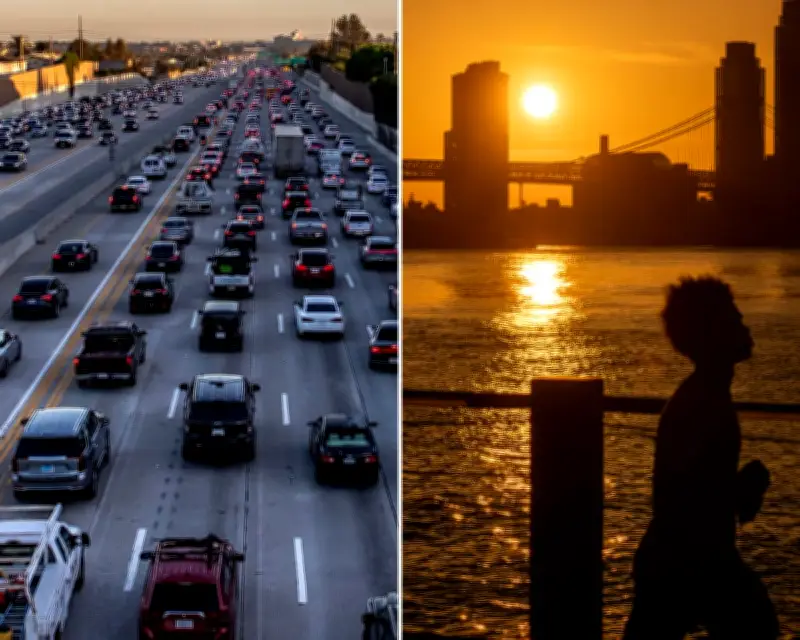
California and New York are weakening their climate policies, even as Republican-led states ramp up clean energy deployment. On Friday, California scaled back its cap-and-invest program, offering more than $3 billion in free pollution allowances to polluting companies. Earlier in the week, New York delayed a plan to regulate carbon emissions from 2024 to 2028 and reduced emissions-slashing targets. Rhode Island's governor is also attempting to roll back aggressive clean-energy programs.
Reasons for Policy Changes
These moves come as the Trump administration withdraws clean energy incentives and energy savings programs, and as energy prices spike across the country amid trade disruptions from the US-Israeli war on Iran. Proponents argue the changes are necessary to suppress electricity costs, but climate advocates say this view is short-sighted.
“Using affordability as a cudgel to weaken climate policy is a major error that will not solve either crisis, ultimately amplifying both,” said Johanna Bozuwa, executive director of the Climate and Community Institute. “Extreme weather and fossil-fuel dependency directly inflate costs – for food, energy, transportation, housing, and health – across the economy for working people.”

Public Opinion on Climate
Polls show most Americans are concerned about the climate crisis. A Gallup poll from April found that 44% of American adults worry “a great deal” about global warming – one of the highest levels since 1989. About 65% of registered voters think global heating is driving up the cost of living, according to a December report by Yale and George Mason universities.
“The polling shows that climate must remain on the political agenda,” said Bozuwa. “Good climate policies provide immediate relief for families while also driving larger structural green transformation.”
Red States Lead Clean Energy Buildout
In contrast to Democratic-led states, red states have dominated renewable energy deployment. In the year to March, eight of the top 10 states for utility-scale renewable growth voted for Donald Trump in 2024. Indiana tops the list, followed by Kentucky and Utah.
Texas has emerged as the country’s leading clean energy superpower, despite its ties to oil and gas. Texas leads in wind energy production, followed by Iowa, Oklahoma, and Kansas, and in March overtook California in utility-scale solar. Governor Greg Abbott calls Texas the “energy capital of the world.”
However, Trump has attacked renewable energy nationally, slashing tax incentives for wind and solar, halting offshore wind projects, and deriding clean power as “stupid” and a “scam.”
Climate Leaders Under Fire
California and New York have long called themselves climate leaders. Governor Gavin Newsom extended California’s cap-and-invest program last year, saying it combats “Trump’s assaults on clean air.” But Friday’s changes reduce costs for refineries and create incentives for cleaner technology, potentially giving more money to fossil fuel producers.
“There’s no reason to think that giving them more free allowances will actually help motivate them to lower gas prices more,” said Bahram Fazeli, policy director with Communities for a Better Environment. “This is the time that we can see who are the real climate leaders.”
New York advocates are skeptical about weakening the 2019 Climate Leadership and Community Protection Act. The state legislature removed a 2030 mandate to cut pollution by 40% from 1990 levels, instead aiming for 60% by 2040 if “feasible and cost effective.” Governor Kathy Hochul said the goals were untenable without driving energy costs higher.
“We have an alternative to fossil fuels that is not just aspirational, but operational,” said Elizabeth Yeampierre, executive director of UpRose. “In a community like ours, looking for green re-industrialization that generates good-paying jobs, these changes won’t help with affordability.”

Rhode Island Governor Dan McKee proposed pushing back the requirement for 100% renewable power from 2033 to 2050. Maryland lawmakers approved measures to lower consumer energy costs, including shrinking emissions-reduction targets through 2035 and cutting energy efficiency spending. Proponents say these will save ratepayers $150 a year, but clean energy advocates warn of locked-in higher costs.
“You can lower costs on paper by weakening protections, but the bill still comes due,” said Mar Zepeda Salazar, legislative director of the Climate Justice Alliance. “It just shows up in emergency rooms, insurance premiums, utility bills, lost wages, and disaster recovery – that families pay, not industry.”