NHS hospitals are implementing a new diagnostic method for bladder cancer that offers superior speed, accuracy, and patient convenience compared to the traditional test. Physicians have hailed the Galeas bladder test as a significant breakthrough, as it requires only a urine sample collected at home, eliminating the need for an invasive hospital procedure that many patients find uncomfortable.
An increasing number of hospitals in England and Wales have adopted this test for a cancer that claims nearly 6,000 lives annually in the UK. Healthcare staff report higher testing rates due to the painless and convenient nature of the alternative to the standard method.
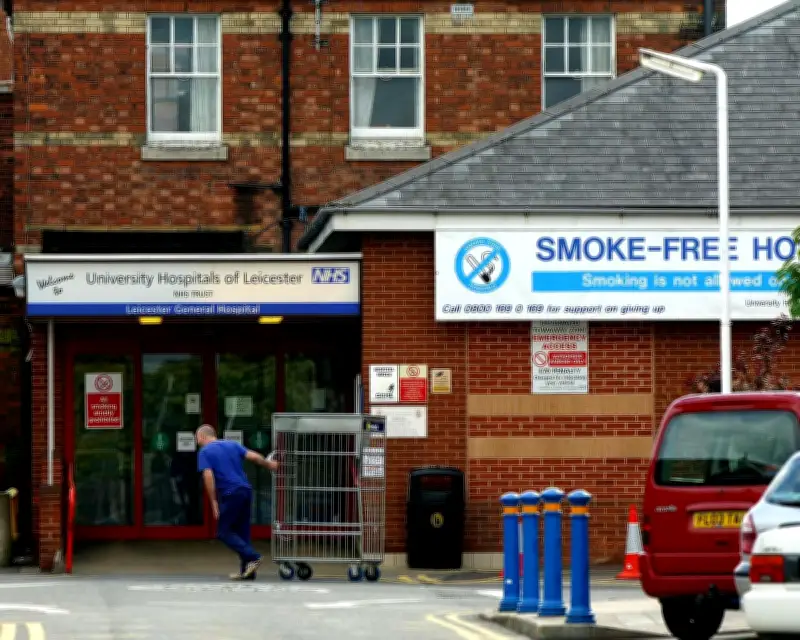
Five hospitals have already implemented the test, with University Hospitals of Leicester becoming the first NHS trust in England to do so, and at least 16 additional hospitals expected to follow by year's end.

Traditional Testing vs. New Approach
Traditional bladder cancer testing relies on cystoscopy, a procedure that involves inserting a tube with a camera through the penis or urethra to examine the bladder. The discomfort associated with this method has led many patients to decline the procedure.
In contrast, the Galeas bladder test is non-invasive, requiring only a urine sample. It is a DNA-based test that analyzes the 23 genes most commonly linked to bladder cancer.
Trial Results
An NHS trial involving 964 patients at seven hospitals in England and Scotland during 2024-2025 demonstrated that the test correctly identified bladder cancer in 92% of participants. Bladder cancer is the 11th most common cancer in the UK.
Cystoscopy, by comparison, achieved only 81% accuracy. Jeff Bousfield, CEO of Nonacus, the biotech company behind the Galeas bladder test, explained that cystoscopy's lower accuracy stems from the difficulty of identifying bladder cancers of varying shapes, shades, and sizes using a manually operated keyhole camera. He expressed hope that the test's 92% accuracy could improve further as its NHS rollout expands.
Patient Experience
Patients are referred for bladder cancer testing when they have haematuria, or blood in their urine. Jayne Douglas-Moore, a consultant urological surgeon at the Leicester NHS trust, described cystoscopy as "an invasive investigation to look at the inside of the bladder. The patient is given an anaesthetic gel but otherwise remains awake. While it only takes one-to-two minutes, it is an intimate examination and can be embarrassing or cause discomfort. It is commonly declined."
Douglas-Moore noted that the Galeas bladder test benefits both patients, who can take the test at home and mail back their sample, and hospitals, by freeing up resources. She called the long-awaited non-invasive test "a significant breakthrough" in diagnosing a cancer that affects more than 10,000 people annually.
Implementation and Early Results
The "convincing" trial results led the Leicester trust to adopt the test last month for patients whose blood in urine is detected via a urine dipstick. "Of the results received so far, patients have received their results in 16 days, which exceeds the NHS 28-day faster diagnosis standard for cancer. This is based on low numbers as we are only three weeks in but shows promise," said Douglas-Moore.
Early data from the trust indicates that the Galeas bladder test may diagnose the disease 50% faster than cystoscopy.
Development and Support
The new test was developed by Professor Richard Bryan, a urologist turned academic who directs the University of Birmingham's bladder cancer research centre, and his colleague Dr. Doug Ward.
Tony Hickson, chief business officer at Cancer Research UK, stated that the organization co-funded initial studies into the new test "because of its potential to dramatically improve how we detect bladder cancers, making the process kinder and quicker for patients. Studies are ongoing, but using this test could replace some of the unpleasant and invasive procedures patients currently experience when getting their symptoms checked out. The test could also catch cases earlier, as it can be done when someone first visits their GP, rather than having to arrange a separate hospital appointment. Innovations like this are critical for improving how we diagnose cancer cases."

Professor Frankie Swords, NHS England's national medical director, commented: "The NHS has a long history of adopting innovations to improve patient care, and this is another great example of NHS healthcare professionals taking the initiative and trialling new technologies to help to diagnose and treat cancer earlier."