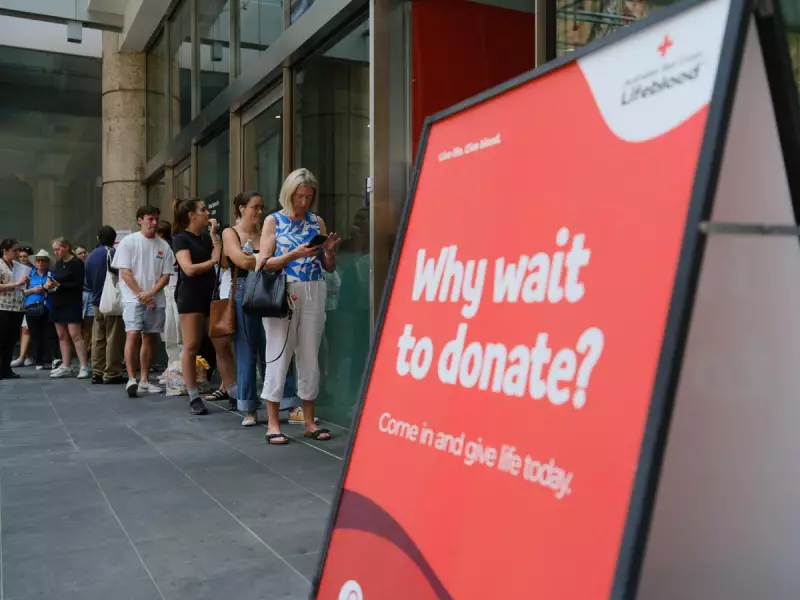
The horrific mass stabbing at Bondi Junction Westfield on Saturday, 13 April, left a nation in shock and six innocent people dead. In the devastating aftermath, however, a powerful and life-affirming response emerged from the community: a significant surge in people rolling up their sleeves to donate blood.
A Community's Immediate Response to Tragedy
Following the attack, which also left a dozen people injured, including a nine-month-old baby, Australian Red Cross Lifeblood reported a remarkable increase in appointment bookings. The organisation's call for donors, particularly for O Negative and O Positive blood types, was met with an overwhelming sense of duty from the public. This wasn't a coordinated campaign tied directly to the victims' treatment, but rather a spontaneous, collective understanding that in times of crisis, the national blood supply is a critical resource.
This immediate public action brings into sharp focus a simple, vital truth: blood donations are always needed. The blood products required to treat the Bondi victims were already on the shelves, thanks to previous donors. Every single donation has a shelf life – 42 days for red blood cells and just seven days for platelets – meaning the supply must be constantly replenished by everyday Australians.

The Constant, Unseen Need on Hospital Shelves
The stark reality is that Australia needs approximately 33,000 blood donations every week to meet patient demand. This need exists independently of any major disaster. It supports patients undergoing cancer treatment, complex surgeries, pregnant mothers experiencing complications, and people with chronic medical conditions. The Bondi tragedy powerfully illustrated that when sudden, unforeseen trauma strikes, hospitals must be able to rely on a ready and robust blood supply.
Lifeblood spokesperson Jemma Falkenmire emphasised this point, noting that the existing blood stocks were what enabled the swift medical response for the injured. "The blood products used to treat those injured were already on the shelf, donated by people weeks ago," she said. The surge in bookings post-tragency is therefore not about replacing what was used, but about paying it forward for the next unknown emergency and the thousands of ongoing medical needs.
Turning Grief and Helplessness into Action
For many citizens, the act of donating blood became a tangible way to channel feelings of grief, horror, and helplessness into something positive and profoundly useful. In the face of an act of senseless violence, it represented an act of shared humanity and community care. It is a reminder that individual contributions, which take less than an hour, collectively form a national safety net.
The lesson from Bondi is clear: we cannot predict the next crisis, but we can prepare for it. Maintaining a strong blood supply is a public responsibility. The generosity shown in the past week needs to become a sustained, habitual commitment. Whether it's in response to a national tragedy or a quiet Tuesday afternoon, every donation contributes to a resource that saves lives daily, keeping our healthcare system resilient.
As the community continues to mourn, the simple act of donating blood stands as a powerful testament to how Australians support one another. It transforms vulnerability into strength and ensures that in our moment of greatest need, the lifeline is there.