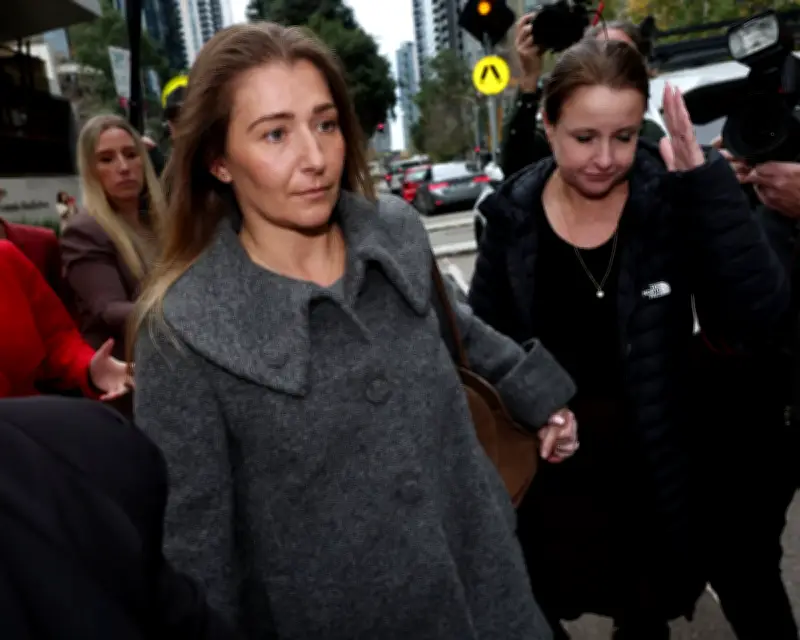
Emily Lal, the birthkeeper hired by Stacey Warnecke, who died after a freebirth, told a Melbourne coroner on Tuesday that her role was not to make the birth safer. Lal was paid $6,000 to provide a full freebirth support package to Warnecke, who passed away on September 29 at Frankston hospital following a home birth attended by her husband and Lal.
Birthkeeper's role defined as 'supportive friend'
Giving evidence at the inquest into Warnecke's death, Lal stated that Warnecke had already decided on a freebirth before contacting her. Birthkeepers lack medical training and operate outside the medical system. Lal emphasized that her primary role was that of a friend, and the payment was for her time, not for medical services.
The court heard that Lal asked Warnecke three times within five minutes if she wanted an ambulance called after she gave birth to the placenta, lost up to 1.5 liters of blood, and began struggling to breathe. Warnecke initially refused but agreed on the third request. By the time paramedics arrived, she was seriously ill from a massive postpartum hemorrhage and died hours later from complications.

Inquest hears evidence on safety and responsibility
Under questioning by counsel assisting Rachel Ellyard, Lal said her role was not to override the wishes of the mother and family. When asked about her website offering services like education, antenatal support, birth attendance, and postpartum support, and whether she saw her role as keeping mothers safe, Lal replied, “How would I help people stay safe during birth? I don’t think me being there makes the birth more safe.”
She described her attendance as “as a friend in a support role.” During a call to paramedics played in court, Lal reported Warnecke's breathing difficulty but stated the bleeding had stopped. She told Ellyard that while she thought the blood loss was more than normal, it wasn't her role to share that unless asked: “I wouldn’t say to her, ‘I think you’ve lost too much blood.’ That’s not my role.”
Ellyard noted that Lal was being paid to be there, to which Lal responded: “I’m attending as a supportive friend. I’m not there to make a birth safer. I can’t do that. I’m not clinically trained. It’s not my role to assess blood loss.”
Training and aftermath
Lal said she completed an online course offered by the Free Birth Society, a multimillion-dollar business promoting unassisted birth, criticized by medical professionals for dangerous advice. At one point, Warnecke asked if her blood loss was normal, and Lal said it was more than she would consider normal, adding, “If it was me, I would have been concerned.” However, she maintained she would not make decisions for a mother about calling an ambulance, as respecting autonomy was central to her support.
With hindsight, Lal said she might have pushed harder for Warnecke's agreement to call an ambulance but still would not have made the final decision. The inquest heard Monday that postpartum hemorrhage is rarely fatal in hospital with medical care. Asked if Warnecke would have benefited from faster medical access, Lal said she couldn't say what would have happened but agreed hemorrhage is more dangerous at home.
Lal stopped working as a birthkeeper immediately after Warnecke's death, citing trauma. The health complaints commissioner suspended her from providing or advertising health services pending an ongoing investigation. The court heard that while Warnecke was in surgery, Lal returned to the home, cleaned up, and disposed of the bloodied carpet in her own bin because it wouldn't fit in Warnecke's. She refused to give a statement to police.
When asked if her actions suggested concern for herself, Lal called it “really unfair,” saying she wanted to spare Warnecke's husband from seeing the scene. She sought legal advice after Warnecke's death due to media blame following a previous freebirth death. “I wasn’t legally required to [make a statement to police] so I opted to not to do that,” she said. “I am so sad and distressed to this day over Stacey’s death.” The inquest continues.