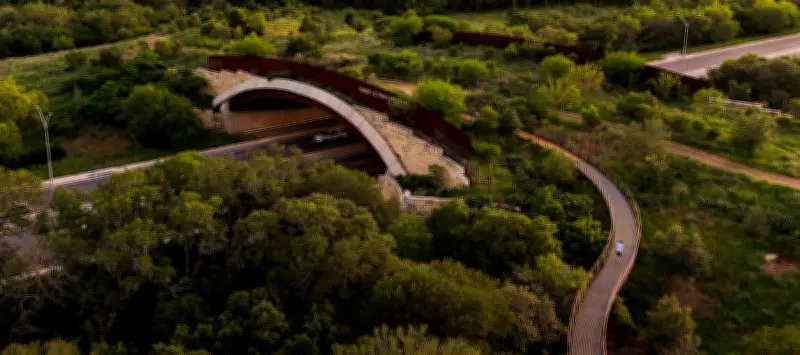
San Antonio, Texas, has unveiled a massive land bridge over a busy highway, providing a safe passage for wildlife and reconnecting habitats that were fragmented by urban development. The Robert L.B. Tobin Land Bridge, spanning six lanes of traffic on Loop 1604, is one of the largest such structures in the United States.
Connecting Two Sides of a Divided Landscape
The bridge connects the 1,200-acre Phil Hardberger Park on one side of the highway with a 300-acre natural area on the other. It is designed to allow deer, coyotes, bobcats, and other animals to move freely across the road, reducing vehicle collisions and promoting genetic diversity among wildlife populations.
According to the city of San Antonio, the bridge is 165 feet wide and 1,200 feet long, making it the largest wildlife crossing in Texas and one of the largest in the country. It is covered with native plants, trees, and grasses, creating a natural corridor that blends into the surrounding landscape.

Funding and Construction
The project cost approximately $23 million, funded by a combination of city bonds, state grants, and private donations. Construction began in early 2025 and was completed in June 2026. The bridge includes fencing to guide animals onto the crossing and away from the highway.
"This land bridge is a testament to our commitment to preserving San Antonio's natural heritage while accommodating growth," said Mayor Ron Nirenberg in a statement. "It will protect both wildlife and motorists for generations to come."
Expected Impact on Wildlife and Safety
Studies have shown that wildlife crossings can reduce animal-vehicle collisions by up to 90%. In Texas, such collisions cost an estimated $200 million annually in damages and injuries. The land bridge is expected to significantly reduce these incidents on Loop 1604, a major arterial road.
Biologists will monitor animal movement using cameras and trackers to assess the bridge's effectiveness. Early signs are promising, with several species already using the crossing within the first week of opening.
A Model for Future Projects
The success of the San Antonio land bridge may inspire similar projects across Texas and the United States. As urban areas expand, wildlife corridors become increasingly important for maintaining biodiversity. The bridge serves as a model for how infrastructure can coexist with nature.
The project has received praise from environmental groups and local residents alike. "This is a win-win for wildlife and people," said a spokesperson for the San Antonio Audubon Society. "We hope to see more crossings like this in the future."