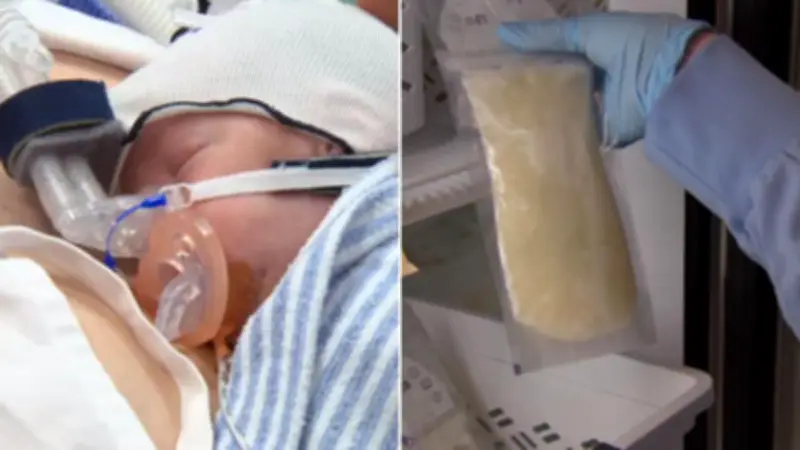
Fresh calls are being made for more breast milk donors after new Australian research found donated breast milk is helping protect premature babies from a life-threatening bowel disease. The study, led by Australian Red Cross Lifeblood and published in the Journal of Paediatrics and Child Health, found cases of Necrotising Enterocolitis (NEC) fell by more than a third after a national donor milk service was introduced.
What Is NEC and Why Is Donor Milk Critical?
NEC is one of the most serious complications affecting premature babies, causing severe damage to the bowel, infection, and death. For mother Chloe Chatfield, donated breast milk was vital for her daughter Ava, who arrived nearly two months early. “Due to my health, I couldn’t give her my breast milk. So having that service there has been amazing,” she told 7NEWS. Ava was born at 31 weeks and six days after complications during pregnancy.
Doctors emphasise that breast milk plays a critical role in helping premature babies survive and thrive. Royal Prince Alfred Hospital neonatologist Dr Meredith Ward told 7NEWS: “Breast milk is lifesaving for preterm babies. Breast milk has got special growth factors. Baby’s intestines will develop better when they’re given breast milk rather than formula, and the babies will also grow better.”

Study Findings: A Third Reduction in NEC Risk
The study examined outcomes for more than 4,300 babies born before 32 weeks gestation at 15 hospitals across Australia and New Zealand. Researchers found the risk of developing NEC dropped by more than a third after reliable access to donor milk became available. Ward said the condition remains one of the greatest fears for neonatal specialists. “Sadly every neonatologist has seen babies pass away from that condition and we’re delighted to be able to offer breast milk to more babies through this program,” she said.
Lifeblood’s Donor Milk Service: Scale and Impact
Since launching in 2018, Lifeblood’s donor milk service has distributed more than 309,000 bottles of donated milk and helped feed more than 8,000 babies in neonatal units across the country. The service now supplies more than 46 hospitals in every state and territory. Lifeblood milk research lead Dr Laura Klein said demand continues to grow. “We currently supply more than 46 hospitals in all states and territories in Australia and so we now need around 5,000 litres of donated breastmilk every year,” Klein said.
Future Research: Donor Milk for Full-Term Babies
Researchers are now exploring whether donor milk could also benefit babies born at full term to mothers with diabetes during pregnancy. These babies have a higher risk of developing low blood sugar and often require admission to neonatal intensive care units. Klein said researchers are hopeful donor milk could help reduce those complications. “Offering donor milk to these babies for the first few days of life might help them avoid low blood sugar, avoid admission to NICU and help support those mums on their breastfeeding journey,” Klein said.
How to Become a Donor
Awareness of the service remains low, but many mothers don’t want their excess milk thrown away. Donations can be made in major cities including Sydney, Adelaide, and Brisbane. For a full list of locations and information about how to become a donor, visit Lifeblood.