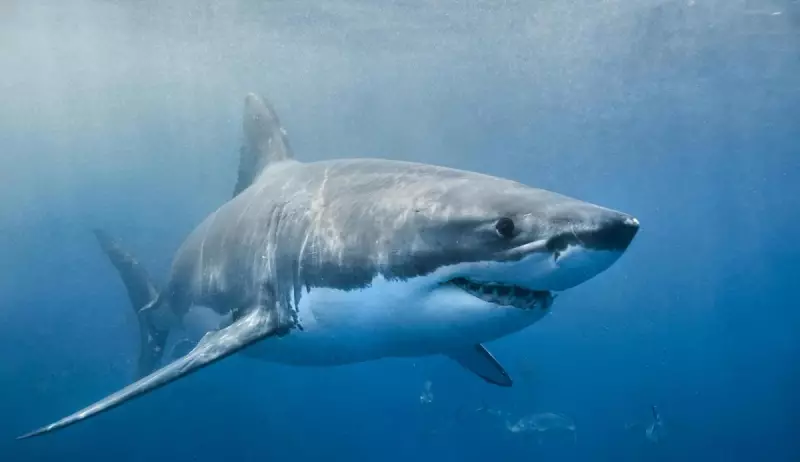
The number of great white sharks being tracked in Western Australian waters has fallen sharply, with tagging efforts dropping by more than a third over the past two years. This decline leaves the vast majority of the state's iconic predator population unmonitored, raising questions about the effectiveness of current mitigation strategies.
Sharp Decline in Tagging Efforts
Official data reveals a significant downturn in the tagging of white sharks. In 2023, authorities managed to tag 28 of the animals. However, that number fell to just 19 in 2024. This two-year total is markedly lower than the 2023 figure alone.
Since the program began in 2009, a total of 218 internal acoustic tags have been fitted. Of these, only 167 tags remain active and can be detected by a network of 40 receivers stationed along the WA coastline. Despite the recent slump, tagging activity in the last three years has still been higher than in 2022 and 2021, when only five and ten sharks were tagged respectively.

A Tiny Fraction of the Total Population
The number of tagged sharks represents just a small sample of the total white shark population frequenting WA's coast. A 2018 CSIRO study estimated the adult population of the south-western white shark group, which inhabits southern Australian waters and up the WA coast, to be approximately 1460 animals.
A spokeswoman for the Department of Primary Industries and Regional Development (DPIRD) explained the variability in tagging numbers. She cited several environmental factors, including sea conditions, seasonal snapper aggregations, the seal pupping season on the south coast, and the presence of attractants like whale carcasses.
"Shark tagging operations are generally planned near Garden Island when sharks are attracted to snapper aggregations, during the seal pupping season in summer in Esperance and near whale carcasses, when possible," the spokeswoman said.
Expanded Tagging and Public Safety
Following the tragic death of 16-year-old Stella Berry, who was killed by a bull shark in the Fremantle harbour in 2023, the WA Government initiated a bull shark tagging program in the Swan River. To date, DPIRD has tagged five bull sharks across the state, including one at Minim Cove in December 2024. The Department of Biodiversity, Conservation and Attractions (DBCA) has also tagged 12 juvenile sharks in the river system.
Tagging is a cornerstone of the state's shark mitigation strategy. "DPIRD’s research shows that white shark movements are mostly uncoordinated highlighting the importance of the Shark Monitoring Network in providing near real-time updates on tagged shark activity," the DPIRD spokeswoman stated.
The public SharkSmart website highlights a stark contrast between technology and human observation. In the week leading up to December 17, tagged shark detections were vastly outnumbered by public sightings. While a tagged bull shark was detected 48 times at Blackwall Reach and another 11 times at East Fremantle, there were 66 reported shark sightings along the coast from Yanchep to Wharton beach, east of Esperance.
This disparity underscores the limited reach of the tagging program. Last weekend, DPIRD issued a shark warning for Perth's northern beaches after numerous sightings, with sharks reported coming within 2 to 5 metres of the shore.