A guided historical tour at a famous explorer's homestead was recently hijacked by one of Australia's most elusive native animals, proving that sometimes nature provides the best entertainment.
A Monotreme Upstages the Monologue
During a dusk visit to Cooma Cottage, the former farm of 19th-century explorer Hamilton Hume on the banks of the Yass River, columnist and adventurer Tim the Yowie Man was mid-story when he lost his audience. He was recounting tales from Hume's groundbreaking 1824-25 overland expedition with Captain William Hovell from Sydney to present-day Geelong, including the daring feat of convict servant Thomas Boyd who swam flooded rivers with a rope in his mouth.
The captivated group, however, suddenly stopped listening. "I was usurped by a plucky platypus surfacing in the river behind me," Tim explains. Far from shy, the monotreme frolicked in the water, holding the group's attention for several minutes before vanishing into a riverbank burrow.

For most on the tour, it was their first-ever sighting of a platypus in the wild. One excited guest declared he'd finally completed the "trifecta" of mascots from the Sydney 2000 Olympics: Olly the kookaburra (air), Millie the echidna (earth), and Syd the platypus (water).
The Quest for the Elusive Echidna
The platypus encounter sparked a conversation about Australia's other iconic monotreme, the echidna. While everyone on the tour had seen a kookaburra, several guests admitted they'd never spotted an echidna outside a zoo, a surprising revelation given their common presence around Canberra.
Mulligans Flat Nature Reserve in the ACT, with its predator-proof fence, is arguably one of the best local places to see them. For a near-guaranteed sighting, head to Murramarang National Park, just north of Batemans Bay on the NSW South Coast.
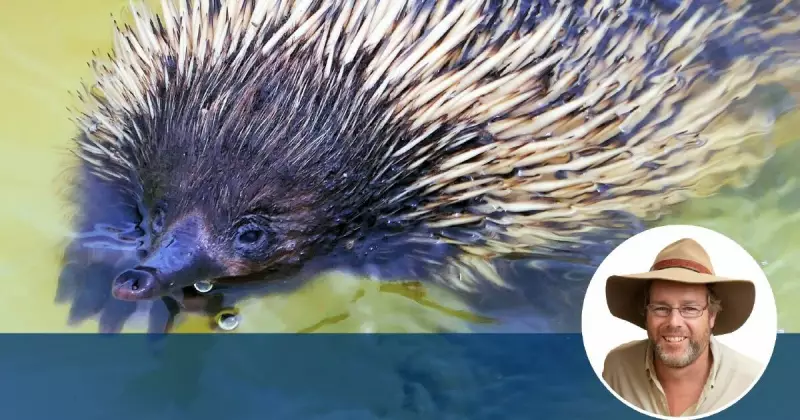
Tim recently had a remarkable 90-minute encounter with an echidna there while searching for a hidden bush cubby near Maloneys Beach. The echidna, affectionately dubbed 'Millie', waddled onto the track and allowed Tim to observe her ant-eating antics at close range. He watched her rummage under logs, extend her long tongue to feast on insects, and even play a game of peek-a-boo from inside a hollow log.
"So often we spot an animal in the bush, snap a photo and keep walking, but it was so rewarding to take the time," Tim reflects, noting the unique opportunity to see her quills and behaviour up close.
Echidnas in Lore and Landscape
The connection between echidnas and the Australian landscape runs deep. At Fingal Head in far northern NSW, the distinctive headland of basalt columns is known to the local Bundjalung people as 'Booninybah', meaning 'home of the echidna'. A Dreamtime story tells of a man turned to stone, his back covered in spikes, forming the rocky outcrop.
Closer to Canberra, a striking example of similar columnar jointing can be seen at Ginninderra Falls, though the site remains closed to the public.
Tim also recalls a unique local echidna story: in 2012, an albino echidna nicknamed 'Casper' was found in distress near Canberra Airport. After recuperating, the vision-impaired animal was released into Tidbinbilla Nature Reserve.
Since his long encounter with Millie, Tim reports that three more echidnas have crossed his path in Canberra's suburbs. He concludes with a playful plea to any echidnas near the Yass River: please wait until after he finishes his Hume and Hovell story before making a grand appearance for his next tour group.