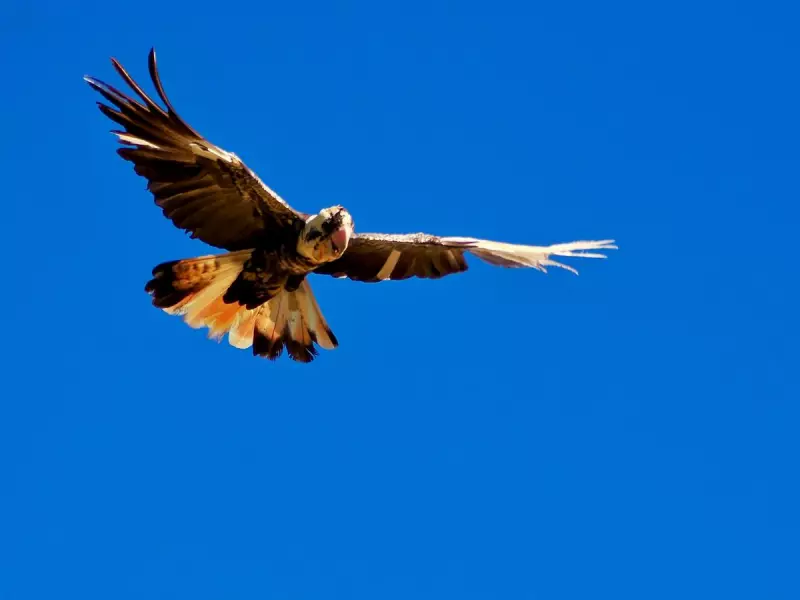
A birdwatcher in Western Australia's South West has captured extraordinary photographs of a mysteriously coloured black cockatoo, a sighting that has excited the local birding community.
A Striking and Unforgettable First Sighting
Simon Handford first glimpsed the unusual bird several months ago on his partner's farm in Dardanup. The initial encounter was fleeting, with the cockatoo flying low through a paddock alongside another. What immediately caught Mr Handford's eye was a distinctive flash of white-cream plumage, a stark contrast to the typical dark feathers of red-tailed forest black cockatoos.
"I remember thinking it was really striking and couldn't quite believe it," Mr Handford recalled. Without his camera ready, he was unable to document the sight, leaving his claims of a strange black-and-white cockatoo initially met with scepticism.

The Patient Hunt for Photographic Proof
Determined to prove his find, Mr Handford spent the subsequent months on the lookout. He caught only brief glimpses until his partner also saw the bird, providing a crucial second witness. The breakthrough finally came on December 21.
During a morning walk with his dogs, and this time equipped with a proper camera lens, Mr Handford spotted the cockatoo again. He managed to take several shots, including profile views as the bird cooperatively turned its head, and even captured images of it in flight.
"I remember checking my camera screen and feeling happy that I'd 'got it'," he said. It was only after sharing his images on the Western Australian Birds Facebook group that he fully grasped the significance of his discovery.
Explaining the Unique Plumage
South West NRM CEO Dr Manda Page reviewed the photographs and suggested the cockatoo likely has a condition known as leucism. Leucism results in a partial loss of pigmentation, explaining the unusual yellow and cream patches amidst its otherwise black feathers.
Dr Page noted it was particularly fascinating that the bird has survived to adulthood and appears to be functioning well within its environment. Mr Handford confirmed the cockatoo seems fit and healthy and is often seen with what he assumes is its partner. The bird is part of a larger flock of around 40 cockatoos that roost in nearby jarrah and marri trees.
This rare sighting highlights the unique biodiversity found in Western Australia's South West and serves as a reminder of the fascinating natural anomalies that can occur in wildlife populations.