Wildlife rescue volunteers across the Illawarra region are dealing with profound trauma after a severe heatwave devastated local bat colonies, claiming the lives of almost 650 flying foxes.
Scorching Temperatures Trigger Mass Mortality Event
The crisis unfolded on Saturday, January 10, 2026, as the mercury soared to extreme levels. Official weather stations recorded a top of 41.9 degrees in Bellambi, 42.6 degrees in Albion Park, and 41 degrees in Kiama. This followed several days of building heat since Wednesday, January 7.
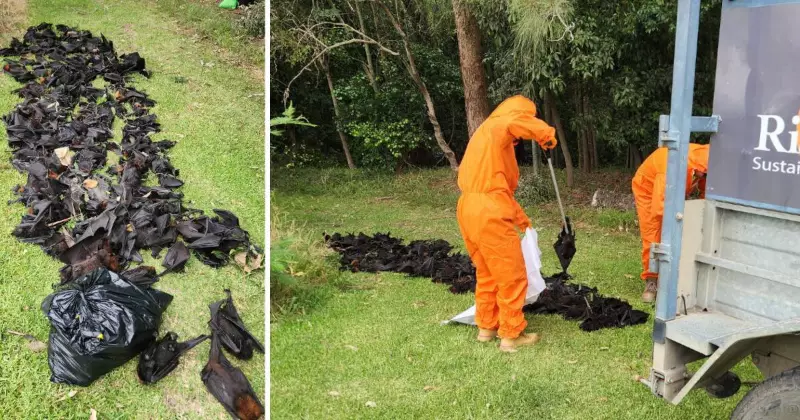
The intense conditions proved fatal for flying fox colonies in two key locations. In Dapto, approximately 500 bats died, while in Figtree, volunteers discovered another 147 dead animals. The scene was described as horrific, with deceased bats littering the ground beneath trees and others found still hanging lifelessly from branches.

Volunteers Confront 'Disaster' and Orphaned Young
Long-time WIRES volunteer Rebecca Daly said the scale of the devastation was unprecedented in her experience. "It was quite a disaster ... they were littered all over the ground, there were bodies everywhere," she recounted emotionally. "It's a rescue unlike any others, it's really devastating and traumatic to see."
The tragedy was compounded by the high number of juvenile fatalities. At the Figtree colony, about 50 per cent of the deaths were juvenile bats. Volunteers encountered orphaned flying foxes struggling amidst the bodies of their parents. This colony was already under pressure, situated between the busy Princes Highway, M1 Princes Motorway, and a Figtree off-ramp.
"The adults didn't survive and there were babies on their own. It's just a terrible situation," Ms Daly said. "That's quite distressing, that's a lot of babies dying in one maternity area."
Vulnerable Species Hit Hard, Recovery in Doubt
The deaths included a significant number of Grey-headed flying foxes, a species listed as vulnerable in New South Wales. They accounted for 50 per cent of the Dapto fatalities and 20 per cent in Figtree, with the remainder being black flying foxes.
"Once it hits 40 degrees they don't cope," Ms Daly explained, highlighting the bats' susceptibility to extreme heat.
Rescue efforts managed to save only a handful of survivors: 23 live bats in Dapto and five in Figtree, now in WIRES care. Many severely ill bats had to be euthanased. This local event mirrors catastrophic losses seen in the Hunter region and Victoria, raising concerns for the species' long-term viability. "Once you have a hit like this, and what we're seeing in Victoria, it's going to impact the species," Ms Daly warned.
Dapto resident and Bushcare volunteer Marcus Burgess described the shocking scene at Brooks Creek. "I've never actually seen dead bats like this before. I have never seen them down this low in the canopy before," he said.
Public Urged to Report, Not Touch
Authorities anticipate more sick or dead flying foxes may be discovered in the coming days. The public is strongly advised not to touch the animals due to the potential risk of Australian bat lyssavirus, a serious disease related to rabies.
If you encounter a sick or dead flying fox, you should immediately contact WIRES on 1300 094 737.
The weekend's temperatures were historically significant. Bellambi's 41.9°C was close to its record of 43.7°C set in 2006, and almost 17 degrees above the January average. Similarly, Albion Park's 42.6°C ranked as its third-highest recorded temperature, underscoring the severity of the heatwave event.