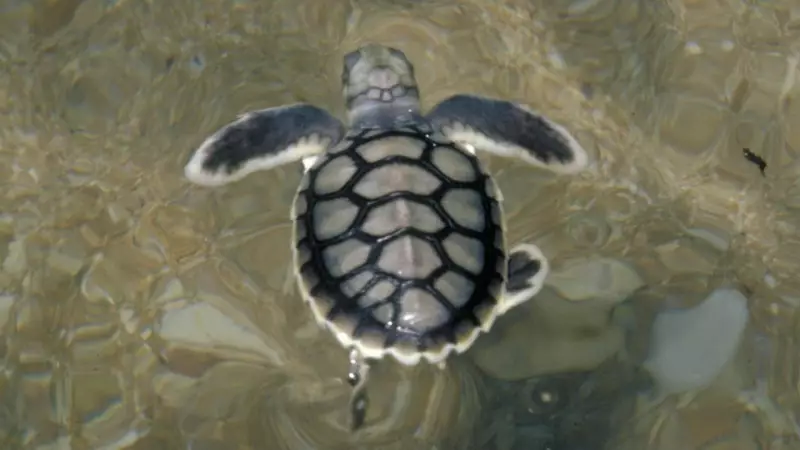
The relentless wet season in North Queensland is doing more than just filling dams and greening lawns. It is also setting the stage for a potential population shift in one of the region's most iconic marine creatures. As the first green sea turtle hatchlings of the season begin their perilous journey to the sea, scientists are watching closely, noting that the constant rain could trigger a significant boom in male hatchlings.
The Science of Sand Temperature and Turtle Sex
The sex of sea turtles is not determined by genetics but by the temperature of the sand in which their eggs incubate. This phenomenon is known as Temperature-Dependent Sex Determination (TSD). Warmer sands, typically above 29.1 degrees Celsius, tend to produce females, while cooler sands result in males. The recent persistent rainfall across the Townsville region has been consistently cooling the region's beaches, pushing sand temperatures into the male-producing range.
Dr. David Booth, a marine biologist from the University of Queensland, confirms the critical role of weather. "The temperature of the nest determines the sex of the hatchling," he explained. "If we have a cool summer with lots of rain, then we tend to get more males. If we have a hot summer, then we get more females." With the current conditions, the balance is tipping towards males.

Monitoring the Crucial Nesting Season
The main nesting season for green sea turtles in Queensland runs from November to March, with hatchlings emerging roughly eight weeks after eggs are laid. Key monitoring sites, including the world-renowned Mon Repos turtle rookery near Bundaberg and beaches around Townsville and the Great Barrier Reef islands, are under close observation. Rangers and researchers are tracking nest temperatures and hatchling success rates.
While a season producing more males is not an immediate crisis, it highlights the long-term vulnerability of these species to climate patterns. "It's a fascinating natural process, but it also shows how sensitive these animals are to changes in their environment," said a spokesperson from the Queensland Department of Environment and Science. Prolonged trends of cooler, wetter summers or hotter, drier ones could skew population ratios over decades, posing a threat to future breeding success.
Implications for Conservation and Climate Change
This season's potential male boom serves as a real-time case study in how local weather events, which may be influenced by broader climate cycles, directly impact wildlife biology. Conservation efforts for endangered sea turtles must now account for these subtle environmental cues. The focus extends beyond protecting nests from predators and human disturbance to understanding the climatic factors that determine the very makeup of the next generation.
For now, the tiny hatchlings making their way to the ocean near Townsville are part of a unique natural experiment. Their journey is fraught with challenges, from crabs and birds on the beach to fish in the surf. The added variable of their sex ratio, shaped by the season's rains, adds another layer to the complex story of marine conservation in a changing climate. Residents and tourists are reminded to keep beaches dark and free of obstacles to give all hatchlings, male or female, the best possible start to life.