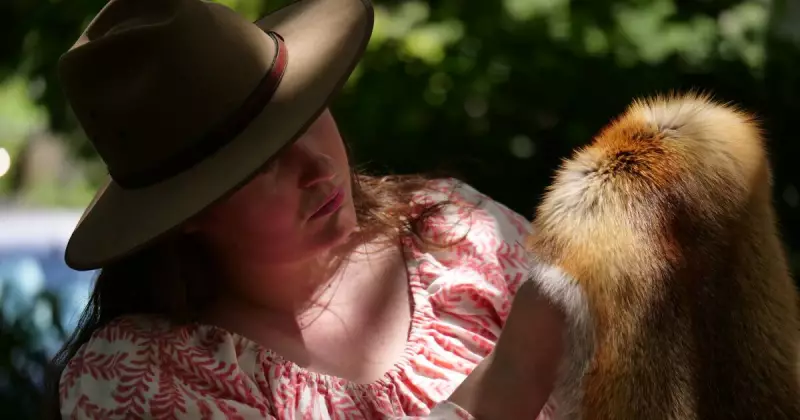
An Australian conservationist is championing a deeply uncomfortable fashion statement as a potential lifeline for the nation's embattled native wildlife. Emma Sinclair, a Canberra-based master's student, is launching a business that transforms the pelts of culled invasive foxes into high-end garments, arguing that wearing this 'conservation fur' is an act of ecological protection.
From Silent Bushland to Parisian Ateliers
The genesis of Sinclair's venture, named Almanac, was her profound sadness at walking through silent Australian bushland. She knew these areas should be bustling with unique mammals, many of which have been driven to extinction or to the brink by introduced predators. Foxes have directly caused the extinction of 16 Australian mammals and threaten 75 more, while also costing agriculture an estimated $227 million annually.
"I'm against the fur industry in general... but this is a really specific, different scenario," Sinclair explains. Observing the thousands of foxes culled across the country each year, she questioned the waste. "Why are we just letting those pelts disintegrate in the field where they fall? That feels wasteful to me."

Her quest for a solution took her from rural fox hunts and Australian wool mills to the heart of the traditional fur trade in Paris, where she attended a friend's wedding and sought knowledge from ateliers. Along the way, she taught herself to sew and design from scratch, even mastering a 50-year-old Toyota knitting machine.
Building a Market for 'Conservation Fur'
Sinclair's project aims to create a financial incentive for ethical culling by establishing a market for fox pelts. Her first product is a wool beanie, sourced from local wool, topped with a fox-fur pom-pom. Future plans include scarves and full-length coats. However, the labour-intensive tanning process and the costs of sustainable production mean she is building the business slowly while completing her Master of Biodiversity Conservation at the Australian National University.
The most significant hurdle isn't logistical but philosophical. Sinclair spends considerable time convincing people that her concept is ethically sound. "This is not normal fur, this is conservation fur," she asserts, drawing a parallel to New Zealand's possum fur trade. "Wearing fur is an act of conservation in itself."
She reports that it often takes just 15 seconds of explanation for people to engage with the idea more deeply, and even vegans have acknowledged the conservation logic behind the project. She meets resistance from those who find the concept distasteful, but counters that wasting the resource is more disrespectful.
An Educational Mission Rooted in Nuance
For Sinclair, the business is as much about education as commerce. Through her interactions, she has discovered many Australians are unaware that foxes are a destructive introduced species. "It's really about meeting people where they're at," she says.
Her journey has connected her with farmers suffering livestock losses, ethical hunters, wombat rescuers dealing with fox-spread mange, and tanners experimenting with eco-friendly methods. She emphasises there is no 'bloodlust' in her mission, only a calculated response to an ecological crisis.
"The sadness I feel about walking through silent bushland... will always be more impactful to me than the loss of introduced species," Sinclair states. She hopes her 'conservation fur' will spark difficult conversations and provide a tangible, if unconventional, tool in the fight to preserve Australia's irreplaceable native fauna.