The senseless killing of a protected blue groper on the New South Wales Central Coast has sent shockwaves through the community, reigniting fierce debate and urgent calls for the establishment of a marine protected area near Terrigal.
A Trusting Nature Becomes a Fatal Flaw
The incident, which occurred on November 30 and was publicised by a local fishing group, involved an inexperienced spear fisher who was subsequently dealt with by police. This act violated not only community sentiment but also a significant fishing ban. In March 2025, NSW Agriculture Minister Tara Moriarty extended an existing temporary ban on taking eastern blue gropers, making it a total prohibition for three years.
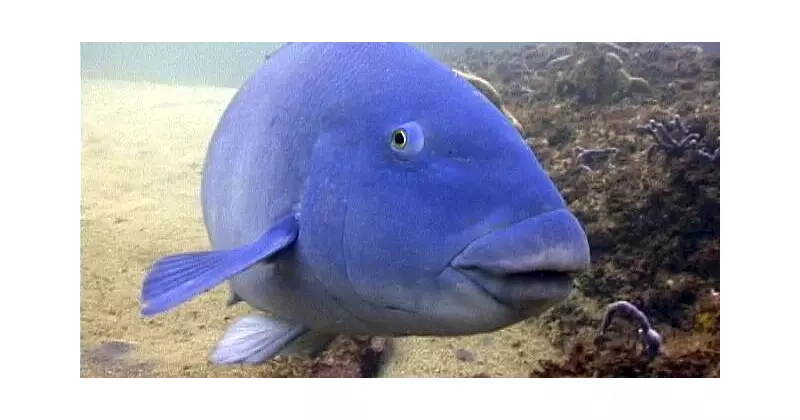
This legislative action was a direct response to a series of high-profile killings that horrified the public. The vulnerability of the blue groper lies in its celebrated character. Often described as the "puppy dog of the sea", the species is known for being wide-eyed, friendly, and remarkably trusting of humans. This curiosity brings them close to swimmers and divers, making them tragically easy targets.

Underwater photographer Vanessa Risku, who encountered a groper known locally as "Petey" in Bushrangers Bay at Shellharbour, captured this sentiment perfectly. "What sort of sport would it be to spear a fish that's actually coming up to say hello? It doesn't seem right," she said. Risku also highlighted the groper's ecological role, noting they are one of the few fish that prey on proliferating longspined sea urchins.
Community Outrage Drives Policy
The emotional connection people feel with blue gropers is a powerful force in NSW. These fish are so beloved they often receive names, like "Gus" whose spearing in Cronulla in late 2023 triggered the initial ban, and the famous "Bluey" whose death in 1996 helped cement the species' protected status. The attachment was formalised when the eastern blue groper was declared the state's official fish, a move championed by former premier Bob Carr after his own encounters.
Minister Moriarty cited new scientific research as a key reason for the three-year extension. The study, published in the CSIRO's Marine & Freshwater Research journal, found blue groper numbers had declined by approximately 50 per cent in some areas of the mid-north coast and the Greater Sydney bioregion, which extends to Wollongong and Lake Illawarra. However, populations further south in the Batemans Shelf region remained stable, suggesting cooler waters may offer a refuge.
"The state's fish holds a special place for many people and communities, and this has also contributed to the decision," Moriarty stated, acknowledging the blend of science and public sentiment guiding the government's approach.
Debate and the Path Forward
Not everyone supports the blanket ban. Some recreational fishers on the South Coast, where numbers are healthier, argue the policy is a knee-jerk reaction not fully supported by data in their region. Eden fishing guide Nath Burns told the ABC he supports conservation based on evidence, while Wollongong MP Mark Banasiak previously criticised the rule as being driven by emotion.
Conversely, environmental advocates like James Sherwood from the Australian Marine Conservation Society welcomed the extension. He argues even catch-and-release fishing is harmful, as panicked gropers can injure themselves, and advocates for a permanent ban. "It's a great first step, but protecting this iconic species through a permanent ban on all forms of fishing would be preferable," Sherwood said.
The extended ban until 2028 is framed as a precautionary measure. Minister Moriarty emphasised it will allow for three further years of scientific monitoring to understand how the species copes with warming seas and other pressures. The government aims to balance community expectation for protection with sustainable management, all while the shadow of recent illegal killings underscores the ongoing threat to this iconic marine resident.