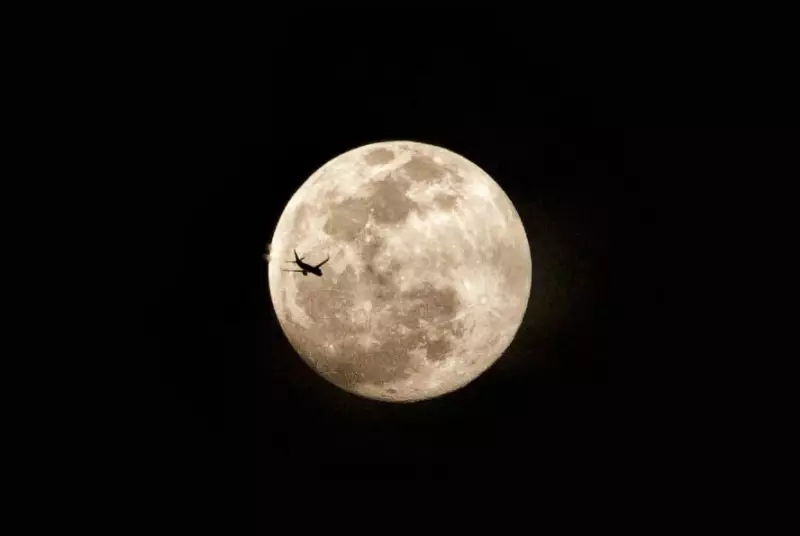
Perth skywatchers are in for a brilliant farewell to 2025, with the year's final and most dazzling supermoon set to dominate the Western Australian night sky this Friday. This celestial event, known as the Cold Moon, promises to be a spectacular sight as it appears larger and more luminous than a typical full moon.
What Makes the Cold Moon a Supermoon?
The upcoming lunar display is not just any full moon. It is classified as a supermoon, which occurs when the moon's orbit brings it closest to Earth, a point known as perigee. This proximity makes the lunar disc appear approximately 14% bigger and 30% brighter than when it is at its farthest point. The Cold Moon marks the third and final supermoon of 2025.
Matt Woods from the Perth Observatory explains that the name 'Cold Moon' is part of a long-standing tradition. "The moons are named after certain seasons. Each moon has its own meaning, and a lot of the naming comes from North American traditions," he said. This particular name reflects the chilly conditions of the Northern Hemisphere winter.

Your Guide to Viewing in Perth
For those eager to witness this astronomical highlight, timing and location are key. The supermoon will begin to rise over Perth at 7:55 PM on Friday night. The beauty of moon-gazing is its simplicity. "You really need your own eyes — go out the front yard or the backyard and you'll see it," advises Woods.
However, for an unforgettable experience, consider heading to one of these prime viewing spots around the city:
- Kings Park: Offers elevated, panoramic views with minimal light pollution.
- Matilda Bay: Provides a stunning foreground with the moon reflecting over the water.
- Perth Hills: Escape the city glow for darker, clearer skies.
- Golden View Lookout: A perfect vantage point to watch the moon ascend.
Capturing the Moment and Future Lunar Events
If you're hoping to photograph the supermoon, Matt Woods shares a pro tip: "Have your camera on a tripod, reduce your exposure, and use your zoom to get right in on the moon, that's how you get the best shot." This technique helps manage the moon's brightness and capture crisp detail.
While this is the last supermoon for the year, the celestial calendar remains busy. The next full moon will occur on January 3, 2026, followed by others later in the year. "We get three or four every year — so whilst they aren't super rare, they're still beautiful events worth stepping outside for," Woods noted, highlighting upcoming full moons on November 24 and December 24, 2026.
So, mark your calendar for Friday night, find a comfortable spot, and look up to enjoy one of nature's most reliable and awe-inspiring shows.