Total Lunar Eclipse to Bathe Australia in Blood Red Light on Tuesday Night
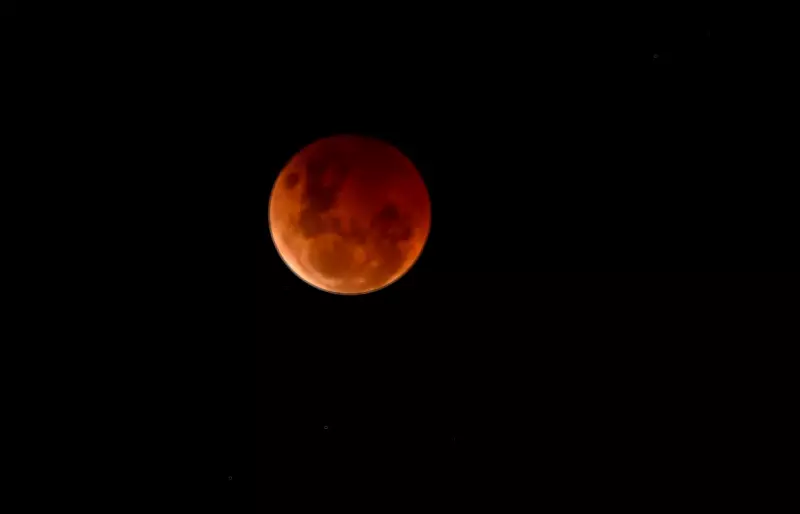
The blood red moon of a total lunar eclipse will glow like a fiery ember in the night sky on Tuesday, March 3, offering a rare and captivating celestial spectacle for viewers across Australia. As the Earth aligns perfectly between the sun and the moon, it will cast a deep shadow over the lunar surface during an hours-long astronomical event that promises to mesmerise sky gazers from coast to coast.
When and Where to Witness the Eclipse Across Australia
The period when the moon is fully engulfed in the Earth’s red shadow, known as totality, will last for precisely one hour and be visible from every corner of Australia. At least part of the partial eclipse, the phase on either side of totality where a creeping shadow appears to take a bite out of the moon, will also be observable nationwide. However, residents on the east coast will enjoy a unique privilege, as they are the only ones who can experience every single moment of this eerie phenomenon.
East coast viewers will additionally witness the penumbral eclipse, a more subtle, hour-long phase on either side of the partial eclipse, during which the moon enters the Earth’s outer shadow and begins to dim gradually. Here are the detailed timings for key locations:

- Sydney, Canberra, Melbourne, and Hobart: The penumbral eclipse commences at 7:44 pm, with the partial eclipse starting at 8:50 pm. Totality on the east coast will last from 10:04 pm to 11:04 pm.
- Queensland: Due to time differences, the partial eclipse begins at 7:50 pm, and totality can be observed from 9:04 pm to 10:04 pm.
- Adelaide: The partial eclipse starts at 8:20 pm, with totality visible from 9:34 pm.
- Perth: Totality will be visible from 7:04 pm to 8:03 pm, though the later sunset in Western Australia means the state will miss the beginning of the partial eclipse as the moon enters the Earth’s shadow, according to Australian National University astrophysicist Brad Tucker.
Dr. Tucker highlighted that this early evening eclipse presents an excellent opportunity for children across Australia to witness the event. However, with heavy rains forecasted to lash much of the country over the next week, cloud cover may obscure the sky show in some areas. For those unable to view it in person, Time and Date will provide a live stream of the eclipse, ensuring no one misses out on this astronomical marvel.
The Science Behind the Moon’s Red Hue
During a total lunar eclipse, the Earth blocks most sunlight from reaching the moon, but some light manages to filter through the planet’s atmosphere. NASA explains that sunlight, which appears white, actually contains a spectrum of colours. Blue light scatters relatively easily as it passes through Earth’s atmosphere, while reddish light travels more directly through the air.
This process, known as Rayleigh scattering, occurs because blueish colours consist of shorter wavelengths that are dispersed by atmospheric particles. In contrast, the long wavelengths of reddish light allow it to penetrate the atmosphere more effectively. The more dust or clouds present in Earth’s atmosphere during the eclipse, the redder the moon will appear.
The phenomenon is similar to a sunset, where the sun’s lower position causes its light to travel on a longer path through the atmosphere, scattering blue components and leaving a reddish glow. NASA poetically describes it as if all the world’s sunrises and sunsets are projected onto the moon during a lunar eclipse.
Rarity and Future Eclipses
Lunar eclipses are relatively rare events, and their visibility is further limited because only half of the globe can witness any given eclipse at once. While another lunar eclipse is scheduled for later in August, it will not be visible from Australia. The next opportunity for Australians to observe a lunar eclipse will be a spectacular event on New Year’s Eve 2028, extending into the early hours of New Year’s Day.

Dr. Tucker also noted that solar eclipses are much rarer than lunar eclipses, with skygazers in Sydney anticipating a dramatic solar eclipse in July 2028, when daylight will temporarily disappear from the skies. This upcoming total lunar eclipse serves as a reminder of the wonders of our universe and the importance of taking a moment to look up and appreciate the celestial dance above.