Black Hawk Helicopter Leads Major Recovery of Flood-Wrecked Vehicles from Victorian Coast
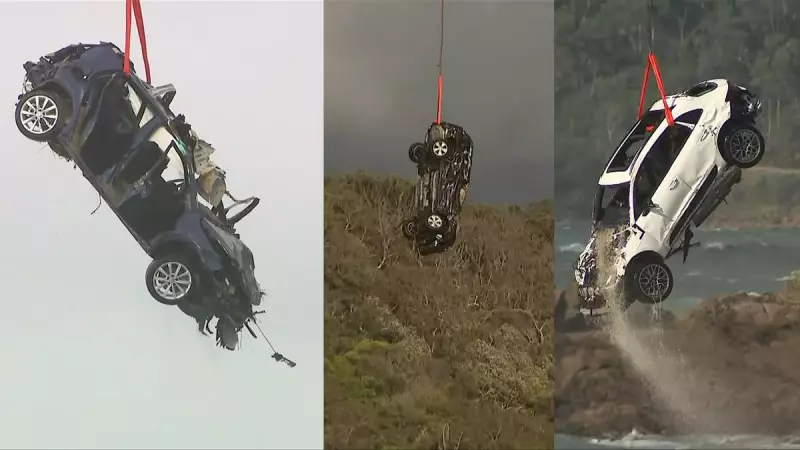
A dramatic recovery operation has unfolded along Victoria's southwest coast, where more than a dozen surf-battered vehicles have been winched from the ocean following devastating flash flooding. The operation, which took place a week after torrential rains lashed the region, saw a Black Hawk helicopter called in to assist ground crews in retrieving 14 cars that had been swept out to sea by the powerful Wye and Cumberland rivers.
"Just Another Day in the Office" for Recovery Teams
While the aerial rescue made for incredible viewing, the team working in the water against challenging surf conditions described it as routine work. Chris Jones from Lorne State Emergency Service (SES) reported that the vehicles were "totally trashed" and filled with sand and rocks from their ocean ordeal. Despite high winds during the operation, these conditions actually assisted the helicopter pilot, who used the wind to stabilize the aircraft during the delicate lifting process.
Challenging Conditions and Remarkable Efforts
The recovery teams faced significant challenges:

- Waves repeatedly rolling over crew members as they prepared vehicles for lift-off
- One car so heavily laden with sand and rocks that ground crews had to shovel it out before the helicopter could lift it
- The Black Hawk's 4000kg sling load capacity being tested by waterlogged vehicles
Marine construction team Craig and Jack Elston had the critical task of strapping harnesses to each car before they were airlifted. Jack Elston maintained that despite the difficult conditions, this was "just another day in the office for us" and that "nothing surprises me anymore."
Record Rainfall and Ongoing Recovery
The region experienced unprecedented rainfall, with the Lorne station recording its highest 24-hour rainfall since records began in 1884. More than 178mm of rain fell on the tourist region, disrupting holiday plans and causing significant damage. The flooding also washed several caravans down river, many of which broke apart in the surf.
For car owners like Lauren Davies, seeing her vehicle for the first time since it was swept away was "a little bit emotional." She described being "quite attached, quite sentimental ... about my car," though she noted the silver lining of being able to begin the insurance process.
Environmental Impact and Future Use
Following the recovery operation:
- The Great Ocean Road between Lorne and Skene Creek has reopened to traffic
- Water quality between Lorne and Kennett River has returned to normal according to Victoria's Environment Protection Authority
- Recovered vehicles were transported to the Anglesea rubbish tip for inspection
Once officially written off, the SES hopes to repurpose the vehicles as training tools, giving them a new life beyond their flood-damaged state. The EPA has advised residents to take precautions when cleaning up, recommending protective equipment like gloves, goggles and rubber boots due to potential contamination from floodwaters.
The successful operation demonstrates the coordinated efforts of emergency services in responding to natural disasters along Victoria's iconic coastline.