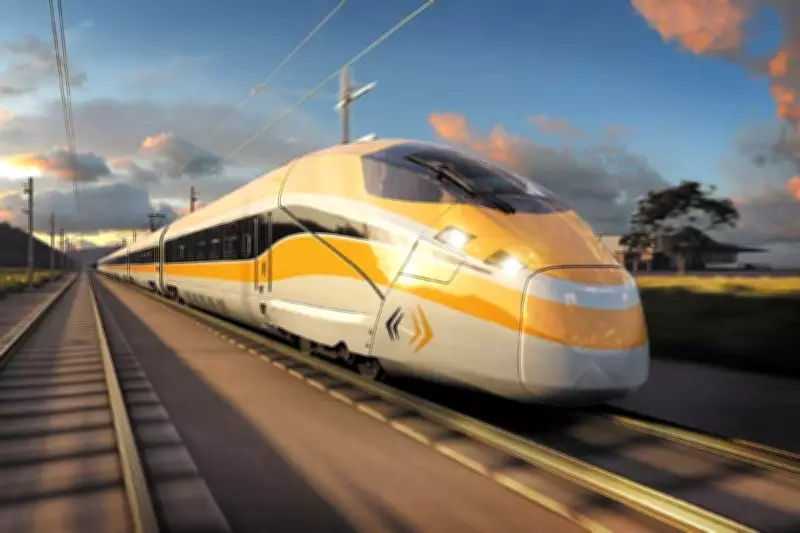
Australia is making its most ambitious push yet for high-speed rail, unveiling a $90 billion plan to connect Newcastle and Sydney in just one hour. However, experts caution that the project faces immense challenges that could see it fail, like all previous proposals.
Current Rail Limitations
The nation's newest passenger trains can reach speeds of 160km/h but are restricted to 130km/h—and sometimes just 80km/h between NSW's largest cities—due to tracks dating back to the 19th century. "They were designed in Victorian days," said Tim Parker of the High Speed Rail Authority. "It's got gradients, turns, and curves. No matter what train you put on that alignment, you'll never do much better."
Global Context
Around 30 countries now have high-speed rail. Japan recently celebrated 60 years of its Shinkansen bullet train, which travels at up to 320km/h. Europe is led by Spain's 4,000km network, while China claims an astounding 50,000km. In Australia, high-speed rail has been proposed many times since the 1980s, only to be postponed as too costly and not viable.

The Latest Plan
The current proposal would reduce the current two-and-a-half-hour journey between Newcastle and Sydney to just one hour, then extend to Western Sydney Airport. Construction would take over a decade and cost at least $90 billion. "We see this very much as a regional economic stimulus," Parker said, predicting thousands of new homes and jobs. "You have to really incentivise Australians to get out of their car. And I think a high-speed train will do that," one advocate added.
Engineering Challenges
The challenging terrain requires at least 70km of tunnels, making it the most tunnelled high-speed rail line in the world. "We have more experience with tunnelling, and tunnel boring machines have gotten better. But this is a significant leap," said Professor David Levinson from the University of Sydney's School of Civil Engineering. He warned the cost per kilometre is higher than any other high-speed rail project globally, including California's troubled effort.
Learning from Overseas
The High Speed Rail Authority says it is learning from international experience and has put the system design out to tender, attracting interest from organisations in 17 nations.
Future Expansion
An expanded network would eventually offer Sydney to Melbourne in four hours and Sydney to Canberra in 90 minutes, but not until around 2060. Prime Minister Anthony Albanese acknowledged the long timeline: "I will not be the Prime Minister when high-speed rail is finished," he said earlier this year. "But I am determined to be the Prime Minister who starts it." The final decision on whether to proceed will be made in two years.
Long-Term Vision
Currently, the fastest train journey between Sydney and Brisbane takes 14 hours and six minutes. High-speed rail would cut the 900km trip to just four hours. "Every country that has high speed is looking to expand it," Parker said, pointing to the Eurostar's success, where "no one now flies from London to Paris" because the train has become "a game changer." But with costs certain and benefits uncertain, Australia's high-speed rail dream faces its toughest test yet.