Embrace Your Green Bin and Help Build a More Sustainable Future for Your Community
The enormity of the environmental challenges facing the world can feel overwhelming, but there are many incredibly simple ways we as individuals can make a difference. Being thoughtful about your household's food waste and how you dispose of it is one of those easy things you can do to contribute to a more sustainable future.
FOGO Services: A Collaborative Effort Across the Region
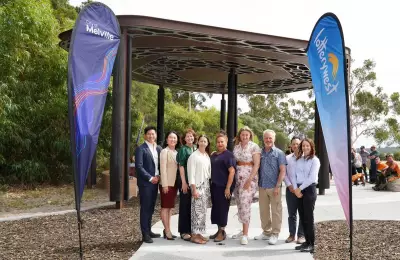
Right now, across our region, the Goulburn Mulwaree Council, Queanbeyan-Palerang Regional Council, Snowy Monaro Regional Council, and Snowy Valleys Council are working together to raise awareness about the FOGO (Food Organics Garden Organics) green bin service. This service allows residents to divert their food and garden waste from landfill and have it turned into valuable compost to be used in the community.
The 'Scrap Together' education campaign aims to encourage all residents to embrace the service and use it correctly, keeping their green bins free from contaminants so the organic waste can be put to use. The campaign is also urging homeowners to adopt some simple habits to go one step further by actually reducing the amount of food waste they generate.

The push comes as audits of local green bins reveal roughly 50 per cent of residents in surveyed areas with FOGO services have not adopted the program and are not diverting their food waste away from landfill.
Proper Waste Separation Is Essential
While the local FOGO system is designed to be simple, maintaining proper waste separation is essential. This includes things like removing all packaging from food scraps, peeling off plastic fruit stickers, and avoiding unaccepted items. Proper sorting ensures the final compost is of high quality and does not contaminate the composting process.
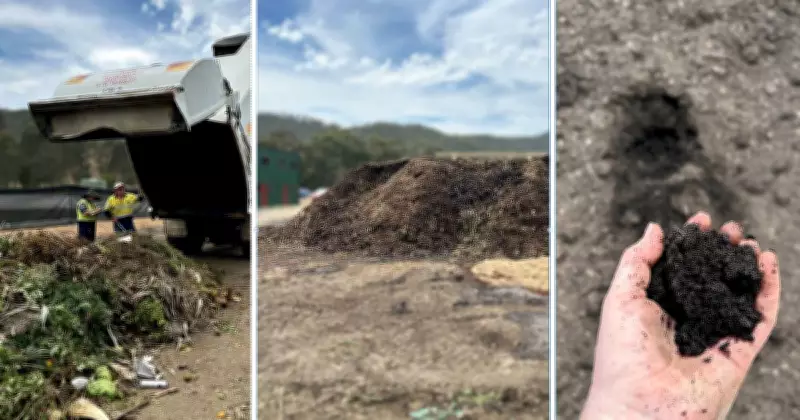
The collected materials are then able to be professionally composted, creating a nutrient-rich soil amendment. This process returns valuable carbon and nutrients to the soil, improving its health and supporting plant growth. Councils and contractors can use the compost on local parks and sports fields.
By participating in these programs, individuals can make a tangible contribution to environmental conservation and a more sustainable future.
What Goes In and What Stays Out of Your FOGO Bin
FOGO programs generally accept a wide range of food items, including dairy, citrus peels, onions, meat and bones, corn husks, fruit and vegetable scraps. However, they are not for disposing of items like plastic bags, newspaper, or pet poo.
Avoid Throwing Away Edible Food
While FOGO is for unavoidable food waste such as egg shells and bones, the councils are also encouraging households to actively work on reducing the amount of edible food going into the bin.
Surprisingly, at a time when households are feeling the weight of cost-of-living pressures, the average NSW household is throwing away more than $40 worth of edible food every week. Wasting food also wastes valuable resources like the energy and water that went into growing, packaging, producing, transporting, selling, and preparing the food.
Five Tips to Reduce Your Food Waste
- Plan your meals.
- Use a shopping list.
- Use up leftovers and excess ingredients.
- Store food correctly.
- Reduce portion sizes.
To get tips and tricks on your food waste journey, sign up for the Love Food Challenge at lovefoodhatewaste.nsw.gov.au.
The Impact of Food Wastage in Australia
In Australia, food wastage continues to be a significant environmental and economic issue. Each year, Australians waste approximately 7.6 million tonnes of food, costing the national economy around $36.6 billion. This amounts to roughly 312 kilograms of food waste per person annually.
Of this total, households are the largest contributors, generating about 2.5 million tonnes of food waste each year, which costs the average household up to $2,500. Australia uses an estimated 2,600 gigalitres of water to grow food that is ultimately thrown away, equivalent to five times the volume of Sydney Harbour.
Additionally, a landmass larger than the state of Victoria—more than 25 million hectares—is used to grow this wasted food.

Why Food Waste Does Not Belong in Landfill
Diverting food scraps from landfill is a crucial step in reducing greenhouse gas emissions and creating valuable compost. When food scraps, such as banana peels, bread crusts, and avocado stones, are sent to a landfill, they decompose without oxygen.
This anaerobic decomposition produces methane, a potent greenhouse gas that is approximately 28 times more powerful than carbon dioxide. The Department of Climate Change, Energy, the Environment and Water (DCCEEW) highlights that food waste accounts for about three per cent of Australia's total greenhouse gas emissions.
For every kilogram of food scraps composted instead of landfilled, more than two kilograms of greenhouse gas emissions are avoided, equivalent to saving the emissions from a car trip of 11 kilometres.
The FOGO Mandate and the NSW EPA
To increase diversion rates, the NSW EPA has set targets, including a mandate to separate business food waste for relevant businesses and all NSW households to have a FOGO collection service by July 2030. The resulting compost can be used to enrich soils, improving their health and water retention, and ultimately creates a circular system where nutrients are returned to the land rather than being wasted.
Find more information about these mandates at the NSW EPA website. The campaign is delivered by Canberra Region Joint Organisation in collaboration with Goulburn Mulwaree Council, Queanbeyan-Palerang Regional Council, Snowy Monaro Regional Council, and Snowy Valleys Council and funded by the NSW Government.