Major construction work on the multi-billion dollar Hunter-Central Coast Renewable Energy Zone is set to get underway in early 2026, marking a significant step in New South Wales' clean energy transition and promising a substantial jobs boost for the region.
Project Details and Infrastructure Upgrades
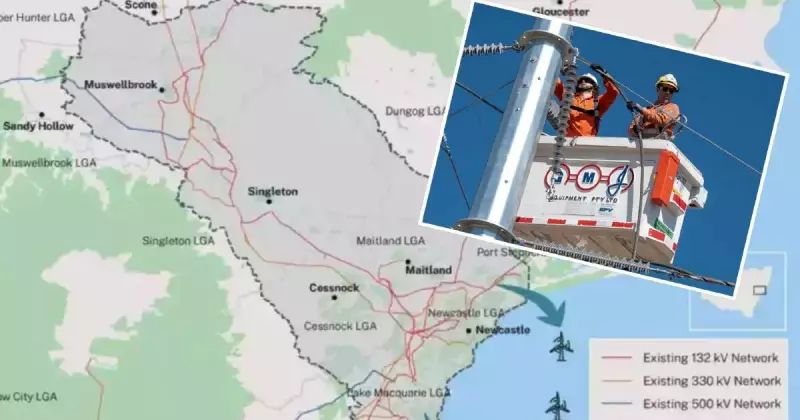
The $4 billion Hunter Central Coast Renewable Energy Zone (REZ) is one of five such zones planned for NSW. It will span from the Upper Hunter in the north down to the Central Coast in the south, encompassing the local government areas of Newcastle, Lake Macquarie, and Port Stephens.
A pivotal aspect of the project's design is its focus on enhancing existing infrastructure. Rather than building entirely new networks, the plan centres on upgrading current distribution poles and wires. This approach aims to reduce environmental impact, lower costs, accelerate delivery, and minimise disruption for local communities.

"We are proud to be leading the first REZ in Australia to augment our existing infrastructure - facilitating a cheaper and faster solution that creates stronger communities," said Ausgrid chief executive Marc England.
The specific construction work will involve several key components:
- Upgrading roughly 85 kilometres of sub-transmission lines.
- Constructing 18 kilometres of new underground fibre optic cable in the Upper Hunter.
- Building two brand new energy hubs, which are essentially substations.
- Augmenting several existing energy hubs.
- Enhancing underground fibre optic circuits in the Upper Hunter region.
Economic Boost and Job Creation
The project represents a massive economic injection for the Hunter and Central Coast. It is forecast to attract up to $3.9 billion in private investment and connect approximately 1.8 gigawatts of new renewable generation and storage capacity to the grid.
During the construction phase, the REZ is expected to support an average of about 590 direct jobs per year. Once operational from around 2030, it will provide approximately 220 ongoing jobs. Furthermore, the project will stimulate demand for workers in supporting sectors including local manufacturing, retail, transport, and the supply of various goods and services.
"We're excited to see this significant project move ahead, ensuring the region remains a major player in future electricity generation. It will provide communities with tangible benefits and reliable energy for homes and businesses," stated EnergyCo chief executive Hannah McCaughey.
Logistics and Community Engagement
A significant portion of the large infrastructure required for the REZ, such as wind turbines and transformers, will be imported through the Port of Newcastle. The equipment will then be stored at the new $115.5 million logistics precinct at Mayfield, a 52-hectare facility designed for portside storage.
Marc England emphasised that community consultation remains a priority as the project moves into the build phase. "I'm incredibly proud of the work our teams have done over the past 12 months to plan this project - and importantly to carry out extensive engagement with landowners, residents and local businesses," he said.
"We now turn our minds to getting on with the job, with construction set to commence early 2026," England added, confirming the project's imminent start date.
The Hunter-Central Coast REZ forms a crucial part of NSW's broader energy strategy. Currently, about 36 per cent of the state's electricity comes from renewable sources. The government reports that supported projects have already achieved two-thirds of the way towards its 2030 generation target and 40 per cent towards its long-duration storage target.