Just a stone's throw from Melbourne's bustle lies a world forgotten by time. French Island, nestled in Western Port Bay roughly 70 kilometres south-east of the CBD, offers a profound step back into a simpler, quieter Australia. Accessible only by passenger ferry or a small vehicle barge, this secluded haven remains defiantly off-grid, with no town electricity, mains water, or sealed roads.
A Landscape Shaped by History and Narrowly Saved
The island's story stretches back millennia, with the Bunurong people visiting seasonally to harvest swans' eggs and shellfish. European history began with explorers like George Bass in 1798, and the island earned its name from a French scientific expedition in 1802. For much of its modern history, French Island was an agricultural outpost. A key industry was chicory growing, used as a coffee additive, which peaked with 22 chicory kilns operating across the island until the 1960s.
This peaceful existence was almost shattered in the 1960s. The vision of then-Victorian premier Sir Henry Bolte threatened to transform the island into a vast industrial complex. Plans included an aluminium smelter, a toxic waste plant, an international airport, and controversially, Australia's first nuclear power station. Vast land tracts were sold to developers with this future in mind.

Thankfully, the island's remarkable natural values saved it. Environmentalists and subsequent scientific studies highlighted its incredible biodiversity, including over 580 indigenous plant species and more than 230 bird species. The discovery of a remote pelican colony and the rare long-nosed potoroo, coupled with the island's proximity to Melbourne, led to the nuclear plan being shelved by the mid-1970s. Today, French Island National Park protects about two-thirds of the island.
Island Life: Koalas, Community, and Quiet
Life on French Island moves to a different rhythm. With a permanent population of only around 120, it's an unincorporated area with no local council; residents pay no rates and manage community affairs themselves. Infrastructure is minimal, centred on the French Island General Store, affectionately known as FIGS, which serves as post office, petrol station, provisioner, and social hub.
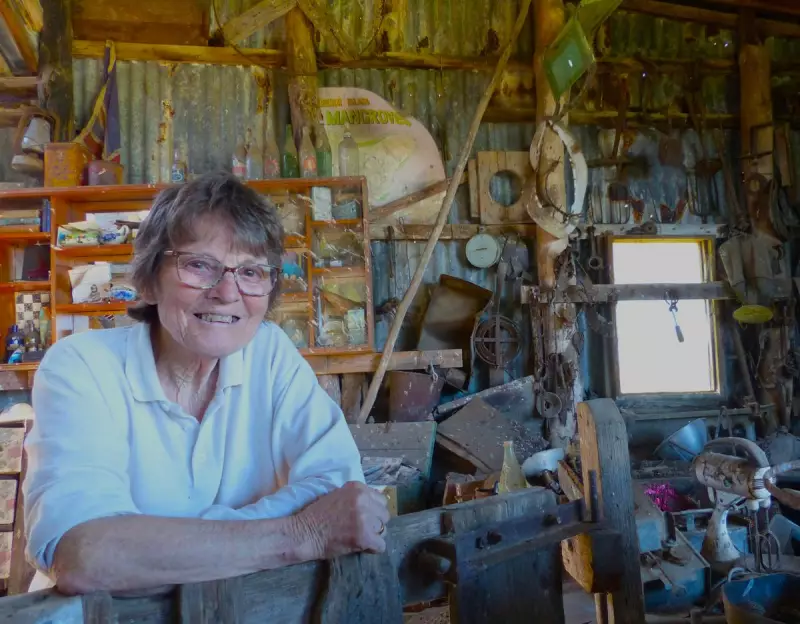
The island's most famous residents are its koalas. Introduced in the 1890s, the isolated population has grown to an estimated 12,000 animals and represents Victoria's last remaining chlamydia-free colony. However, this success brings challenges. "The koala population on French Island has grown to an unsustainable level," explains lifelong resident Lois Airs, noting that translocation programs have stalled. She advocates for humane relocation to suitable coastal habitats to prevent over-browsing and starvation.
Echoes of the Past and Idyllic Retreats
Exploring the island's gravel roads and sandy tracks reveals layers of history. Crumbling chicory kilns and the occasional tumbledown homestead stand alongside surprising modern houses. Historic homes like the 1890s Longpoint Homestead, now home to French Island Vineyards, still dot the landscape.
The island's serene beauty has also attracted those seeking respite. The south coast's pristine Fairhaven Beach, often devoid of footprints, was a favourite escape for singer Kylie Minogue. Properties like Mandalaye Park Estate offer upmarket accommodation in a restored 1908 homestead, where even former racehorses belonging to the King of Dubai enjoy a peaceful retirement.
French Island remains a captivating paradox: a remote wilderness within sight of a major city, a place where history is etched into the landscape, and where the loudest sounds are the laughter of kookaburras and the gentle growl of a koala. It is a true Australian time capsule, patiently waiting in Western Port Bay.