For years, a glistening side of Tasmanian farmed salmon was a centrepiece of the Australian Christmas table, symbolising a festive and healthy choice. That tradition is now under intense scrutiny, as a growing wave of consumers, activists, and even leading chefs turn their backs on the product. The reason is a mounting body of evidence revealing the severe environmental and ethical costs of the industry.
An Industry Losing Its Social Licence
Public trust in Tasmania's salmon farming sector is collapsing. What was once marketed as a pristine, 'clean and green' product is now being exposed as an aquaculture operation with one of the world's poorest environmental records. Critics argue the industry has been sustained by government inaction and the complicity of major supermarkets, but its social licence to operate is rapidly eroding.
The list of documented problems is long and alarming. The industry is plagued by regular mass fish kills and has been found to release extraordinary volumes of antibiotics into sensitive coastal waters. Government health warnings have advised recreational fishers to stay kilometres away from salmon pens, highlighting the direct risk to public health and local fisheries.

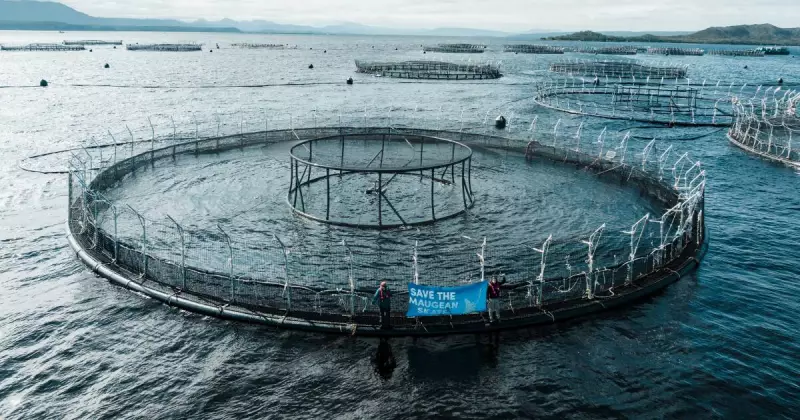
Perhaps most damning is the direct threat posed to native wildlife. Tasmanian salmon farming is linked to a catastrophic extinction risk for the critically endangered Maugean skate. This ancient fish's only known habitat is Macquarie Harbour, where intensive salmon farming continues despite widespread public outrage and scientific concern.
A System Under Stress and Failure
The core of the issue lies in farming an exotic species in an increasingly unsuitable environment. Atlantic salmon are cold-water fish from the northern hemisphere, yet they are being farmed industrially in Tasmanian waters, which are warming at nearly four times the global average. This makes Tasmania arguably the warmest place on Earth to raise this particular species.
The result is a cycle of suffering and contamination. Heat-stressed salmon, with weakened immune systems, are packed densely in open-net pens. This creates ideal conditions for disease outbreaks, leading to more mass deaths and a reliance on heavy antibiotic use. This is no longer an occasional crisis but a standard operational challenge.
Earlier in 2025, drone footage revealed dead and diseased salmon being processed for human consumption alongside healthy fish, further shaking consumer confidence. Then, between January and April, a devastating outbreak of the bacteria Piscirickettsia salmonis killed nearly 15,000 tonnes of farmed salmon.
The antibiotic response has been staggering. In November alone, the industry used 700 kilograms of the antibiotic florfenicol to combat another outbreak. This single-month figure was more than triple the total antibiotics used across all of Tasmania's salmon farms in the entire previous year.
The pollution fallout was immediate. Tasmania's Public Health Director, Dr Mark Veitch, recommended people avoid eating fish caught within three kilometres of salmon pens for 30 days. The contamination had wider economic consequences, shutting down parts of the lucrative lobster fishing industry during the peak Christmas season after China refused imports with antibiotic traces.
Supermarket Greenwashing and Sustainable Solutions
Despite these systemic issues, major supermarkets continue to sell the product, often using certification schemes that critics label as greenwashing. Coles and Woolworths rely on labels like Best Aquaculture Practices (BAP) and Global G.A.P., which are criticised for failing to adequately account for biodiversity loss or damage to the adjacent UNESCO World Heritage Area.
While Coles has taken the minor step of removing 'responsibly sourced' claims from its home-brand salmon, advocates argue incremental change is insufficient. They say the crisis demands a fundamental shift away from open-net farming of exotic species in stressed environments.

The solution, according to experts like Adrian Meder from the Australian Marine Conservation Society, lies in accelerated investment in land-based aquaculture and a pivot to native species. Australia already successfully farms native seafood better suited to local conditions, including barramundi, Murray cod, jade perch, silver perch, marron, yabbies, oysters, and mussels. These species have evolved to thrive in Australian waters and do not carry the same environmental baggage.
This Christmas, the power lies with the consumer. Choosing to bypass Tasmanian farmed salmon sends a powerful market signal that environmental destruction, extinction risk, and questionable animal welfare are unacceptable costs for a festive meal. The choice on the holiday table has become a vote for the future of Australia's marine environment.