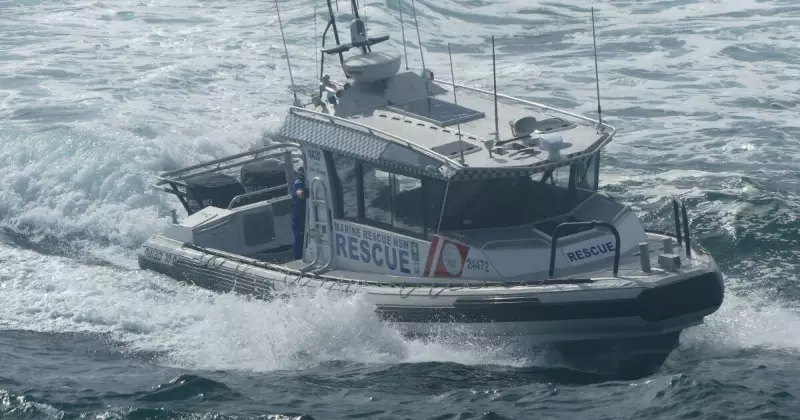
With the summer holidays in full swing, Marine Rescue NSW has issued a critical safety warning to all boaters planning to navigate the Hunter region's waterways. The volunteer organisation is calling on skippers, regardless of their experience, to prioritise planning and preparation before heading out.
Respect the Gateway: The Swansea Bar Warning
Marine Rescue NSW Hunter Central Coast inspector Jane Shirriff delivered a specific alert for those intending to cross the notorious Swansea channel bar to access the ocean from Lake Macquarie. She described coastal bars as "gateways to adventure that demand respect from every skipper planning to cross."
Inspector Shirriff, drawing from firsthand experience, emphasised how quickly conditions can turn treacherous. Her advice is clear: "Boaters looking to cross Swansea Channel Bar should stand off, check the conditions and then decide whether it is safe to proceed." She recommends crossing on a run-in tide for fewer compression waves.

Highlighting that every bar is unique, she stressed the importance of local knowledge. "Marine Rescue NSW encourages boaters to always seek advice from their local unit on the best options for going in or out," she said, while noting the final decision and responsibility always rests with the vessel's skipper.
Near-Misses and Preventable Incidents
The risks of misjudging a crossing are severe, with capsized vessels creating life-threatening emergencies in moments. Lake Macquarie unit commander Jim Wright recounted several alarming incidents that narrowly avoided tragedy.
"We had one person who was crossing the bar on a jet ski and was turned over and separated from his craft," Mr Wright said. Fortunately, the unit's location overlooking the bar allowed crews to spot the incident immediately. A rescue jet ski was deployed, retrieving the person while other crews later recovered the craft.
Mr Wright also reported incidents involving smaller craft and "tinnies" capsizing or being swamped upon return, often due to not properly assessing conditions. He identified the most dangerous scenarios as a strong outgoing tide combined with a large north-east swell or strong wind.
"Nine times out of ten the bar is a rather safe crossing but certainly if there is white water breaking across the entire opening I would be turning around and spending the day fishing in the lake," he advised.
The Non-Negotiable Safety Steps
Inspector Shirriff's fundamental safety message is straightforward: "Boaters must wear a lifejacket, stay with the vessel and grab hold of anything floating." She noted that lifejackets are legally required to be worn when crossing any coastal bar in New South Wales.
Beyond bar crossings, preparation is critical. Inspector Shirriff revealed that engine troubles, battery failures, and running out of fuel account for more than half of all incidents Marine Rescue NSW responds to across the Hunter Central Coast region.
Marine Rescue NSW Acting Commissioner Todd Andrews highlighted the simplest yet most effective safety measure: logging on with Marine Rescue before departure. "When a boater logs on, they share details of their trip and expected return time," he explained. "If they don't return as planned, a search will be initiated."
Logging on, which saves vital time in an emergency, can be done via the free Marine Rescue NSW app or on VHF marine radio channel 16. "It only takes a minute to log on to protect a lifetime," Acting Commissioner Andrews said.
The statistics underscore the volunteers' busy summer period. Last summer, crews across the Hunter region performed 514 search and rescue missions, including 112 emergency responses. Their efforts safely returned 1,199 people to shore while monitoring nearly 4,500 vessels that had logged on.
This holiday season, more than 700 dedicated Marine Rescue NSW volunteers will be on standby across eight Hunter Central Coast units. The final word from authorities is a call for prudent leadership: "A skipper who chooses to cancel or adjust a trip in poor conditions shows good leadership. If you're unsure, don't go out."